

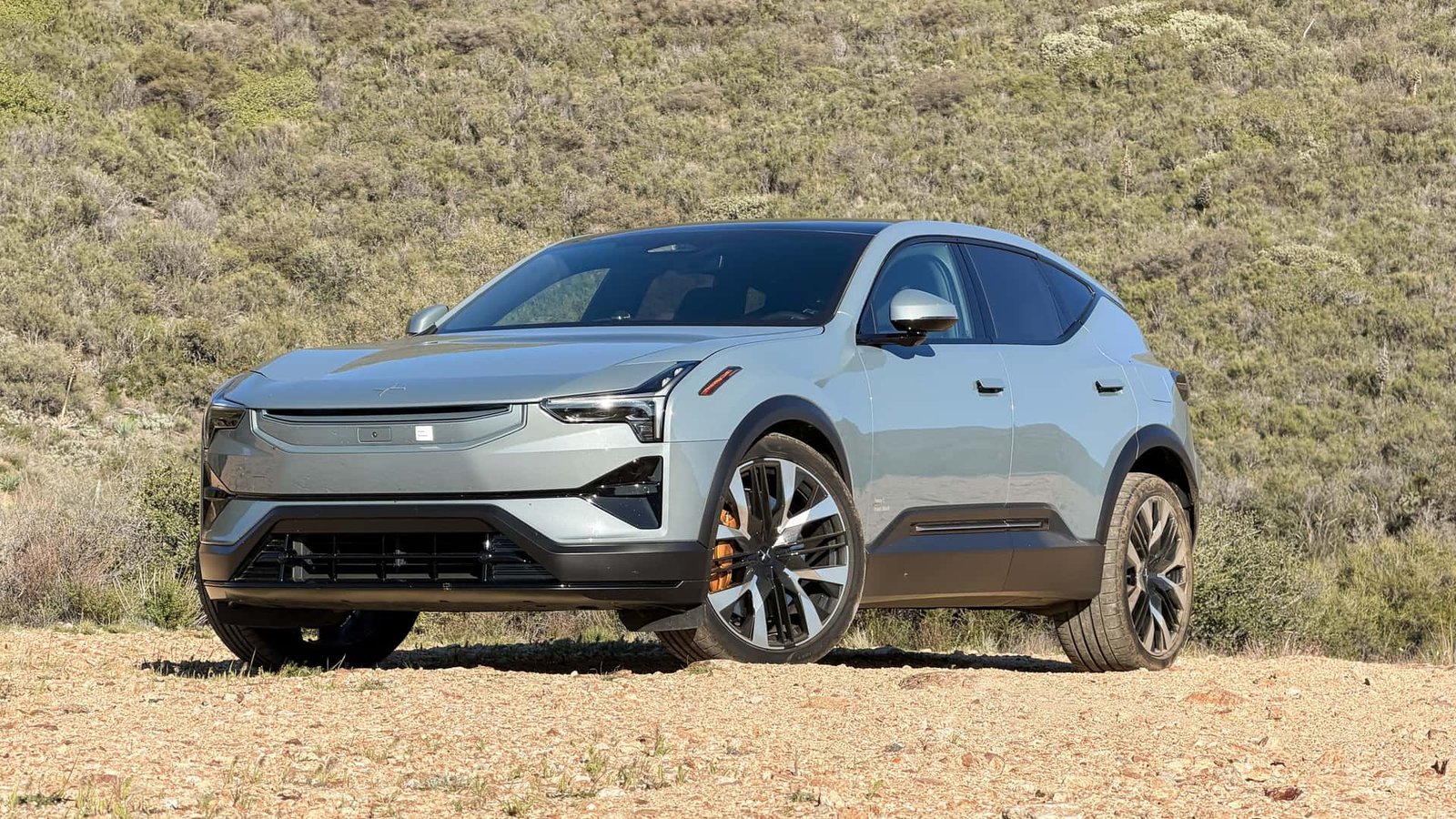
When I first drove the Polestar 3 at launch in Jackson Hole, Wyoming, it was September 2024. Biden was the president, Francis was the pope, and core features of the SUV were still marked “Coming Soon” via an over-the-air update. Eighteen months later, only one of those statements remains true. And it’s a damning indictment of the Polestar, an SUV I enjoy driving but couldn’t live with.
Simple features like the ability to adjust the volume of your music or skip a track using the steering wheel are still missing. The user experience remains cumbersome, requiring too many steps for too many features. Eight of the 12 buttons on the steering wheel are completely useless 99% of the time. And virtually all other buttons have been eliminated, even down to the rear window switches on the driver’s seat. Instead, there’s an annoying toggle switch, a callous way to save pennies on a test car that cost over $93,000.
It’s not just that these decisions are frustrating in themselves. It’s that they fundamentally struggle to deliver what should be this car’s main selling point.
Let me explain.
(Full disclosure: Polestar loaned me a 2025 Polestar 3 Dual Motor with the Performance Pack for this test. The car arrived with a full battery and was returned with a less full battery.)

18
Source: Mack Hogan/InsideEVs
Table of Contents
A true software-defined EV
When the Polestar 3 and its mechanical twin, the Volvo EX90, launched in 2024, they were announced as the first true European-developed software-defined vehicles (SDVs) to go on sale in the United States
This is no small thing. The SDV revolution is huge and massively underestimated. Ford’s CEO recently claimed it’s a bigger transition for the automotive industry than the transition to electric vehicles, and I think he’s absolutely right. Because you need to know how to make great SDVs to make great EVs. An SDV has a software stack that is owned by the manufacturer and updated directly by the manufacturer, not by various third parties.
It sounds simple, but it is an enormously valuable unlock. This means you can dramatically reduce the amount of wiring in the car, enable previously isolated systems to interact, and wirelessly update everything from the drive units to the door locks. The benefits of a true SDV are why Teslas have sleeker software, more frequent updates, lower costs and more sophisticated user interfaces than older electric vehicles. And Volvo and Polestar were really early; Mercedes and BMW are currently launching their first SDVs in this market.
Conventional cars use dozens of electronic control units (ECUs) distributed throughout the car, most of which use proprietary software from suppliers. SDVs, like the Rivian pictured here, require far less cabling and a handful of powerful, centralized computers to improve the software experience and reduce costs.
But consumers won’t buy an SDV just because it’s software-defined. Most people have no idea what that even means. The value lies in creating a cheaper car with a better software experience and higher update frequency.
And here Polestar and Volvo have not yet kept their promise.
How can it take so long?
A core tenet of the selling point for SDVs is rapid upgrades. When Polestar representatives told me in September 2024 that steering wheel controls for music would soon be available via an over-the-air update, I believed them. Finally, I could feel the physical keys clicking beneath my fingers. They worked on adjusting the mirrors, the few times you do that. Everything is connected.
I’m not a programmer, but the solution to this problem seems pretty simple. Some variations on: When VolumeUpButton == pressed {Volume+1}. Like I said, I’m an idiot, but I can’t imagine how this is going to last 18 months. A Polestar representative said the feature will now be added via an over-the-air update after the updated Polestar 3 hits the market in 2027. To that I say: If I have to wait for a mid-cycle update to get a core feature that should have been available at launch, how exactly is that a better experience?
The interior design looks nice, but is difficult to use.
Photo by: Mack Hogan/InsideEVs
To be fair to Polestar, it has to be said that the software team was busy with… other things. But the Polestar 3 and EX90 came onto the market with many software errors, all of which had to be painstakingly fixed last year. This hard work is certainly paying off. The 2025 model I drove had no major software problems. But the idea that the company released a product so incomplete that it had to spend a year getting it up to basic reliability while leaving core functionality offline seems like exactly the kind of move that has angered many consumers of tech-focused vehicles.
Frustrating controls
Even outside of the missing functionality, there are other options that I don’t understand. First of all, there are the window switches, which I have complained about before. Instead of a separate button for all four windows that must be controlled by the driver, the Polestar has two driver-operated window switches, with a toggle button that switches between controlling the front and rear windows. So if you want to lower all four windows, press both switches, the toggle switch, and then press both switches again.
Ok, these are the switches from an EX90 because I couldn’t get a picture of the Polestar 3. But it’s the same setup, with tiny, barely visible light strips showing you which windows you’re controlling.
Photo by: InsideEVs
I can’t imagine that removing two switches and adding a button saved more than a dollar here. And it’s an annoying compromise if, like me, you like driving with the windows down and hate gusts of wind. On most trips I take, I have all four windows down at least once, because I’m paying for the beautiful San Diego air and I’m going to use it. So it was a hassle getting into the car and not knowing which windows were going to come down.
This isn’t the only one-step process that requires two steps on the Polestar. I’m not much of a cheapskate when it comes to on-screen controls, and I find the on-screen temperature control on a Rivian or Tesla to be good enough that I rarely miss buttons. But that’s because you can quickly adjust things with your finger. With the Polestar you have to tap on the temperature, whereupon the + and – buttons open a submenu about an inch away. So you have to hit not one but two tiny targets while moving. The same goes for the heated and cooled seats.
Photo by: Mack Hogan/InsideEVs
And while you aim your finger, your eyes must be distracted from the road for at least a second, which is enough to trigger the world’s most stringent driver monitoring system. The Polestar 3 constantly screamed at me as I simply tried to navigate its own complicated systems. For example, despite being the best-driving SUV in its class, switching between all driving modes requires navigation on three separate screens. Even opening the trunk isn’t easy as there’s no hard button for it and another menu to navigate.
All of this would be acceptable if the result was an unbeatable price. But the Polestar starts at $68,900 and goes up to over $90,000. At this price, you shouldn’t have to make that many compromises.
There is still hope
The best thing about SDVs is that they allow automakers to make your car even better after you purchase it. But the worst part is the other side of the same coin. Automakers now know they can launch something half-baked and finish it later, which is dangerous at a time when margins are thin and companies are under pressure to move quickly.
But it’s an old-fashioned automotive measure that could fix this problem: the mid-cycle update. All Polestar 3s are already entitled to a free upgrade to an Nvidia Drive AGX Orin central computer, which is significantly more powerful and should enable a better software experience.
More importantly, the entire car will be redesigned for 2027, with a new 800-volt architecture that should dramatically improve charging times. And yes, Polestar says it will come with functional steering wheel buttons from the factory. This is part of a broader initiative by the company to incorporate far more physical controls into future designs.
So not all hope is lost. But this whole experience is further proof that you should never buy a car with the promise of what it will be like tomorrow. You’ll have to wait until it’s good enough today and consider updates a nice bonus. Because once you give a company your money, you no longer have any influence. You’re just there. So stay strong and wait for a product that feels complete to you.
Contact the author: Mack.Hogan@insideevs.com
Click here to view all articles with lists of the best electric vehicles
We want your opinion!
What would you like to see on Insideevs.com?
Take our 3 minute survey.
– The InsideEVs team
https://insideevs.com/reviews/790694/polestar-3-tech-issues/
