By Fanny Potkin
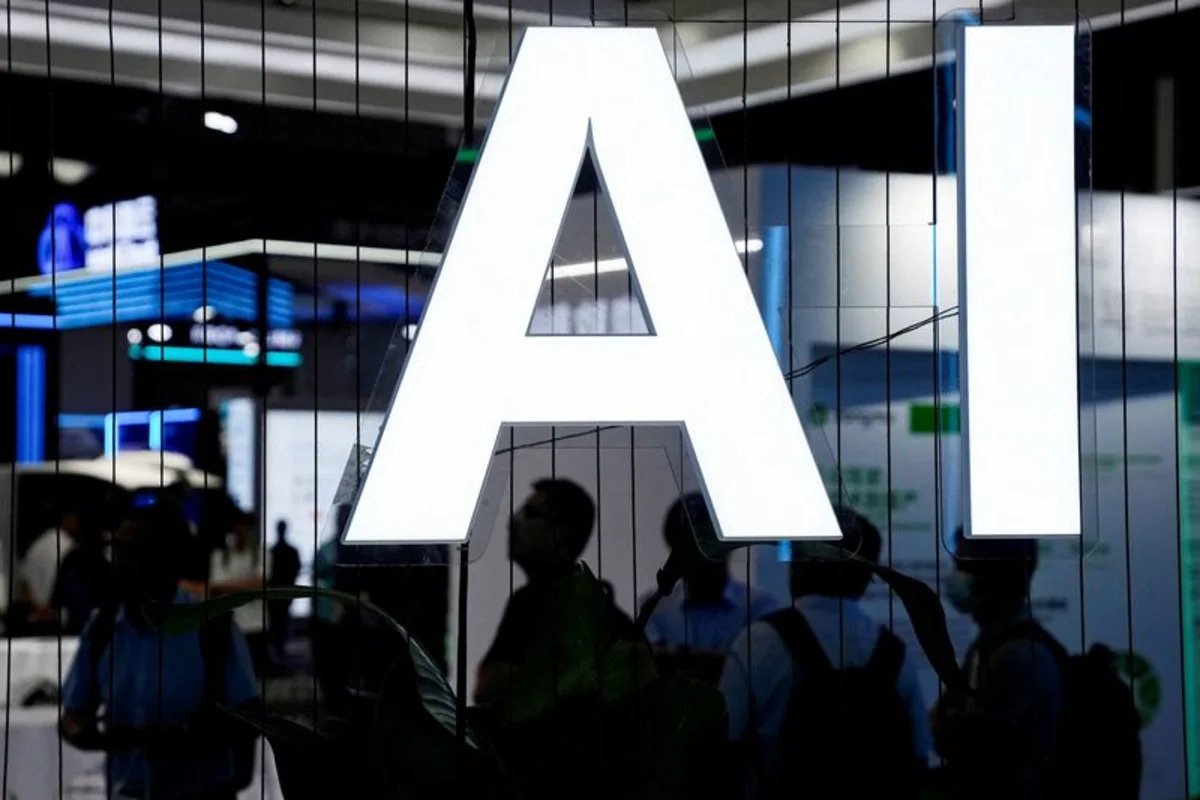
SINGAPORE, July 7 (Reuters) – Chinese authorities held meetings with leading technology companies last month to potentially limit foreign access to China’s most advanced AI models, including those not yet released, three people familiar with the discussions said.
The talks follow a series of moves by Beijing to keep homegrown AI in the country and underscore how China, like the United States, is now treating cutting-edge artificial intelligence as a critical national asset that must be controlled.
Companies present at the talks included tech giants Alibaba and ByteDance as well as startup Z.ai, said the people, who were not authorized to speak to the media and declined to be named.
Since the launch of DeepSeek’s R1 model last year, Chinese AI models have made great strides around the world thanks to their low cost and increasing capabilities. Any decision by Beijing to restrict access to these products could impact all AI markets, as costs would likely increase for many companies.
Tightening penalties for AI theft discussed
At the meetings led by China’s Ministry of Commerce, participants discussed setting limits for the most advanced AI models – both closed-source and more open versions, according to two of the sources.
One of the sources said officials had spoken of any leaking or theft of proprietary AI technology being a crime under China’s strict national security law.
Officials also raised the possibility of introducing new measures to restrict who can fund domestic AI startups, the source added.
The scope of the possible restrictions is still being discussed, two sources said, adding that they may only apply to future models. It was not immediately clear when or if they would even come into effect.
China’s Commerce Ministry, which oversees export regulations, and the National Development and Reform Commission – the country’s state planning agency, whose officials also attended the meetings – did not respond to Reuters requests for comment.
Alibaba, ByteDance and Z.ai also did not respond to Reuters queries.
All three companies have a range of AI models, some of which are closed source while others are open source, meaning users can download, run and customize the underlying systems.
Alibaba’s Qwen and ByteDance’s Doubao are two of the most widely used AI models in China. Z.ai recently sent Silicon Valley into a frenzy as its GLM 5.2 model’s capabilities come close to leading US offerings, but at a fraction of the cost.
AI MODELS AND NATIONAL SECURITY CONCERNS
The story continues
US President Donald Trump’s administration is also deeply concerned about the impact of AI on national security – particularly the possibility that American AI products will be misused by military intelligence agencies in China, Russia and other countries of concern.
In June, it ruled that foreigners would not have access to Anthropic’s most advanced Fable and Mythos models, prompting the company to disable the models for all users worldwide because nationality could not be verified in real time.
Export controls on Fable, which is intended for the general public, have now been lifted after new safeguards were introduced. But Mythos, designed for cybersecurity professionals, is still only available to some “trusted” U.S. organizations.
Some US AI experts also said that the US needs to regulate the use of Chinese AI models.
FEAR IN CHINA ABOUT MYTH THREAT
According to two of the sources, Chinese authorities are deeply concerned about Mythos’ potential to exploit software vulnerabilities and that Washington could use the model against Chinese interests.
That echoes concerns publicly expressed by state media and Zhou Hongyi, the founder of cybersecurity company 360, a major provider to government and corporate customers, who said China needs to develop its own myth.
China has implemented numerous measures to protect domestic AI this year.
In April, the country’s state planner ordered Meta to handle the $2 billion acquisition of China-founded AI startup Manus. In early June, authorities issued sweeping new rules tightening controls on foreign transactions affecting Chinese investors, technology, data and national security.
China had also launched investigations this year into Manus and other local AI startups that had moved abroad to find out whether they violated export control laws, according to two of the sources and a third person.
Manus did not respond to requests for comment.
Reuters was unable to learn how possible new restrictions on foreign access to Chinese AI models might work.
However, some clues may be gleaned from a May roundtable of Chinese legal experts on open-source AI regulations.
According to a summary of the discussions published in an official journal of the Supreme People’s Court, participants proposed a tiered system: basic open-source tools subject to easy submission, more advanced technologies subject to security reviews, and the most sensitive boundary models excluded from public release or limited to private use.
(Reporting by Fanny Potkin in Singapore; Editing by Anne Marie Roantree and Edwina Gibbs)
https://finance.yahoo.com/technology/ai/articles/exclusive-beijing-looking-curbing-overseas-101644780.html
