


As an environmental justice and urban land use scholar, I have seen these various contradictory forces at work in Michigan. In the last two years alone, more than 30 large and small data center projects have been proposed in the state, including one from the university where I work.
 Michigan Governor Gretchen Whitmer (center) was criticized for participating in this photo op at the construction site for a new data center in her state. Related digital information about Planet Detroit
Gov. Gretchen Whitmer is enthusiastic about bringing tech companies to the state, even posing with tech company CEOs at photo ops at the sites of planned data centers.
But not everyone is so excited. An example of the resistance these projects can face is the Ypsilanti Community Utilities Authority, a local water utility where I live, which has informed the state that it will not provide water to cool a data center that the University of Michigan and Los Alamos National Laboratory had proposed in its service area.
So the University of Michigan suggested another location in the next town, Superior Township. This city manages its own water, but obtains its supply by purchasing water from both the Ypsilanti Community Utilities Authority and the Municipality of Ann Arbor.
A look at some of the forces at play in these projects reveals the deep problems they raise. The disputes over data centers can often lead to disputes between companies and community members. But they also reflect conflicts about social values, democratic systems and capitalist interests.
Table of Contents
Technology company
Tech companies obviously have a desire to store and process more and more data. And many important aspects of society rely on the data centers built over decades to serve websites, process online purchases and deliver emails, text messages and alerts.
The latest push comes amid expected demand for artificial intelligence systems in business and people’s lives – and the resulting increased need for computing capacity to process all of these requests and filter all available information to provide answers.
Corporate pressure to grow, keep increasing profits for shareholders, and squeeze more revenue from workers and assets is driving these tech companies to look for more land on which to build more data centers. And Michigan lawmakers have openly courted tech companies, passing laws that exempt data center operators from sales and use taxes they would otherwise have to pay.
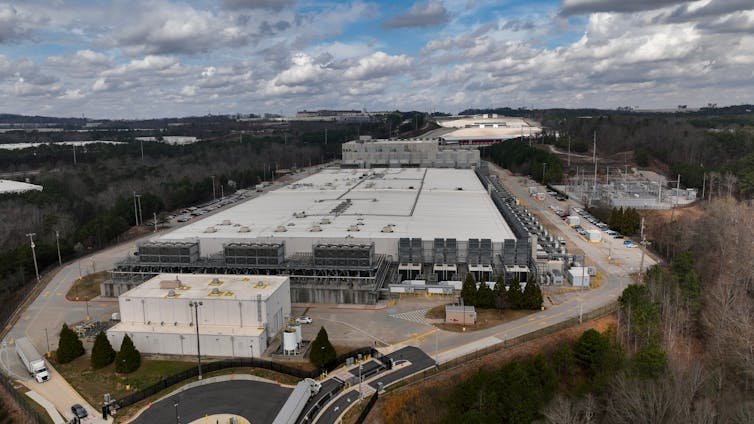 Data centers like this one in Georgia use large amounts of electricity. AP Photo/Mike Stewart
Electricity company
Many electric utilities are subject to regulation by state or local governments and are not permitted to make profits from maintaining existing services or selling electricity. Their profits come from building new power plants, new transformers and substations, and new power lines – and passing these costs on to customers, with a profit markup.
A data center can require significant investments in power generation and transmission – for example, a data center proposed by Google in Van Buren Township, Michigan, would require “2.7 gigawatts of electricity – an enormous amount of energy equivalent to the needs of approximately 2 million homes,” according to a local news report.
Therefore, a utility is likely eager to capitalize on the opportunity of a new major customer and may be willing to accept some public backlash.
Utilities operating in small geographic areas are highly dependent on the success of the communities from which they source their customers and in which they build their infrastructure. In these situations, they have a vested interest in local economic growth, in particular in the establishment of companies in the region that offer jobs and thus workers. This drives them to participate in local policymaking by advocating for zoning changes to build data centers.
Larger utilities that operate regionally or across entire states are less tied to the economic success of a specific community within their service area. But they can also target their influence specifically at state legislatures. For example, DTE Energy assured state lawmakers that its proposed data center in Van Buren Township would not increase customers’ electric rates.
 A local meeting room in Evanston, Wyoming, was packed for a public hearing on a proposed data center. Natalie Behring/Getty Images
community leader
Community leaders and elected officials are often interested in the jobs that tech companies promise with data centers and therefore tend to support approving permits, zoning changes or other legal changes.
Although data centers don’t really create many jobs, they have the potential to contribute to local property taxes, which can be attractive to small towns without many other options.
Cities and municipalities are always looking for growth opportunities and strive for additional tax revenue. This can leave them feeling pressured to build new roads, change their land use regulations, and approve applications from companies that want to build within their borders.
My research has shown that this pressure also exists in shrinking or small cities. This pressure has increased as cities have sought to reduce taxes on their residents. In their opinion, the solution to taking less money from existing residents is to bring in more businesses, more industry and more new residents. That’s why they are interested in welcoming data centers.
However, not all community leaders agree with data centers. Some reject it but feel hampered or powerless to stop or slow its progress, as was the case in Ypsilanti Township and also in nearby Saline Township.
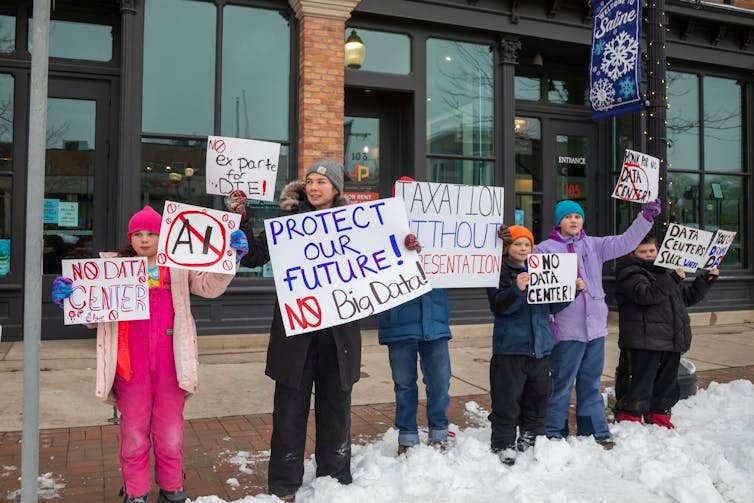 People in Saline, Michigan, hold signs opposing a data center planned for their community. Jim West/UCG/Universal Images Group via Getty Images
Everyday people
In many communities, people concerned about noise, land, water and electricity use oppose data centers.
They are also concerned about the costs that data centers could impose on utility ratepayers, taxpayers and those who must bear the environmental impact. The power of the people, exercised through democratic processes such as public hearings, legislative changes and elections, can be overwhelmed by technology companies and allied groups.
But voters have power. In June 2026, Utah voters fired a longtime legislative leader, state Senate President Stuart Adams, who had helped win approval for a massive data center in the northwest part of the state.
Whether a data center makes progress in a municipality ultimately depends on how the authorities classify the motives and socio-political power of all these actors.
Lauren Mullenbach, associate research scientist for environmental justice, University of Michigan
This article is republished from The Conversation under a Creative Commons license. Read the original article.
https://fortune.com/2026/07/14/voters-ai-backlash-politicians-lose-seats/
