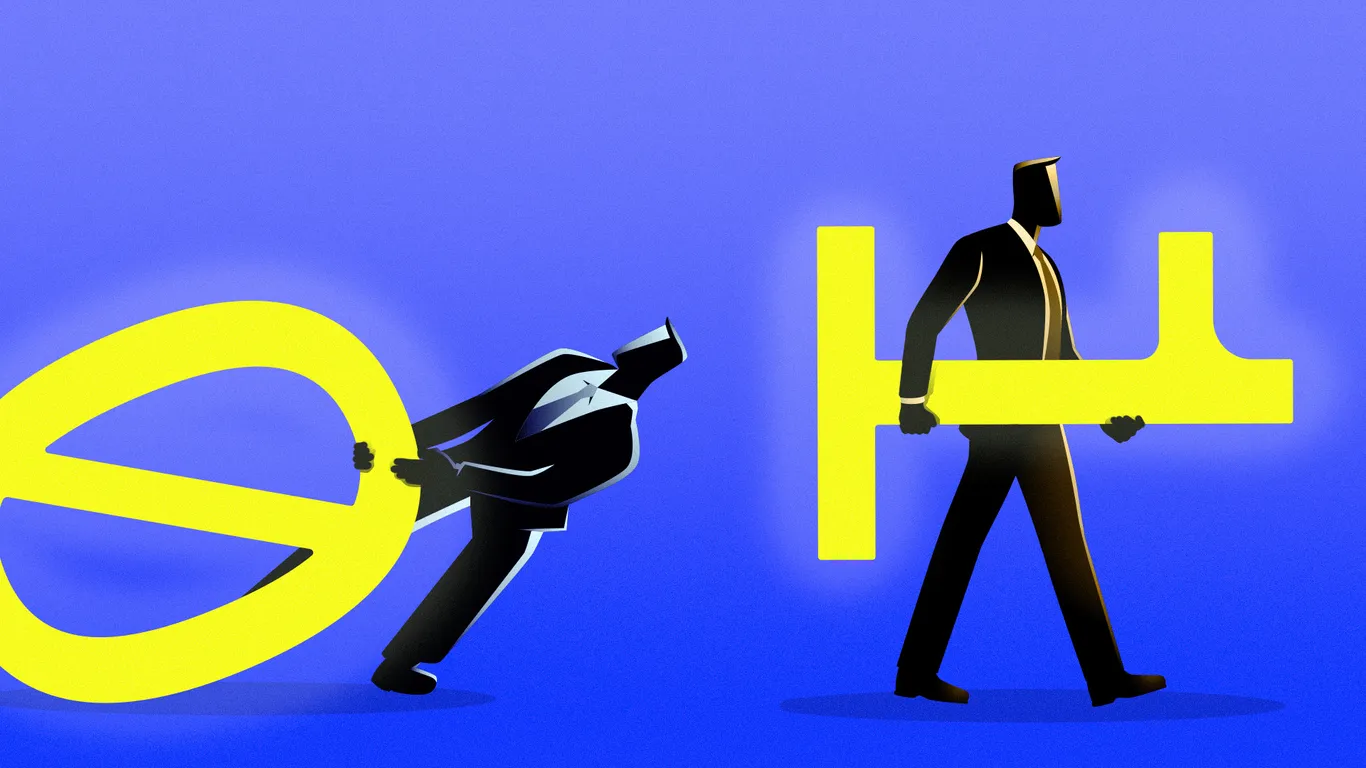
- It’s a new chapter in America’s digital divide – the AI “haves,” “haves nots,” and “unconscious” — with profound implications for the future of wealth, work, and power.
Enlarge: The latest Frontier models are designed for an agent world of coding, research, and cybersecurity that most Americans will never see, let alone engage in.
- OpenAI’s Sol and Anthropic’s Fable are now at the forefront of elite AI obsession, prized for running long programming and research loops with minimal human intervention.
- Celebrity creators spent the week impersonating the two models – discussing their temperament, their work ethic, even their personalities and the way sports fans argue about rival athletes.
- “My overall impression is that Fable is a ‘wise owl’ who is very thoughtful and speaks very well,” tweeted AI researcher Peter Gostev. “GPT-5.6-Sol is like a Rottweiler that grabs the problem by the throat and won’t let go until it’s done.”
Reality check: The people fluent enough to compare Sol to Fable using a coding benchmark are only a tiny fraction of the country. For most Americans, these names and metrics mean nothing.
- Millions of people encounter AI passively or unknowingly – through search summaries, AI-generated content, customer service bots, and invisible features in apps.
- Nearly half of U.S. adults now use AI chatbots, but the most common use is to search for basic information — the same task Google has been doing for two decades, a far cry from autonomous programming agents.
- OpenAI counts more than 50 million paid subscribers in its weekly ChatGPT user base of more than 900 million. The population using agent coding tools is only a fraction of that fraction.
Between the lines: Even among the elites experiencing the frontier AI revolution, there is a pecking order.
- Sol began as a limited preview for OpenAI’s trusted partners and select organizations before wider launch, making early access itself a status marker in AI circles.
- Fable was taken offline worldwide for nearly three weeks in June due to US export controls, while its more powerful sibling Mythos remains restricted to a small number of trusted organizations.
- The result is a hierarchy within a hierarchy: free users, paid users, power users, preview users, and an insider class for testing features that the rest of the world can only read about.
The big picture: The AI industry ultimately needs broad societal acceptance of the transformation it sells: more data centers, greater workplace automation, and AI embedded in schools, government, and everyday life.
- But as AI adoption has increased, trust has fallen: 63% of Americans say AI is advancing too quickly, and only 16% expect it to benefit society in the next 20 years, according to Pew Research.
- The clearest gains are coming to investors, tech giants and power users, while ordinary Americans are being asked to cope with disruptions to jobs, energy and information sources.
What you should see: The Trump administration’s Labor Department released a national AI skills framework in February aimed at helping workers “share in the prosperity that AI will create.”
- OpenAI, Anthropic, Microsoft and Amazon in June helped pool $500 million for RAISE US, a workforce reskilling initiative led by former Commerce Secretary Gina Raimondo and former Indiana Gov. Eric Holcomb.
- But basic literacy efforts can only go so far: Frontier users have better tools, earlier access, deeper technical context, and hundreds of hours of trial and error with systems that change every few weeks.
Flashback: A century ago, electricity revealed a similar divide between Americans living in modernity and those watching it in the dark.
- By 1930, nearly 90% of urban households had electricity, compared to about 10% of farms. Private utilities had little incentive to provide electricity to rural customers spread across miles of unprofitable areas.
- It took the New Deal’s Rural Electrification Administration—and years of federal loans—to fill a gap left by the market.
- The AI gap may be even harder to close: access to cross-border technologies is rare and expensive, and even where it is free, most people don’t know what to do with it.
The conclusion: The AI industry relies on inevitability. But history suggests that technological revolutions also need legitimacy.
https://www.axios.com/2026/07/10/ai-class-divide-fable-sol-mythos
