

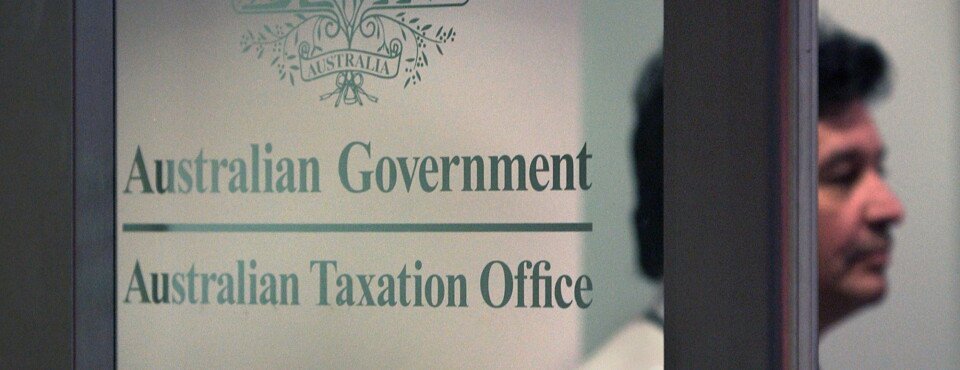
The Australian Taxation Office’s assertion that it can impose a withholding tax on royalties on outgoing payments from certain local software retailers contradicts OECD guidelines and ignores objections from the US government.
At an international tax conference in Washington, DC last month, Manal Corwin, director of the Organization for Economic Co-operation and Development’s Center for Tax Policy and Administration, emphasized the value of the OECD’s widely disseminated international tax findings. She and other speakers expressed hope that the current “constructive dialogue” on taxes and the digital economy will lead to common approaches from governments around the world and reduce the use of unilateral measures such as special taxes and unorthodox interpretations of long-standing rules.
The section of the OECD Model Tax Convention dealing with royalties (particularly paragraph 14.4 of the Commentary on Article 12) specifically addresses software distribution. It states that payments from the distributor to the software owner should not be considered royalties for tax purposes, regardless of whether the software is sold via tangible media (e.g. in a shrink-wrapped package) or via electronic transmission.
The Australian Taxation Office took the same view until it abruptly changed course in 2021 and issued guidance that payments under a software distribution license would be treated as royalties if the payer had the right to reproduce the software, even if it could only do so for the purpose of selling copies of the software to local buyers.
The US Treasury wrote to the Australian Treasury in early 2022 protesting the new guidance to no avail. The ATO issued updated guidance in 2024 to reflect the new guidance. Again, the US Treasury objected to the Australian Treasury, but the ATO did not budge.
Software is copyrighted material, but the typical buyer of software does not want to exploit copyright by selling copies of it. Instead, the buyer simply wants to use the software to handle their business or personal affairs.
When a software buyer purchases a shrink-wrapped package, payment for it is treated for tax purposes as proceeds from the sale of goods and not as a copyright royalty. More commonly, however, software is acquired by a buyer through a digital download from the cloud or server.
If the seller of the software so delivered is not the owner of the software, but is a distributor who has received the right to sell under a license agreement, the distributor will sell copies of the software, just as in the case of shrink-wrapped software packages. The only difference is that the distributor of digitally delivered software may need to make a copy in order to provide a copy to the buyer. Accordingly, the normal tax treatment of these sales is the same as sales of shrink-wrapped packages – not as licenses generating royalty income, but rather as sales of inventory property.
The ATO is currently pursuing proceedings against Oracle Corp., which have been stayed pending a mutual agreement procedure under the US-Australia tax treaty. Earlier this year, the ATO published a decision impact statement on the High Court’s August 2025 decision in favor of the taxpayer Commissioner of Taxation v. PepsiCo Inc. The ATO essentially said the decision would not change its approach to payments in intellectual property transactions.
This type of aggressive enforcement of gross withholding tax on cross-border payments for routine distribution activities sets a bad example for the rest of the world. There is no credible policy rationale for taxing sales of digitalized products more than physical ones, and an ATO rejecting the OECD commentary, two rounds of objections from the US Treasury and a negative Supreme Court decision signals that revenue is more important than principles.
As things stand, it appears that the only way for a non-resident software owner to make sales in Australia through a local reseller without being hit with withholding tax on royalties by the ATO is to sell shrink-wrapped copies of the software to the reseller. This makes no sense in the context of modern companies. The ATO should rethink its policy and rejoin the rest of the world in treating the ordinary distribution of downloaded software products as a sale of goods or services for tax purposes.
This article does not necessarily reflect the opinion of Bloomberg Industry Group Inc., publisher of Bloomberg Law, Bloomberg Tax and Bloomberg Government, or its owners.
Table of Contents
Information about the author
Jefferson VanderWolk, partner at Squire Patton Boggs, was head of tax treaties, transfer pricing and financial transactions at the OECD Center for Tax Policy and Administration.
Interested in writing? Check our Author Guidelines and submit pitches Insights@bloombergindustry.com.
https://news.bloombergtax.com/tax-insights-and-commentary/australia-tax-approach-to-software-distribution-sets-bad-example
