Two years after Elon Musk made the Memphis area the center of his artificial intelligence ambitions and rapidly built data centers and energy infrastructure, residents are grappling with unwanted impacts, including noise and emissions from natural gas-powered turbines.
Now, The public opposition to the SpaceXAI sites, known as Colossus and Colossus II, serves as a model for other communities across the country that oppose AI developments.
This week, New York Governor Kathy Hochul issued a one-year moratorium on building AI data centers in her state, drawing the ire of US President Donald Trump, a Musk ally.
And last week, New Jersey Gov. Mikie Sherrill passed a law to ensure data center operators pay a fair share for electricity rather than passing the costs on to residents and businesses.
More policy proposals, protests and litigation are underway, many directly citing Memphis and SpaceXAI, which was acquired by Musk’s defense contractor. SpaceXin February.
“If you consider the precedent Colossus set, it’s not a great precedent,” said Jigar Shah, the former director of the U.S. Department of Energy’s loan program office and a longtime energy entrepreneur. “It’s certainly a case study in what not to do in most other parts of the country. But from a capitalist perspective, they’ve been rewarded.”
Jason Haley of Southaven, Mississippi, is part of a class action lawsuit against SpaceX over power plant noise.
In June, SpaceX pulled off a record-breaking IPO, with AI and its Colossus I and II facilities at the heart of its growth story.
Google, Anthropic and Reflection AI have signed agreements with SpaceX to lease excess computing capacity at Colossus and Colossus II, deals worth up to $2.32 billion per month.
Residents don’t feel the same benefits. Several told CNBC that SpaceXAI never consulted them about their plans before breaking ground, even though it was clear the data centers would have a profound impact on surrounding neighborhoods.
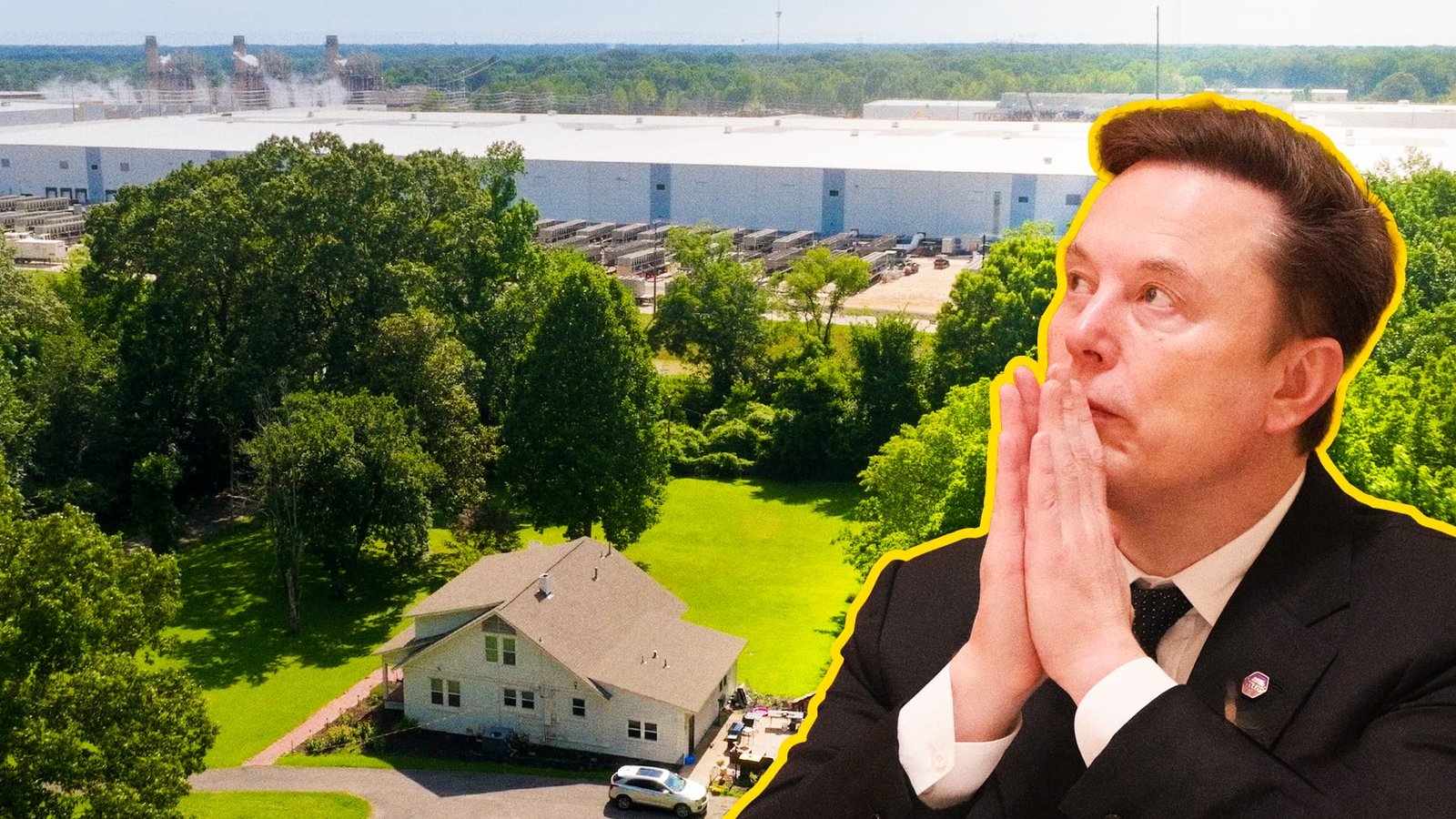
Today, the noise from Colossus II and its gas turbines is “like a form of torture,” said Jason Haley of Southaven, Miss., whose home is just a mile from the site. Southaven is part of the greater Memphis metropolitan area.
Table of Contents
The opposition is growing
Resistance to data centers is increasing, not only against xAI, but also in response to planned or ongoing developments Microsoft, Meta, Google, OpenAI and other so-called hyperscalers.
In May, seven in 10 Americans said they oppose building AI data centers in their region, according to a Gallup poll. Nearly half, or 48%, said they strongly opposed it.
Even Musk has acknowledged the public antipathy toward AI data centers and the power plants that power them.
“There are very few people who want a power plant in their backyard,” Musk said in an interview with JPMorgan CEO Jamie Dimon at SpaceX’s pre-IPO roadshow. “For example, if we wanted to double the United States’ electricity consumption,” he said, “we would have to build twice as many power plants. Most communities aren’t particularly keen on that.”
Musk and SpaceX did not respond to multiple requests for comment about the backlash to their Memphis construction.
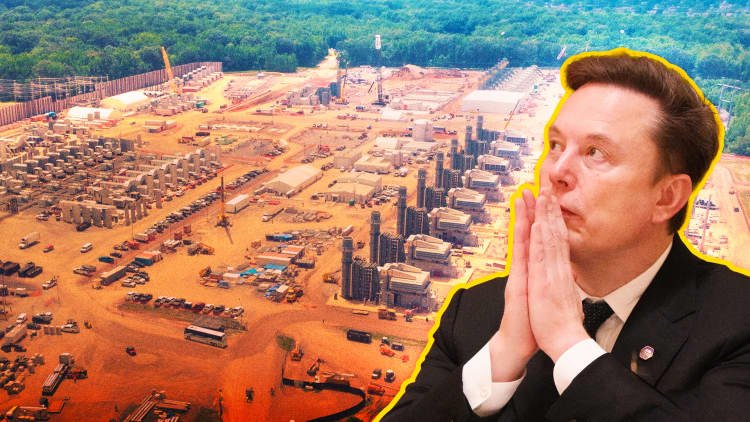
SpaceX is building a massive gas turbine power plant in Southaven, Mississippi, to power its data centers in the region.
SpaceXAI has purchased over 1,100 acres in the Memphis area for its data centers and power plant.
The data centers were originally built to train and run xAI’s Grok AI models and chatbot, which sparked controversy.
Data centers have been around for decades, but a construction boom began after generative AI sparked an explosion in demand for computing and power. The facilities typically require huge amounts of land, energy to run the chips and servers inside, and water to cool high-tech equipment.
For all their complexity, once constructed, data centers do not require a large workforce to operate and do not always generate large numbers of new jobs or large tax revenues.
Memphis residents and climate advocates are sharing their experiences as a cautionary tale and using lessons learned to help other communities advocate for updated regulations or more favorable deals with data center developers.
Their statements have directly and indirectly influenced the policies, lawsuits, elections and movements that are taking shape beyond Memphis.
Communities in nearby Olive Branch and Jackson, for example, updated their zoning laws, citing a desire to avoid the pitfalls that Memphis residents faced when Musk moved to the city.
In June, Utah Senate President Stuart Adams lost in the Republican primary after supporting a proposed data center backed by investor Kevin O’Leary. Two other local officials who supported the project also lost in the primary election.
Whitehaven, Tennessee resident Loretta Thornton’s home is right next door to xAI’s Colossus 2.
Musk’s Colossus I data center was completed in just 122 days, he said in a September 2, 2024 post, announcing that the data center had gone online.
In its first year of operation, SpaceXAI paid $25 million in taxes, making it the second-largest tax-paying property in Shelby County after FedEx, said Memphis Mayor Paul Young, who helped bring the data center business to the county.
“From the beginning of this project, we have been thinking about how we can mitigate the potential negative impacts and increase the positive impacts,” Young said. He acknowledged that SpaceX hasn’t yet delivered on everything it promised, such as the delayed construction of a water recycling plant that would reduce the company’s need for huge amounts of water to cool equipment at Colossus.
Residents in the Memphis area told CNBC that their water and electric bills increased after SpaceXAI moved to the city.
Memphis Light Gas & Water said its water and electric rates were “not impacted” by SpaceXAI.
A “plan to increase electricity rates by 4% for three years starting in 2024 is not due to data center utilization,” a spokesperson for the utility told CNBC via email.
Litigation
Last year, Haley joined a neighborhood group called the Safe and Sound Coalition to conduct noise surveys, raise awareness and push the company and local politicians for change.
In March, Southaven Mayor Darren Musselwhite promised to step up noise enforcement, but told Haley in emails read by CNBC: “You might want to think about selling your house.”
Musselwhite told CNBC in an email Thursday that he has “worked countless hours to address noise complaints” and “never told a citizen to move.”
SpaceXAI’s Colossus data center in Memphis, Tennessee, on June 17, 2026.
Andrew Evers, CNBC
Haley and other Southaven residents sued SpaceX in a proposed class action lawsuit filed in June of this year, claiming the company caused a “public nuisance” with the noise from Colossus II.
The neighbors of Microsoft’s Fairwater Data Center in Mt. Pleasant, Wisconsin, followed in their footsteps and filed a proposed class action lawsuit this month over noise issues.
In April, the Southern Environmental Law Center and Earthjustice sued Musk’s company on behalf of the NAACP in federal court in Mississippi. They allege the company violated the federal Clean Air Act by using dozens of gas turbines to power its facilities without required permits and without pollution controls put in place from the start.
The types of SpaceXAI turbines used in Memphis can emit thousands of tons of smog-forming nitrogen oxides every year, according to the manufacturers’ data sheets. SpaceXAI also emits particulate matter called “PM 2.5” or “particulate pollution” during construction and operation.
NAACP lawyers asked a judge in May for an injunction to stop SpaceX from using dozens of turbines at Southaven. The US Department of Justice quickly intervened and asked the court to dismiss the lawsuit.
As part of its motion to intervene last month, the Justice Department said SpaceXAI’s technology had been used in American military operations in Iran and was now critical to national security. They also argued that the lawsuit “threatens” America’s national, economic and energy security.
SpaceX is defending itself against the NAACP lawsuit, arguing that the turbines currently on site are temporary and there are plans for approved turbines with environmental protections.
Whitehaven, Tennessee resident Loretta Thornton lives next door to xAI’s Colossus 2 data center.
Andrew Evers, CNBC
The NAACP in January released a guide for communities on how to protect themselves from “dirty data,” as well as a framework that companies can follow to avoid clashes with neighbors like SpaceXAI in Memphis.
Attorney Abre’ Conner, who directs the NAACP Center for Environmental and Climate Justice, said SpaceXAI and other companies are moving into areas already affected by industrial pollution, “deepening the sacrifice zone that many of these community members have struggled to escape for so long.”
In Whitehaven, Tennessee, where the majority of residents are Black, longtime resident Loretta Thornton said she invested some of her retirement and savings into remodeling her home, which abuts the Colossus II fence line.
She said proposals to sell and move away seemed unfeasible, especially given rising housing costs and interest rates.
“You just have to endure it. And that’s all I do,” Thornton said. “I know I can’t sell my property. Who’s going to want to buy it if they live next to this thing?”
—CNBC producer Andrew Evers contributed reporting.
Choose CNBC as your preferred source on Google and never miss a moment from the most trusted name in business news.
https://www.cnbc.com/2026/07/16/elon-musk-memphis-ai-colossus-data-center.html
