The Ukraine War changed the way militaries think about autonomous systems.
In recent years, Ukraine has often proven more effective by using off-the-shelf technology adapted for military purposes than purpose-built systems that took decades to develop. As a result, the country has transformed its defense industry into an ecosystem of hundreds of companies, including many private startups, that develop and deploy autonomous systems designed to be expendable – an approach that has sparked a broader shift in defense technologies.
Today, a large number of affordable, software-defined weapons can compete with a small number of expensive weapons, a concept known as mass affordable weaponry, and the Department of War (DOW) has taken note. The U.S. military is now moving toward an affordable, mass-market model in which autonomy is not a hardware feature tied to specific platforms, but rather a software capability that can be deployed across various fleet types, from maritime to air. This multi-platform software approach reduces vendor lock-in and increases agility, allowing the DOW to stay ahead of threats in a changing landscape.
“In today’s operational environments, threats emerge and spread faster than traditional cycles can respond,” said Qasar Younis, co-founder and CEO of Applied Intuition. “Combat aircraft need autonomy on dozens or even hundreds of platforms simultaneously while maintaining safety, precision and reliability. That’s what Drone Stack was designed for.”
Table of Contents
Get to know Drone Stack
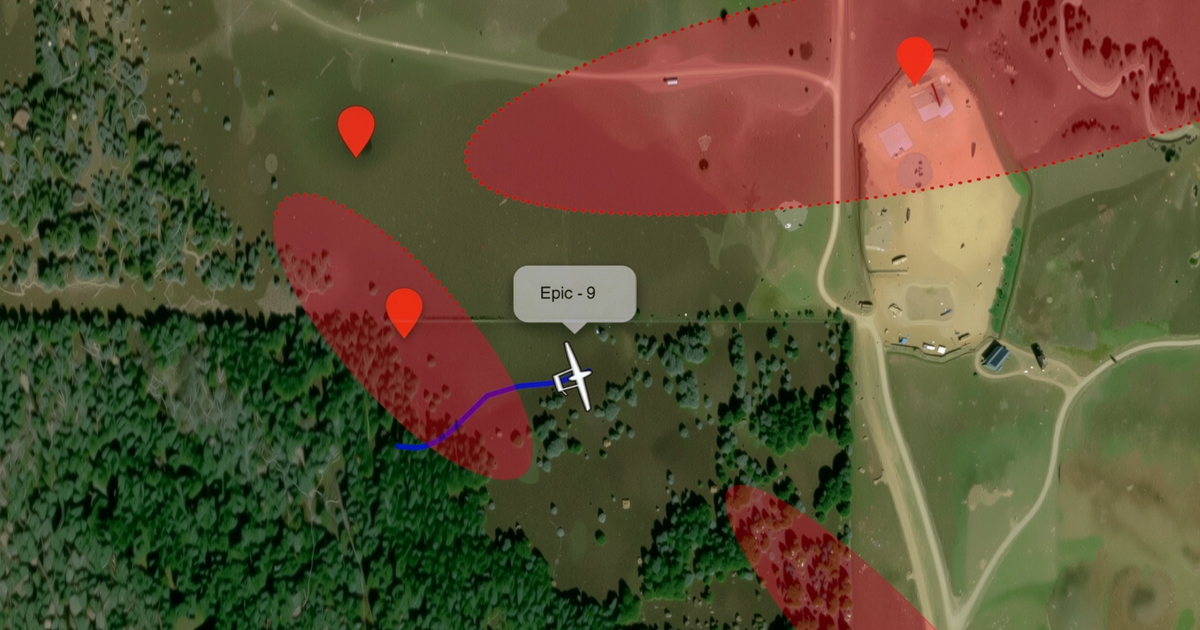
Drone Stack is Applied Intuition’s defense autonomy solution that enables intelligence, surveillance, reconnaissance (ISR) and attack capability for any aircraft. It is based on the same approach that has proven successful in all of the company’s commercial autonomy products: best-in-class autonomy software, an operating system designed for rapid integration, and development tools that shorten the iteration cycle from months to days or even hours.
Most companies have approached the problem vertically. You build an aircraft, integrate the autonomy specific to that airframe, and sell the complete system. The software is tightly coupled to the hardware, making it difficult to adapt to new platforms or configurations. If the customer wants the capability on another aircraft, the integration process begins again.
Applied intuition takes the opposite approach. Drone Stack was designed to be hardware independent from day one. Building on a software-defined approach proven in the commercial sector (driverless 18-wheelers with Isuzu, autonomous mining vehicles with Komatsu, global vehicle operating system with Stellantis), Applied Intuition engineers have developed an intelligent platform. As a result, Drone Stack supports rapid integration with software-in-the-loop simulation, hardware-in-the-loop testing, a dedicated flight test facility and a complete development environment that reflects on-site deployment.
It includes a hardware-agnostic autonomy stack that can run on any platform with sufficient computing power, from high-end tactical systems to commercial quadcopters. This allows it to handle mission planning, autonomous navigation, multi-aircraft coordination, target detection and tracking through embedded Automated Target Recognition (ATR) models, and precise deployment according to defined rules of engagement.
Global data embedded in the drone
Another differentiator for Drone Stack is the embedded computing power.
Applied Intuition has nearly a decade of data from all vehicle shapes that go into its model – a proprietary database it can embed into drones, allowing them to fly autonomously even in environments without GPS.
This embedded computing platform, called Axle, gives every aircraft autonomy across all environments and connectivity levels. The functionality is available in multiple form factors, from a rugged chassis for larger platforms to smaller form factors optimized for size, weight, performance and cost. Both are based on the same validation and security standards that Applied Intuition uses for all of its commercial products.
The result is software that allows any drone to fly in any conditions.
“By deploying our autonomy software on a pre-validated, embedded hardware circuit board, we eliminate the software integration burden for customers who simply want to focus on building a great aircraft,” says Matthew Niemiec, director of Aerial Autonomy at Applied Intuition’s Drone Center in Fort Walton Beach, Florida. “This model directly reflects the commercial automotive sector, where Tier 1 suppliers deliver specialized subsystems to OEMs. It is exactly the approach needed to achieve true economies of scale in defense and deliver superior capabilities at unmatched affordability.”
The Automated Future of Warfare
Drone Stack is expanding and is actively used by commercial and government customers. Affordable masses are achievable now and can be secured for the future. As a hardware-independent and flexible system for ISR and strike missions, Drone Stack will continue to enable its users to move at the speed of modern warfare.
“Drone Stack is unique because of its modularity, rapid portability and the fact that it works on any aircraft,” says Niemiec. “Ultimately, it accomplishes the mission.”
https://www.appliedintuition.com/blog/drone-stack-software-defined-warfare
