It started when no one can agree on what to do with Kimi, a free, open-source model that Chinese AI company Moonshot launched last week. It appears to rival the intelligence of models from OpenAI and Anthropic, which are anything but free.
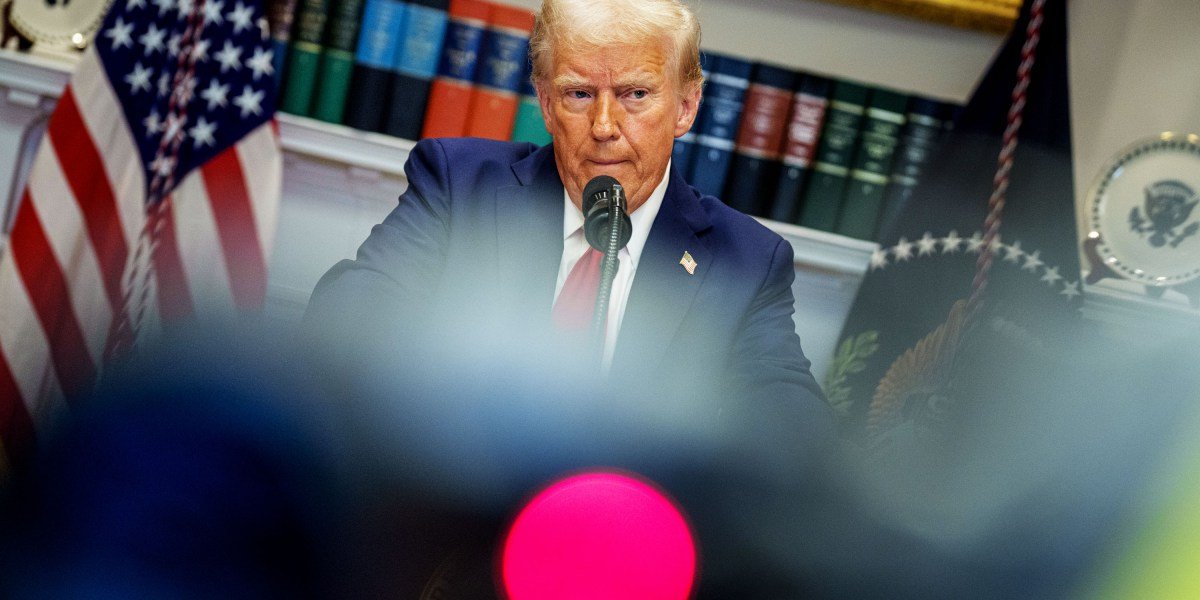
Kimi and other Chinese models like her pose a real problem for Trump. And they divide the best AI strategists in his environment into factions. Every time a new smart, free model from China like Kimi comes to market, U.S. companies see less reason to spend money to access models from Anthropic or OpenAI. Given that enthusiasm for these and other AI companies accounts for a large portion of economic growth, China’s AI models pose both economic and political problems for the president. They are “a threat to a government that really doesn’t want any more bad news from the economy,” Carnegie Endowment member Anton Leicht wrote on X. They have already roiled U.S. stocks.
What should Trump do? First, consider that this all comes just a week after New York imposed the country’s first federal ban on new data centers. Distrust of AI companies is growing, and I can imagine that a sizable portion of Americans would have little sympathy for OpenAI or Anthropic as they push back against cheaper competitors, and would say that it is not the government’s job to protect their interests.
On this point, they would see a hint of agreement (and actually just a hint) with David Sacks, who on July 19 criticized leading AI companies that “want the government to eliminate their open source competition.” He has also argued that Chinese AI models have become popular because they have fewer restrictions on how people can use them (aside from built-in government censorship).
However, Sacks is unemployed. He no longer has a formal role as an adviser to Trump, and his position that more open AI is better has largely been replaced in the administration by a position that sees a greater role for government intervention. The idea behind this view is that the government needs to control how AI models are used because they have become powerful enough to pose a threat to national security.
This position has driven the White House’s new review process, which aims to verify the safety of AI models before their release. Dean Ball, a former Trump AI adviser who now works for OpenAI, criticized it over the weekend as a “de facto licensing system for frontier AI.” Ball predicted that Trump could solve his Chinese open source problem with a little soft power, perhaps by making U.S. companies afraid to use models like Kimi. Responding to this was Michael, who along with Defense Secretary Pete Hegseth was the agency’s main liaison to AI companies. Michael called Ball the AI industry’s “top village idiot” and bristled at the suggestion that the government was quietly pressuring companies rather than, as Michael put it, going through “the democratic process and not some deep state plan.”
How a model like Kimi became so good was not taken into account in the discussion. For much of the Biden administration and even early in the second Trump administration, keeping China from becoming the front-runner was a priority. Those export controls have been relaxed — Trump made the controversial decision to allow Nvidia to sell more chips to China in exchange for the U.S. government taking a cut — and the government has alleged that chip smuggling has occurred. Still, China has limited computing power, and it’s not clear what chips the company behind Kimi used to train the model.
It’s possible that the process involved some distillation, a practice in which AI models are trained on the results of existing AI models. OpenAI and Anthropic have long complained that Chinese AI companies are doing this and have asked the government for help to stop it. They got it in April, when the Trump administration announced a series of efforts to curb the practice.
But Kimi is out there and free, and it’s almost as good as the anthropic model that the U.S. government deemed so powerful that it was briefly shut down because it threatened national security. The weekend’s sparring suggests that many in Trump’s circle view this as a wake-up call. But no one can agree on why.
https://www.technologyreview.com/2026/07/20/1140675/chinas-ai-models-have-trumps-ai-world-at-war-with-itself/
