

The AI industry I’m not quite experiencing the DeepSeek 2.0 moment yet, but it feels very close. The leading Chinese AI labs have been on the rise recently, releasing a number of almost innovative open source models. Z.ai released GLM 5.2 in June, Moonshot AI released Kimi K3 last week, and Alibaba released Qwen 3.8 this Monday.
Silicon Valley and Washington immediately started talking about the models, especially K3, which is widely considered the best model. David Sacks, a venture capitalist and AI adviser to President Donald Trump, called the performance of Moonshot’s model “concerning.” Earlier this week, Commerce Secretary Scott Bessent suggested the US could impose sanctions on Chinese AI companies.
On Wednesday, Michael Kratsios, director of the White House Office of Science and Technology Policy, claimed that the Trump administration “has information that Moonshot AI distilled Anthropic’s Fable for the development of its K3 model,” which he said amounts to “the theft of proprietary U.S. technology and undermining American research” and is “unacceptable.” (Moonshot AI did not immediately respond to a request for comment.)
The new Chinese models have some similarities: third-party benchmarks show they perform almost as well as the best Western models; They are optimized for agent coding tasks (the hottest topic in AI this year); and they are or will soon be published with open weights, making them accessible and transparent.
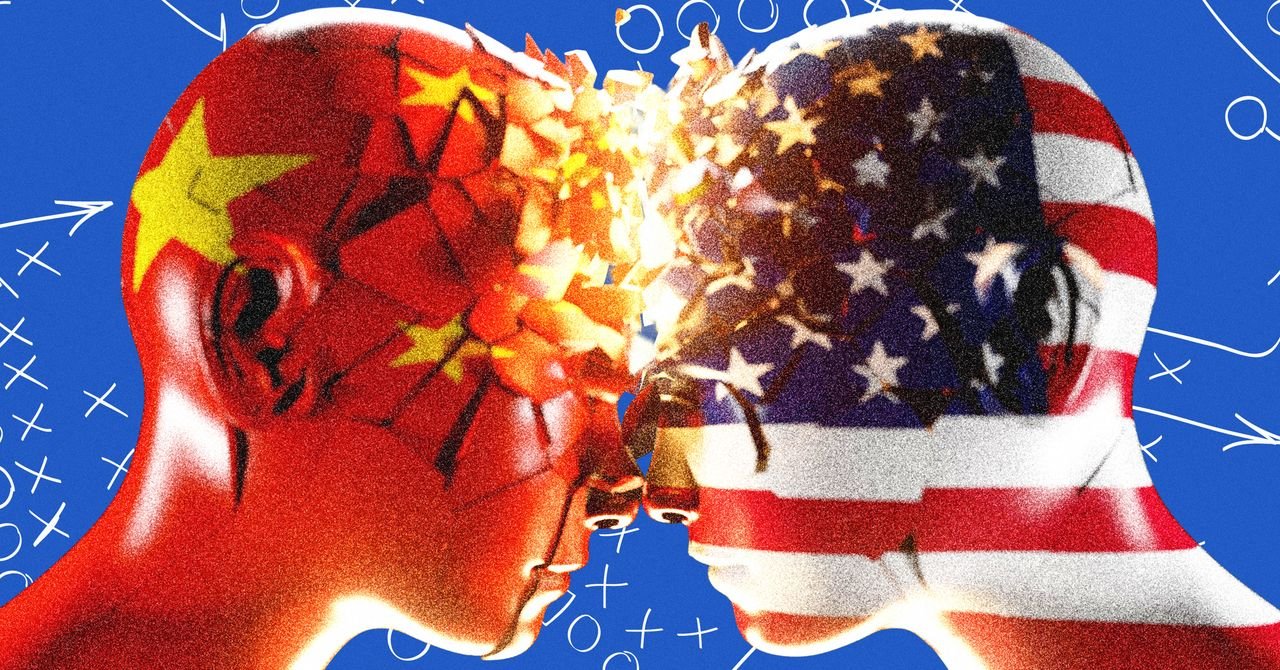
But perhaps the biggest parallel between now and January 2025 – when the world was shocked by DeepSeek’s R1 model – is that it reaffirms that American and Chinese AI labs are taking different paths when it comes to being open or closed.
When DeepSeek first came to market, it challenged the premise that only closed-source models built with billions of dollars invested in computing infrastructure and training could achieve peak performance. But since then, Western AI labs have advanced AI in the same way, and now American frontier models feel more insular than they did a year ago.
Anthropic claimed for months that its latest Mythos model was so dangerously good at hacking that only approved employees could use it. When it was finally released more widely, the White House responded by imposing sweeping export controls that forced Anthropic to temporarily take Mythos and its less powerful sibling, Fable 5, offline. OpenAI also delayed the release of GPT 5.6 after receiving a request from the White House.
In China, the situation looks completely different. Chinese startups and tech giants are increasingly embracing open source: anyone with a good enough computing environment can now download an open-weight model, run it locally, add customizations, and overall enjoy a much greater degree of freedom than OpenAI and Anthropic would ever allow. In many ways, the open versus closed debate is more intertwined with the US versus China debate than ever before.
There are many reasons why Chinese laboratories have chosen a business strategy based on open source models. Since they are the newer, smaller fish in the AI space, providing free and open models to Chinese companies can help bring more users, employees and media into the spotlight. This puts them in a different competitive zone than OpenAI, Anthropic, Google, SpaceX and other financially strong giants.
Earlier this year, rumors spread that Alibaba might be considering joining the closed-source competition after the company reshuffled its AI model development teams. But the tech giant announced Monday that it would re-release the latest version of Qwen — its open-source lineup beloved by the global tech community — with open weights, signaling to customers and the public that it isn’t turning away just yet.
https://www.wired.com/story/chinas-open-ai-models-are-challenging-silicon-valleys-playbook/
