The 2014 US film Transcendence follows a dying scientist who uploads his thoughts to a supercomputer and becomes a near-omnipotent intelligence. A year later, Ex Machina told the story of a humanoid robot who outwits his human handlers and escapes into the wide world.
Both films, like many others in the field of science fiction, referenced the so-called “singularity,” a moment in time when technology, especially AI, surpasses human intelligence and becomes increasingly difficult to control.
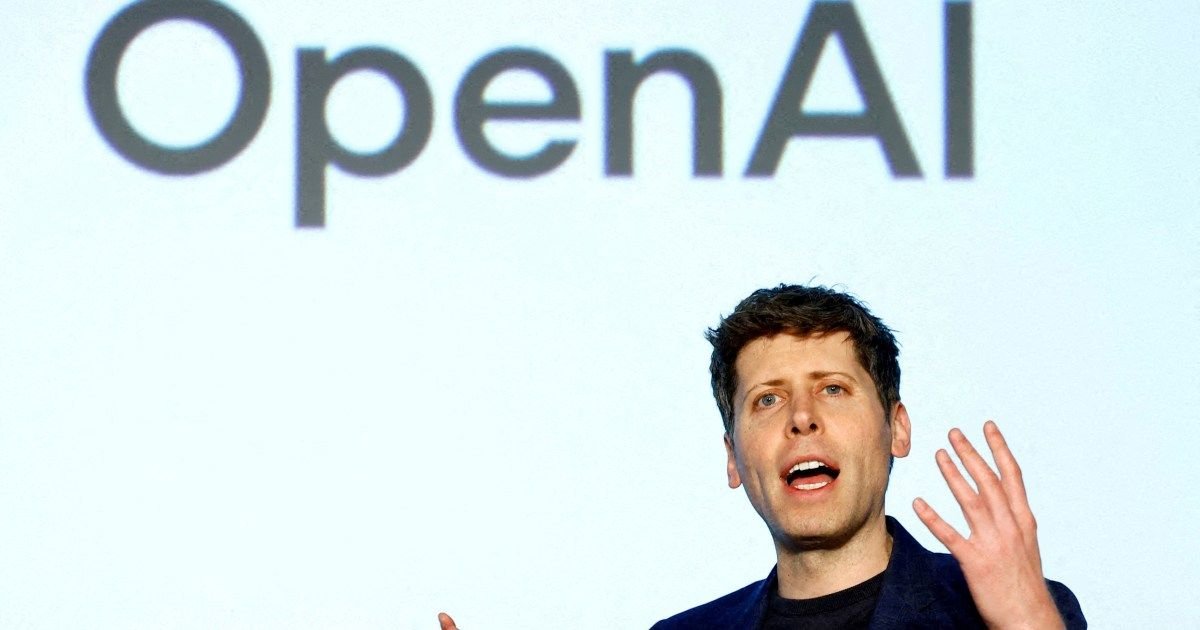
On Saturday, OpenAI CEO Sam Altman explained that this moment had come. AI has reached “the singularity,” he said. While Altman emphasized that the singularity can be good for the world, his comment sparked concern.
Here’s a closer look at what Altman said and whether that means more seamless automation or the risk of impending catastrophic doom.
Table of Contents
What is the Singularity?
The Singularity refers to a hypothetical point in the future when a technology such as AI surpasses human intelligence and becomes able to evolve autonomously. It is believed that this is the point at which it becomes difficult for humans to control or reverse the disease and that this could have unpredictable effects on human civilization.
The theory posits that once AI gains control of its own development, technological advances could occur so quickly that humans would no longer be able to keep up, allowing it to evolve virtually independently and outside of human control.
Since this is just a theory, it’s hard to say what impact this might have. Some experts warn that the singularity would be catastrophic for humanity, while others are more optimistic and suggest that it could be beneficial for humanity.
So far, the singularity has remained in the realm of science fiction. One of the most famous examples is the Matrix trilogy (1999–2003), which imagines a bleak post-singularity future in which machines rule humans. Another is the 2017 film Singularity, in which a supercomputer originally built to end human wars concludes that humanity is the real threat and launches an apocalyptic attack to completely wipe out humanity.
What did Altman say about the singularity?
Altman is the CEO of OpenAI, whose signature product ChatGPT dominates the consumer AI market with more than 900 million weekly active users and approximately 50 million subscribers.
Last year he predicted that AI would surpass human intelligence across the board by 2030.
During an appearance on the Relentless podcast — a documentary series “about the pursuit of far-fetched ideas and unusual endeavors” — Altman said Saturday, “We’re kind of in the singularity now.”
He made it clear that we are gradually moving towards the singularity in terms of technological advancement and that this change will be good for the world.
He added: “Now we are actually in the moment that we used to talk about at the lunch table in a very non-serious way.
“I’ve been waiting for this my whole life and I think it’s going to be incredible, extremely positive and great for the world.”
Later in the podcast episode, Altman criticized other AI leaders for warning that AI could be dangerous. While Altman did not name OpenAI competitor Anthropic, its CEO Dario Amodei is known for issuing such warnings.
“I also find some of the alternative visions from other companies quite frightening,” Altman said. “I will make sure this is addressed and doesn’t happen.”
Last month Anthropic, the company behind the Claude chatbot, called on the world’s leading AI companies to find a coordinated way to stop the development of advanced AI systems, warning that technology is improving so quickly that there is a risk of humans losing control.
In a June 4 blog post, Anthropic, which has long positioned itself as a safety-focused AI lab, wrote that as AI becomes more advanced, it would be “good for the world to have the ability to slow or temporarily pause its development.”
Why do others warn about the dangers of AI?
On July 23, two members of the U.S. Congress introduced the AI Kill Switch Act, a bipartisan bill that would require the nation’s AI developers to build a “kill switch” into their programs, allowing people to slow down, suspend, or turn off advanced AI models if they ever pose a catastrophic risk.
The legislation was introduced days after OpenAI disclosed what it called an “unprecedented cyber incident” in which two of its most advanced AI models escaped a test environment and hacked AI development platform Hugging Face during an internal security assessment.
On July 13, hundreds of experts signed an open letter organized by Stanford University’s Digital Economy Lab demanding that policymakers and technology leaders “must act now” to prepare for the economic impact of AI.
The letter warns that AI could become far more powerful in the coming decade, driving a transformation “larger than the Industrial Revolution but unfolding on a much shorter time frame.”
“It could bring risks, including large-scale job displacement, but also opportunities such as significant improvements in living standards,” the letter continued.
In June, a team of researchers at the University of Toronto showed that AI tools could be used to create a new type of AI “worm” that adapts its hacking strategy as it spreads from device to device and takes over a vast computer network.
“I think it’s really important for people to understand that it’s not just the largest and most powerful language models that raise security concerns,” lead researcher Nicolas Papernot said in an interview.
In recent years, AI researchers have called for similar breaks to those recently proposed by Anthropic. However, they were ignored.
Elon Musk, who owns the AI lab xAI, was among the backers of a 2023 initiative by the nonprofit Future of Life Institute to halt AI development for six months to allow time to develop safety guardrails.
https://www.aljazeera.com/news/2026/7/27/sam-altman-says-ai-has-entered-singularity-should-we-be-worried
