Jack Manning knows firsthand the emotional and practical challenge of remembering a loved one in a way that feels appropriate. After losing his sister more than a decade ago, he and his family spent hundreds of hours fundraising to organize a volunteer project in their sister’s honor.
“It took years of bake sales and $5,000 to raise money to honor her memory in a way that was meaningful to us. We’ve seen how much effort it takes to create a memorial with impact,” he told CBS News. “I thought there’s certainly a way technology can help us.”
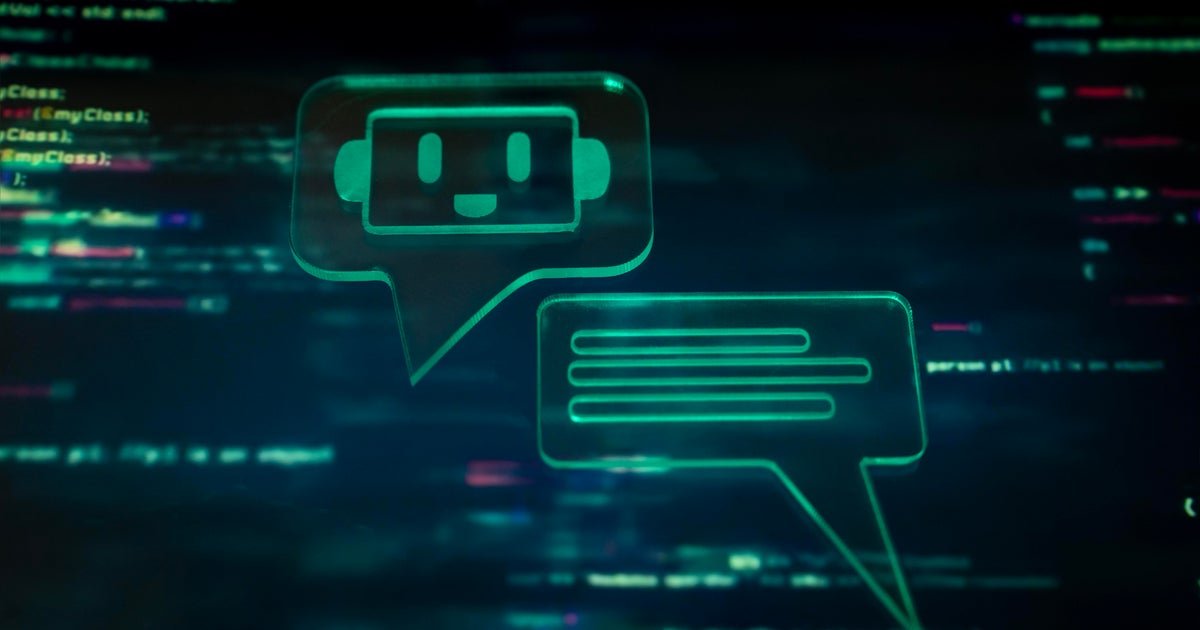
Enter artificial intelligence. Manning, a doctoral student in information science at the University of Colorado Boulder, is currently studying the use of large language models (LLM) to create what some call “generative ghosts” – AI chatbots that are trained on a dead person’s social media posts, emails, audio and video recordings, photos and other data to create a digital simulation that family and friends can interact with after the person’s death.
“It’s definitely a growing sector. We’re seeing a growing interest in how AI and grief are linked,” Manning said.
Table of Contents
A “lifelike” avatar
A number of startups now offer these services, including Séance AI, You, Only Virtual and re;memory. For example, Re;memory allows users to create lifelike avatars of their loved ones based on photos and voice recordings.
“By allowing you to interact with a lifelike digital avatar of your loved one, you can find solace in expressing your love and forgiveness, bridging the cherished moments that matter to you,” the company’s website says. The tool “allows you to see and hear your parents as they were in their beloved photos, rather than just imagining them.”
In a paper published in June in the Association for Computing Machinery by lead researcher Jed Brubaker, an associate professor at the University of Colorado Boulder who studies sociotechnical systems, Manning and his colleagues observed study participants’ reactions to the AI ghosts of the people they had lost.
“Participants completed a simple survey in which they shared positive memories of a loved one and talked about their upbringing and core characteristics,” he explained. “And they were fascinated by how much an LLM could achieve with so little information.”
According to Manning, there are two basic types of generative minds. A simple “death bot” might be limited to verbatim the statements recorded by a loved one, but would not be able to simulate the deceased’s manner of communication.
““You can get a reasonable, if thin, representation of a loved one with a single prompt on a free ChatGPT account,” Brubaker said. “In the same way that you might ask him to say, ‘Talk to me like Shakespeare,’ you can say, ‘Talk to me like my grandfather – here are some details about how he behaved.'”
Continuation of the conversation
Generative spirits go much further, recreating the voice and manner of communication of the deceased, offering the opportunity to interact with the living and even respond to questions in a recognizably familiar way.
“They are able to say things that a loved one might not have said. Ghosts are AI models that can speak for someone and perhaps answer a question they didn’t answer when they were alive,” Manning said.
The costs for consumers is variable. Re;memory charges $24 per month to create three custom avatars. For $19.99 per month, Sceance AI users can create animated images of their loved ones who can smile, make gentle head movements, and speak in the voice of the deceased.
The researchers found that study participants generally preferred communicating with an AI “ghost” of their loved one in the first person, with the chatbot acting as a direct reincarnation, rather than an avatar speaking in the third person. A distraction: When a bot used an endearing term like “champ” or “buddy” that their loved one wouldn’t normally say, a user wanted to end the interaction.
Generative minds have some similarities with so-called deepfakes, which can be used to mislead the public by falsifying the speeches and actions of a public figure. But Brubaker said there is a clear difference.
“The basic premise of a deep fake is the intent to deceive,” Brubaker said. “The intent of generative minds is not to deceive another person.”
Edited by Alain Sherter
More from CBS News
Go deeper with The Free Press
https://www.cbsnews.com/news/ai-ghost-chatbots-deceased-loved-ones/
