

By Adam Ashton, CalMatters
This story was originally published by CalMatters. Sign up for their newsletter.
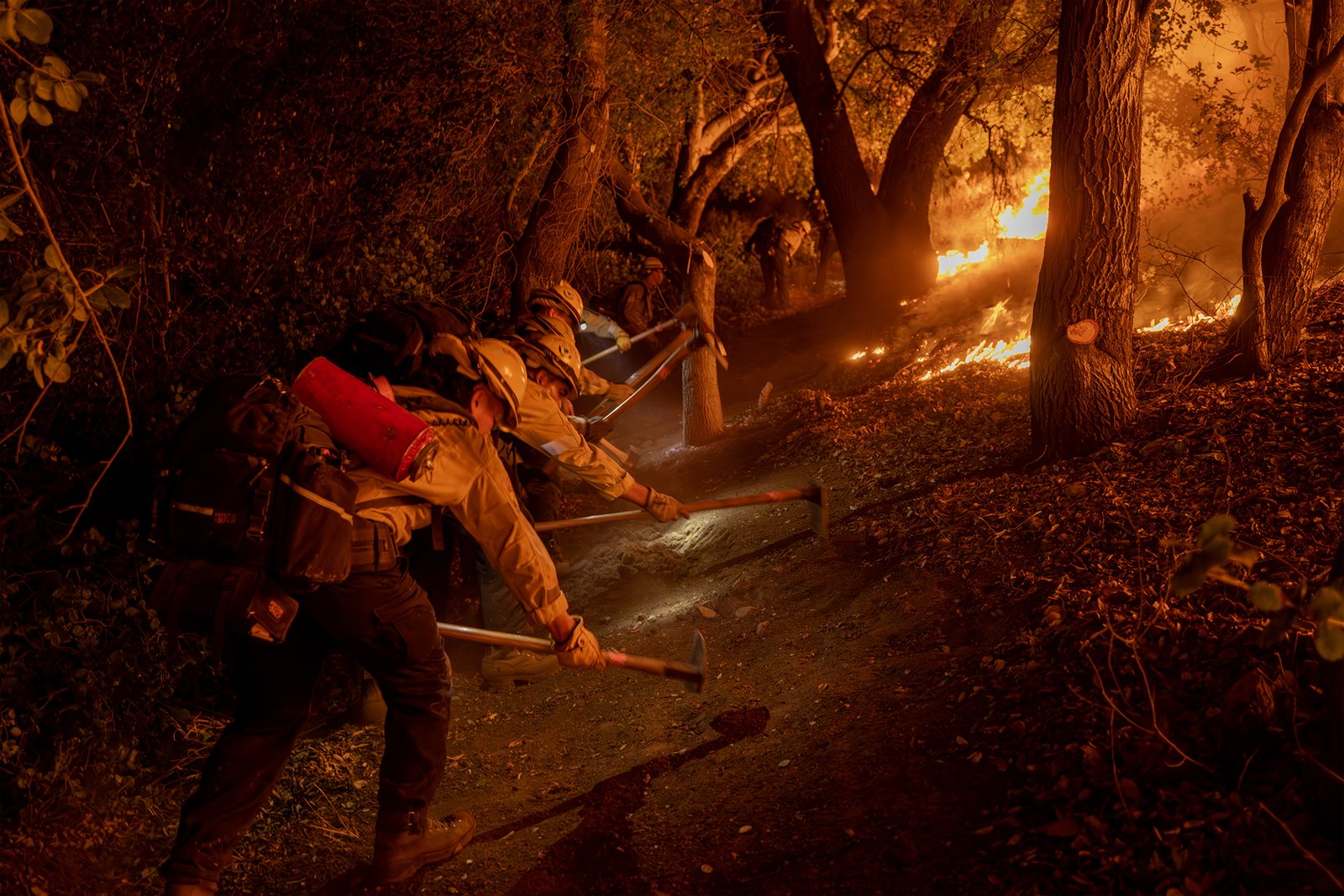
Lawmakers want to make wearing a California police or firefighter uniform more lucrative.
Three bills are being proposed that would either increase salaries for state firefighters or increase retirement benefits for public safety personnel.
Supporters say the measures are intended to compensate people who risk their lives for others and are at risk of career shortening because of the nature of their work. The proposals are moving through the legislature with bipartisan support, with an overwhelming majority of lawmakers voting in favor of them.
“Every day has a price, and we pay it with our lives,” Darrell Roberts, president of the California Professional Firefighters union, said at a recent hearing where he supported a bill that would allow public safety workers to retire at 55, two years earlier than currently allowed. “This job is extremely physically and mentally demanding and the requirement to work until 57 not only pushes us to our limits, but beyond them.”
The proposals involve significant costs and could potentially increase annual spending by hundreds of millions of dollars. They could also add billions of dollars to the state’s long-term liabilities. That could make it difficult to sell to Gov. Gavin Newsom as the state expects deficits in the near future.
The two pension bills in particular bring back memories of California’s pension crisis during the Great Recession, when large funds lost tens of billions of dollars. At the time, taxpayer advocates drew attention to the benefits that former Gov. Gray Davis had signed into law just a few years before the crash when the stock market was booming.
Marcia Fritz, an accountant and longtime California pension watchdog, said the current push to expand public safety pension benefits is similar to the law signed by Davis. During Davis’ term, California’s pension funds benefited from a rapid stock market boom driven by technology companies, and lawmakers expected the good performance to continue.
Today, the two largest pension funds – CalPERS and CalSTRS – have not yet fully recovered from their recession losses. But they exceeded their earnings targets, thanks in part to a stock market once again buoyed by the tech sector.
For Fritz, the lawmakers pushing the bill are “the Kool Aid so the markets will never go down,” she said. “We are the ones who pay for it with reduced services.”
California cut benefits for workers hired after 2012, when former Gov. Jerry Brown signed a law that required workers to work longer before receiving a full pension and required them to bring in more money to fund their own pensions.
CalPERS has estimated that Brown’s pension reform saved government agencies $4 billion in its first decade and predicts it will reduce their spending by another $24 billion over the next decade.
For tax advocates like Fritz, this is a sign that the law is working and should continue to exist. For public safety unions, this means government agencies have the ability to increase benefits without fully repealing Brown’s Law.
The future bills would:
- Allow public safety employees to retire at age 55 instead of 57. House Bill 1383 would also allow unions to negotiate more generous pension formulas that would give public safety employees up to 3% of their uniform pay each year. And it would increase the cap on annual retirement income by nearly $60,000 to $249,000 a year.
- Create a new deferred retirement program for California Highway Patrol officers and Cal Fire firefighters. AB 1054 is intended to incentivize officers and firefighters to continue working later in their careers by allowing them to accumulate money that they can cash out in a single lump sum upon retirement.
- Increase the salaries of Cal Fire firefighters by recommending a new formula for their raises. AB 2129 would encourage the governor’s office to bring its compensation closer to — but not necessarily equal to — the average of the 20 local fire departments.
Table of Contents
How much do they cost?
The bill, which would allow police and firefighters to retire earlier, poses the largest potential cost, requiring $282 million in additional annual contributions to the California Public Employees Retirement System and increasing its long-term liabilities by $4.8 billion.
The price tag would rise if cities, counties and other local government agencies agreed to offer more generous pension formulas for police and firefighters, as the bill requires. If that happens, CalPERS estimates it would cost $353 million in additional annual contributions and further increase the fund’s long-term debt.
These estimates do not take into account the 20 county pension systems separate from CalPERS.
The potential costs are one reason California cities and counties are opposing the measure. “We certainly support strong pension benefits, but those benefits must remain sustainable and fiscally responsible for our local governments,” Johnnie Pina, a lobbyist for the League of California Cities, said at a recent Senate hearing.
It is less clear what the other two measures will cost.
Supporters of the bill, which would give CHP officers and Cal Fire firefighters access to an alternative retirement investment program during their final five years of service, say it is intended to be cost-neutral, even though similar plans from cities and counties have driven up costs. The bill would require CalPERS to evaluate the program every five years, which union officials say would give lawmakers the opportunity to make adjustments if they find unintended drawbacks.
The measure, which would require Newsom to increase salaries for Cal Fire firefighters, carries uncertain costs because it is worded to allow flexibility for the governor’s office.
It encourages the governor to negotiate “in good faith” to bring Cal Fire compensation closer to what local governments pay, but does not require it. A 2023 state compensation survey found that local fire departments pay firefighters between 11% and 29% more than Cal Fire.
“Instead of being the lowest paid, we’re bound to be somewhere in the middle,” firefighter union lobbyist Terry McHale told lawmakers at a hearing earlier this year when the bill becomes law.
Last year, Newsom rejected a similar measure that was more explicit about demanding an increase in Cal Fire’s salaries. Newsom wrote in a veto message that this would “create significant cost pressures for the state and bypass the collective bargaining process.” Officials estimate it would have cost between $373 million and $609 million in the first year.
Cal Fire’s firefighters union essentially wants what only one other group of state employees has: raises based on salaries from other government agencies. CHP officers receive annual raises based on the salaries of several other major California police departments. Every other state employee union must negotiate compensation with the governor.
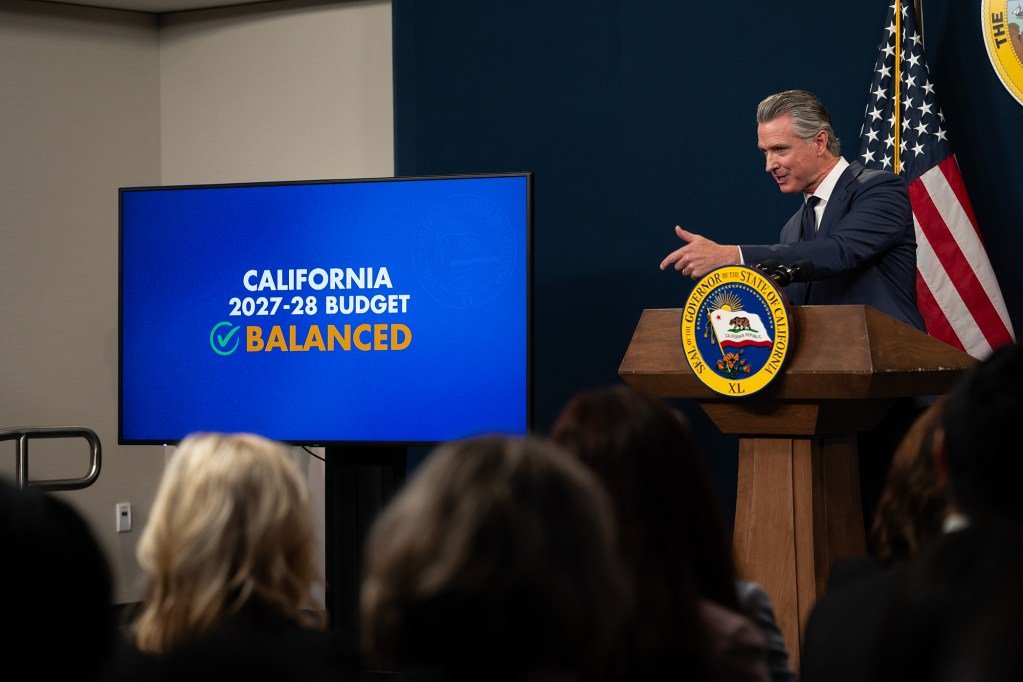 Gov. Gavin Newsom addresses the media during a news conference at the Capitol Annex Swing Space in Sacramento on May 14, 2026, to introduce his revised 2026-27 budget proposal. Photo by Miguel Gutierrez Jr., CalMatters
What will Newsom do?
All three measures face a major hurdle later this month in the Senate Appropriations Committee, which has the power to shelve bills due to cost concerns. If they clear this committee, the bills have a good chance of getting through to Newsom.
At the recent hearing, lawmakers said increasing incentives to recruit and retain first responders was so important that they would cut other programs to make room for the additional spending. They praised emergency responders who responded to a chemical spill in Orange County in May without knowing whether the danger would harm them.
“I still get goosebumps for those firefighters and their families who had to know that they were risking their lives to prevent this explosion, which they ultimately did,” Sen. Tony Strickland, a Republican who represents Huntington Beach, said at the hearing.
“You can’t put a price tag on it,” he said.
Labor unions also had a constant presence at the Capitol during Newsom’s time in office. According to the CalMatters Digital Democracy database, fire unions have donated $6.2 million to lawmakers and legislative campaigns since 2019, and the law enforcement organization known as PORAC has spent $4.5 million during that period.
They have also been reliable allies of Newsom. California Professional Firefighters and the California Correctional Peace Officers Association were two of the biggest donors helping the governor fend off a recall campaign in 2021.
But union support for Newsom and other lawmakers does not guarantee he will sign the bills. Newsom served as mayor of San Francisco during the Great Recession and supported a successful ballot measure that required city employees to put more of their own money toward their pensions.
This article was originally published on CalMatters and republished under the Creative Commons Attribution-NonCommercial-NoDerivatives License.
https://calmatters.org/digital-democracy/2026/07/police-fire-unions-pension-benefits/
