Since taking office as NATO secretary general nearly two years ago, Mark Rutte has spent much of his time trying to maintain the United States’ entrenchment in the world’s largest military alliance, using open flattery to dissuade U.S. President Donald Trump from responding to threats to abandon the alliance.
But the targets keep shifting, raising the stakes ahead of this week’s summit in Turkey.
First of all it was about money. Mr. Trump has long railed against NATO allies for spending too little of their national budget on defense. But these issues were addressed at their summit last year, when U.S. allies pledged to invest as much as America in terms of gross domestic product.
NATO’s real problem now is converting that money into military capabilities, especially as European countries fear a possible attack from Russia.
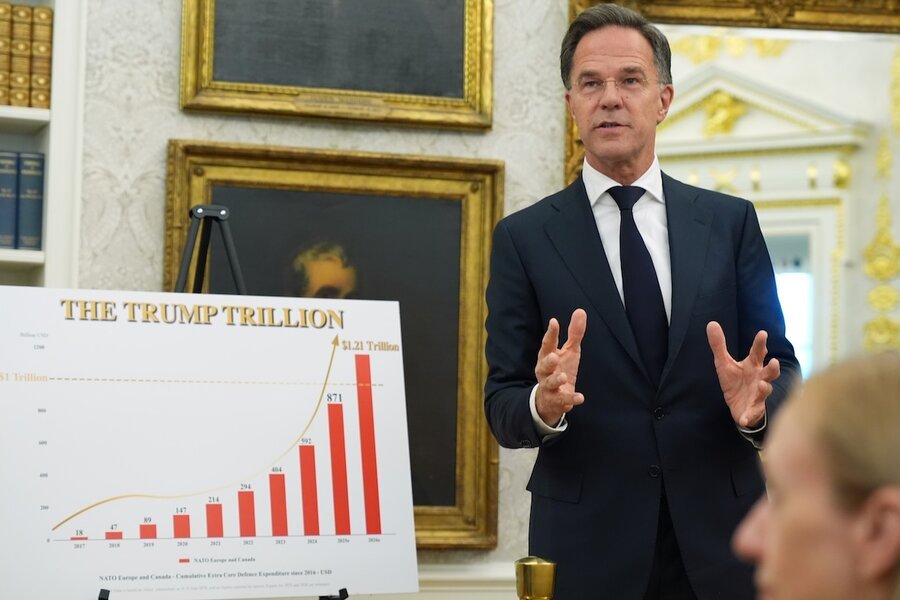
Still, at a meeting at the White House last month, Mr. Rutte sought to address any remaining concerns by delivering a new presentation using a spreadsheet labeled “The Trump Trillion” in gold letters, showing the $1.2 trillion in spending by European allies and Canada since 2017.
But Mr. Trump was unmoved, saying he was still disappointed by the refusal of some NATO allies to join the Iran war, which he started alongside Israel without consulting them.
“We don’t need their money – we don’t need anything,” Trump said. “I just want loyalty.”
Mr. Trump suggested he might have skipped the upcoming summit entirely if it had not been hosted by Turkish President Recep Tayyip Erdogan. It’s a sign that even Mr. Erdogan and Mr. Rutte – foreign leaders for whom Mr. Trump appears to have extraordinary respect – will have big work ahead of them to keep the summit on track.
Table of Contents
Rutte set a new example of flattery in the White House
Historically, the main job of NATO’s top civilian official – always a European, never an American – was to promote consensus in an organization that makes its decisions unanimously and to speak on behalf of all 32 member countries.
But during Mr. Trump’s two terms in office, Mr. Rutte and his predecessor at the top of NATO, Jens Stoltenberg, have devoted enormous amounts of energy to keeping the United States in their alliance.
Mr Trump has threatened to leave NATO, dabbled in withdrawing US troops from Europe and vowed to take over the island of Greenland – a semi-autonomous part of ally Denmark. He has expressed doubts about whether he would defend another member that doesn’t spend enough on its military, undermining trust.
Mr Rutte’s approach was heavy on flattery. The carefully choreographed pitch in the Oval Office last month – with props reminiscent of an American flag – set a new tone, even for a man who was heavily criticized for comparing Mr Trump to a “daddy”.
The charts showed that tens of thousands of US jobs were created and a $300 billion backlog of European orders for military equipment emerged – all thanks to the “leader of the free world,” Mr Rutte said.
He gently dismissed Mr Trump’s complaints that NATO had not supported the US against Iran, pointing out that up to 5,000 US planes had taken off from bases in Europe ahead of a ceasefire in April.
Trump has threatened to withdraw troops from Europe in a moment of danger
NATO cannot function without its largest and most powerful ally. Europe is being pushed to fend for itself even as Russia, the historic reason for the alliance, poses a greater threat.
Last month, the Pentagon surprised its NATO allies by announcing that it would reduce the number of troops, warships, planes and drones it would deploy if any of them were attacked. Mr. Trump has also sent conflicting messages about whether the number of U.S. troops would be reduced or increased.
The cuts and mixed messages have undermined unity in the alliance while Russia has tested Europe’s defenses with drone flights near military bases in several countries, according to a study published Thursday.
Flattery worked last year, but now there are new challenges
Each summit is intended to demonstrate a commitment to collective security – the promise of “all for one, one for all” enshrined in Article 5 of the NATO Treaty. It was invoked only once, when allies came to America’s aid after the September 11 attacks.
The last NATO summit was held in The Hague, the hometown of Mr Rutte, a former Dutch prime minister. The Dutch royal family hosted a dinner and Mr. Trump stayed overnight at the royal palace.
Mr. Rutte won over allies by pledging big defense spending, and Mr. Trump left a happy man who described his NATO partners as a “nice group of people.”
The summit this year will be hosted by Mr. Erdogan, another key NATO member with an independent streak. His close ties with Mr Trump may keep the American president at the negotiating table, but they are unlikely to overcome the rifts.
Mr. Rutte has tried to convince Mr. Trump that his European partners are spending so much more that America can confidently focus its attention on China’s security challenges while managing the war in Ukraine.
But Mr. Trump wants more now, and his demand for “loyalty” is not captured in any graph.
Mr. Rutte’s predecessor, Mr. Stoltenberg, wrote in his memoirs about leading a 2018 summit that Mr. Trump almost upended.
“If an American president says he no longer wants to defend other allies and walks out of a NATO summit in protest, then the NATO treaty and its security guarantee are not worth much,” Stoltenberg wrote.
This story was reported by the Associated Press.
https://www.csmonitor.com/World/2026/0705/NATO-summit-Trump-loyalty
