

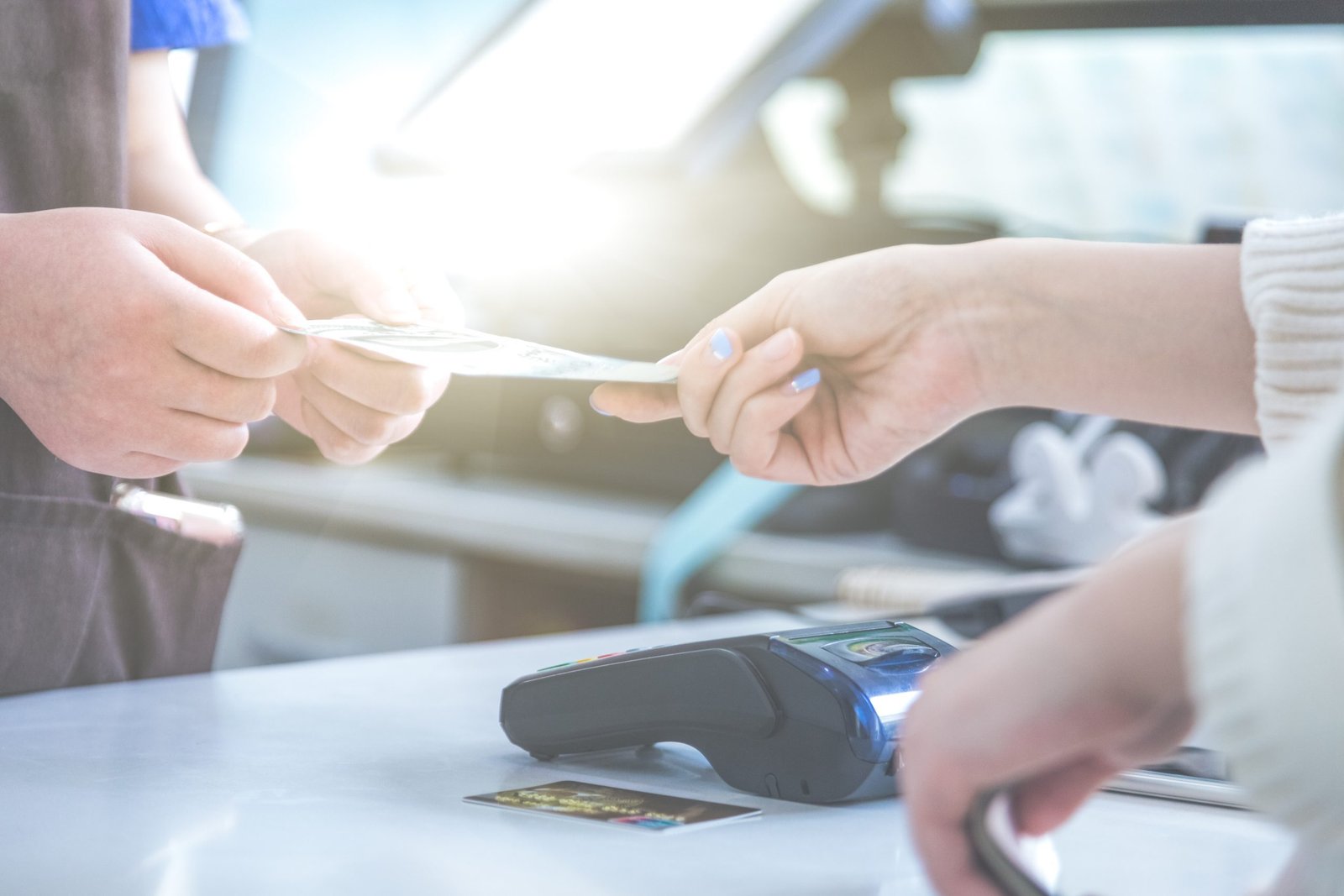
Previously, payments were a separate step in a transaction. Increasingly, they’re just another feature of the software people already use.
As payments capabilities become increasingly integrated into everything from point-of-sale systems to ERP platforms and digital wallets, they have faded into the background, enabling entirely new business models – from self-service checkouts and subscriptions to potential AI agents making purchases on behalf of consumers.
What happens next with the payment software? In the How software makes merchant payments easy, secure and advanced In the report, Don Apgar, Director of Merchant Payments at Javelin Strategy & Research, examines how software has changed payments for merchants and customers – and where the next opportunities lie.
Table of Contents
A long tail
The change didn’t happen overnight. Over the decades, payment software has steadily expanded beyond the checkout, evolving from systems that simply connected payment terminals to point-of-sale software to technology that is integrated into the entire purchasing experience. Today, consumers rely on payment software every day, often without even realizing it. Saving a credit card in Chrome so that payment details are autofilled during checkout is a small example of how software has made payments feel almost invisible.
A software layer has been built around payments, with more of the transaction experience continuing to move into the software.
“Payment software was big news 25 years ago,” said Apgar. “Twenty years ago we started looking at it as a solved problem. If you put a drop of ink on a piece of paper, it spreads quickly at first, but then it takes a long time for the last bit to come out around the edges. After all these years, we’re now starting to paint in smaller spaces where there was no software.”
“Adoption has a really long tail,” he said. :Will we ever reach 100%? Nothing ever reaches 100%.”
Spread throughout B2B payment transactions
One area where payment software still has room for growth is B2B payments. Supplier activation has long been a barrier for companies looking to implement purchasing card programs. Finally, employees cannot use purchasing cards if their suppliers do not accept card payments.
In some cases, a company’s size has created enough inertia to slow the migration of payments to software platforms. Even a $50 million company selling janitorial supplies may still have a single assistant managing payments for the entire company.
“The people who wrote software for these types of companies never thought about credit card payments,” Apgar said. “The bigger problem for a company like this is that someone in accounts receivable with a credit card terminal on their desk takes payments either by phone or email and then manually updates the CRM with the payment details.”
Companies such as SAP, Oracle and NetSuite have now integrated card payment capabilities, allowing companies to set up websites where customers can pay bills online. This has reduced both the direct and indirect costs of accepting card payments while laying the foundation for suppliers to expand into e-commerce.
Public sector software
Another area in which software has steadily shaped payment transactions is local public transport. Transportation systems in cities like New York have evolved from tokens to swipe cards and have now largely moved to tap-to-pay systems, offering commuters benefits beyond simple convenience.
“When you look at the cost of payment processing, there is the percentage of the sale that counts as an exchange, and there is also a per-item fee,” Apgar said. “One of the reasons for buying an OMNY card in New York is that I pay $100 with my credit card and get a prepaid card by using one fare at a time.
“The software now is much better than what they use at the turnstile,” he said. “Today, if I take the subway four times, the software recognizes my card, groups those four transactions, and bills me for four rides as one transaction. So instead of four $3 transactions, I’m billed for one $12 transaction.”
Similar stories exist across the public sector, where payments modernization is often slower because authorities need to remain accountable to taxpayers. A private company looking to upgrade its payment systems can often act quickly. The same modernization generally takes much longer in a public sector agency, as any investment requires transparency and careful use of public funds.
“As some of these slower cycles gain traction, payments will become easier as more software is implemented to handle them,” Apgar said. “The DMV has been a laggard for years. Now I can go online, enter my license plate number and credit card number and they will mail me my renewal.”
Adaptation to the future
Payment software is becoming increasingly efficient and powerful, creating new systems that benefit both businesses and consumers. One of the clearest examples is subscriptions, which are far more common today than they were a decade ago.
Now the industry is looking at agent trading, where software not only processes the payment but also handles the purchase itself. With this model, the software is integrated even more closely into the transaction and at the same time takes an active role in the activities surrounding the payment.
As software improves, payments can be processed with less active involvement from both merchants and consumers. It is not a one-time transformation, but a process of continuous improvement.
“Twenty years ago, if you were among the first to adopt payment software, some of those workflows were outdated,” Apgar said. “It’s like Windows 95 – just because you introduced Windows 20 years ago doesn’t mean you’re using the same version of Windows today. So there’s still room for improvement in many software programs used across all categories.”
“As payments become more sophisticated, they are taking a back seat,” he said. “This is what I call the payments paradox. As customers become more aware of how they pay, payments become less visible.”
https://www.paymentsjournal.com/how-software-turned-payments-into-a-seamless-part-of-commerce/
