

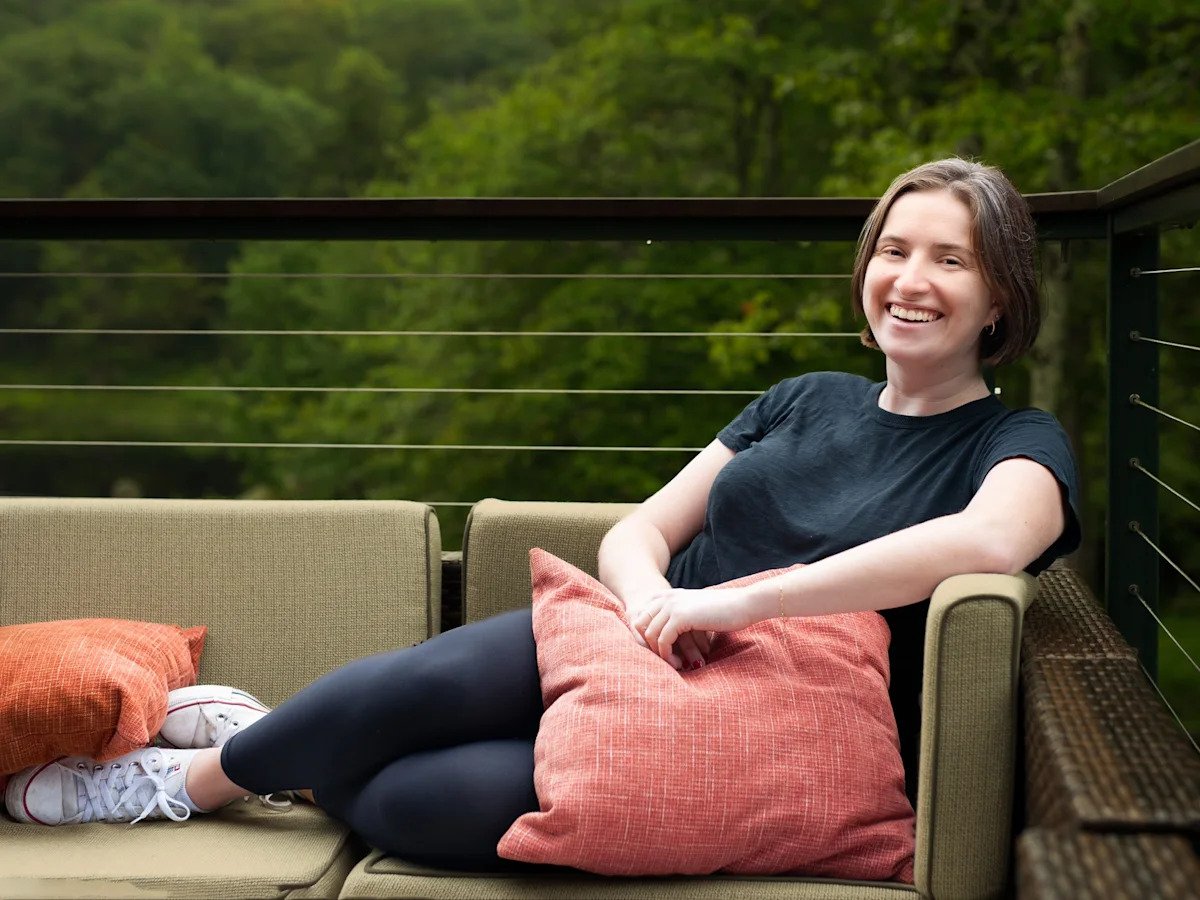
After hundreds of applications and no offers, Cristina Estupiñán decided to leave technology behind.
Their discomfort with AI made the brutal job search even more difficult as employers embraced the technology.
She is now 33, retraining to become a nurse and drawing hope from a new beginning.
This essay is based on conversations with 33-year-old Cristina Estupiñán from New Providence, New Jersey. Her identity and background have been verified. This story has been edited for length and clarity.
I earned my Bachelor of Arts in Computer Science from Boston University in January 2017. I went to college to study chemical engineering, but then took a computer science course and ended up changing my major.
After graduating, I moved to San Francisco. A friend helped me get a temporary non-technical job at a large tech company, but when that ended, I had no clear path forward. The computer science courses I took at university taught me a lot, but didn’t really prepare me for work as a software engineer.
Then another friend told me that she attended a three-month coding bootcamp and quickly found a job afterward. I decided to sign up and after I finished, I was hired by a startup as a front-end software developer. I stayed there for a few years before taking on similar positions at three other companies.
I was released in December 2024. In the past, it had never taken me longer than six weeks to find a job in software engineering. But this time it was different. Six weeks turned into six months and finally a year.
Table of Contents
AI overload
When I was job hunting, I noticed that every single company was some kind of AI company. Either you had to use AI as part of the work, or the product itself was AI, which was a problem for me.
I don’t think AI is needed for everything, and I’m worried about its impact on the environment. But in interviews, recruiters always asked, “What excites you about AI?” I always thought to myself: Well, I have to think of something because, to be honest, nothing about AI really excites me.
In total, I applied for more than 700 positions and made it to several final rounds, but didn’t receive any offers. I kept hearing that I wasn’t senior enough, and some companies told me mid-interview that they were going to freeze hiring.
There was a company in Europe that I interviewed with earlier this year that I really believed I would get. It was hands down the best interview I’ve ever had. I felt like I had really connected with the hiring manager, but a few days later I received an email overnight with a generic rejection message.
This email was the culmination of it all. My mental health was at an all-time low. I had gained a lot of weight and moved back home to my parents in New Jersey. I was isolated from my social network.
Career change
At this point, I was wondering if I still wanted to work in tech. My parents encouraged me to consider a career in healthcare and I did. I assumed that I might not make as much money as I would in tech, but I would probably have a more stable job, so I went for it. As soon as I made a decision, it was made. I won’t turn back.
In May, I began taking nursing courses at a local community college. Once I complete 10 required courses, I will be eligible to apply to Rutgers University’s accelerated nursing program. My ultimate goal is to become a psychiatric nurse and have a private practice.
I now work part-time in retail and things are going great. Since I have never worked in the service sector before, I am gaining skills in dealing with customers. I’m also more active because I’m on my feet a lot. I really like the people I work with.
Starting a new career at 33 isn’t easy, but I felt like I had no other choice. It’s a little difficult to take a look at LinkedIn because all my contacts are tech people and sometimes I feel like I’m missing something. They do all this cool technical stuff and that’s not really my life anymore.
However, I don’t regret my decision. When I think about becoming a psychiatric nurse, I get excited. I have a lot of experience dealing with my own mental health issues. The knowledge that I can help people in the future motivates me.
If you enjoyed this story, be sure to follow Business Insider on Yahoo.
https://www.yahoo.com/lifestyle/articles/software-engineer-couldnt-excited-ai-095001498.html
