

Table of Contents
Read quickly
IBM CEO Arvind Krishna admitted major deals “failed to close” as customers shifted capital spending to AI hardware, triggering a historic 22% drop in one day.
MSFT fell 3% and NOW fell 8% in a multi-stock sell-off, while HSBC gave IBM shares a Reduce rating and a $191 price target.
This lithium producer surpassed a private valuation of $1 billion, joining some of America’s most powerful startups. Now you can invest in EnergyX alongside global giants like General Motors, but only until July 16th. (Sponsor)
Shares of IBM (NYSE:IBM) fell 22% to $225.20 in early trading on Tuesday, on pace for the stock’s worst single session since 1987. Strategist Mike Zaccardi noted that IBM shares fell 23% in a single session in October 1987, calling today’s move a rare historic move.
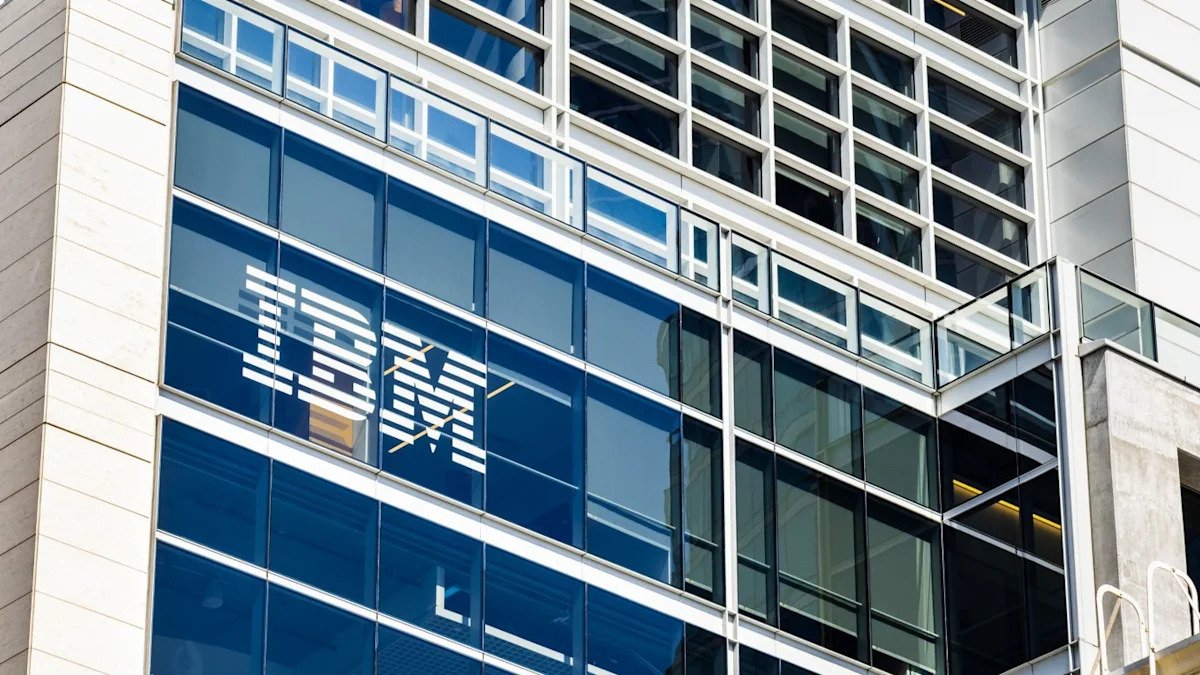
 Various photographs / iStock Editorial via Getty Images
The trigger is a preliminary sales and profit loss for the second quarter of 2026, which was released this morning ahead of the full report on July 22nd. IBM CEO Arvind Krishna told investors: “We have stalled” and that “numerous large deals have failed to close” as customers shifted spending toward supply-constrained infrastructure.
The broader market tells a different story. Meanwhile, the NASDAQ 100 rose 1.08% after the June Consumer Price Index report showed consumer prices fell 0.4% from the previous month, the largest decline since April 2020, with annual inflation falling to 3.5% and core inflation falling to 2.6%. Today’s software sell-off appears to be more industry and IBM specific than macroeconomic.
Preliminary Q2 miss triggers sell-off
IBM reported preliminary second-quarter 2026 revenue of $17.2 billion, up 1% from consensus of $17.86 billion. Non-GAAP operating earnings per share were $2.93, below consensus of $3.01. GAAP EPS was $2.27.
Segment details show that the deficit was concentrated. IBM’s software segment rose 5%, Red Hat rose 11% and consulting was about the same.
Krishna said that in the final weeks of June, customers redirected their capital spending toward servers, storage and memory to protect supply-constrained infrastructure from expected price increases – a reprioritization the extent of which IBM had not anticipated. He also cited cybersecurity distractions among corporate buyers.
July 16th is the last day to profit from the lithium boom (Sponsor)
General Motors, POSCO and over 50,000 everyday investors have already backed lithium producer EnergyX.
Here’s why you should do the same before the July 16 investment deadline: lithium prices are up 75% this year, and demand is expected to increase a staggering fivefold by 2040.
With technology that can recover up to three times more lithium than traditional methods, EnergyX is preparing to develop up to 15 million tons. Become a private EnergyX investor before the July 16 deadline.
The story continues
HSBC downgraded IBM shares to “Reduce” from “Hold” with a price target of $191, the clearest bearish voice on the Street today. More optimistic targets from Morgan Stanley and Oppenheimer preceded the warning and are likely to be revised.
Software colleagues feel the wave
The contagion is real this morning but uneven. Microsoft (NASDAQ:MSFT) shares fell 3% to $379.76, and ServiceNow (NYSE:NOW) shares fell 8% to $102.38. There is also less sympathy for Salesforce and Intuit.
The iShares Expanded Tech Software Sector ETF (NYSEARCA:IGV) is trading down 4% to $89.31. IGV holds IBM alongside these names and is not leveraged, although its focus on a handful of large-cap software issuers means that shocks to individual names quickly impact the fund.
The prediction markets reflect short-term stress. Polymarket sees the odds of Microsoft shares closing lower today at 0.95, while longer-term markets still favor a rebound towards $360 to $405 by month’s end. This split can be interpreted more as acute fear than as existential concern.
Bull and Bear Cases at IBM
The bull case relies on the parts of IBM that worked. Software growth continued, distributed infrastructure increased 37%, the best in reported history, and free cash flow reached $4.8 billion year to date. Management described the failed deals as postponed, not lost.
However, the bear case is equally clear. Mainframe cyclicality is an issue, large deal execution has failed, and capital spending reprioritization toward AI hardware may continue. HSBC’s IBM price target of $191 implies a significant decline from current levels.
The fair reading is that this is partly an IBM-specific mainframe and execution problem, and partly a signal that buying AI infrastructure and storage is crowding out other IT budgets. IBM’s own software line has grown, so it’s not a wholesale collapse in software demand. Dealers still sell the scarier “AI eats software” interpretation.
What to watch next
IBM’s full earnings report and conference call are due out July 22, and revisions from analysts at Morgan Stanley, Oppenheimer and others could change the situation by then. Polymarket currently estimates only a 25.5% chance of IBM outperforming when the full report comes out.
Investors can pay attention to whether Software and Red Hat’s momentum is confirmed on the July 22 conference call, whether Krishna quantifies the pipeline of foisted deals, and whether the collapse in mainframe demand was really a blowout in June. Given the magnitude of today’s move, investors should consider keeping their position sizes moderate until the full report clarifies the segment’s performance.
For industry observers, IGV and the reactions of software rivals leading up to the close could shed light on whether today’s selloff was a one-day repricing or the start of a broader software reduction.
Meet America’s Newest $1 Billion Unicorn (Sponsor)
A US startup has just passed a $1 billion private valuation, joining billion-dollar private companies like OpenAI and ByteDance. Unlike these other unicorns, you can now invest in EnergyX; but only until July 16th.
Over 50,000 people have already done it, along with global giants like General Motors and POSCO.
That’s why there’s so much interest: EnergyX’s patented technology can recover up to three times more lithium than traditional methods. This is a big deal as demand for lithium is expected to increase to five times current production levels by 2040. Become a member before the investment deadline on July 16th. an early-stage shareholder of EnergyX.
contact editor@247wallst.com for questions or corrections.
https://finance.yahoo.com/markets/stocks/articles/ibm-tumbles-22-toward-worst-130646251.html
