

 JUSTIN TALLIS/AFP/Getty Images
As large companies increasingly rely on AI to maximize efficiency, people across industries are being forced to integrate the technology into their daily tasks (unless they are pushed out of their roles entirely).
But not everyone simply accepts the change, especially since certain programs continue to have their shortcomings.
Table of Contents
Must read
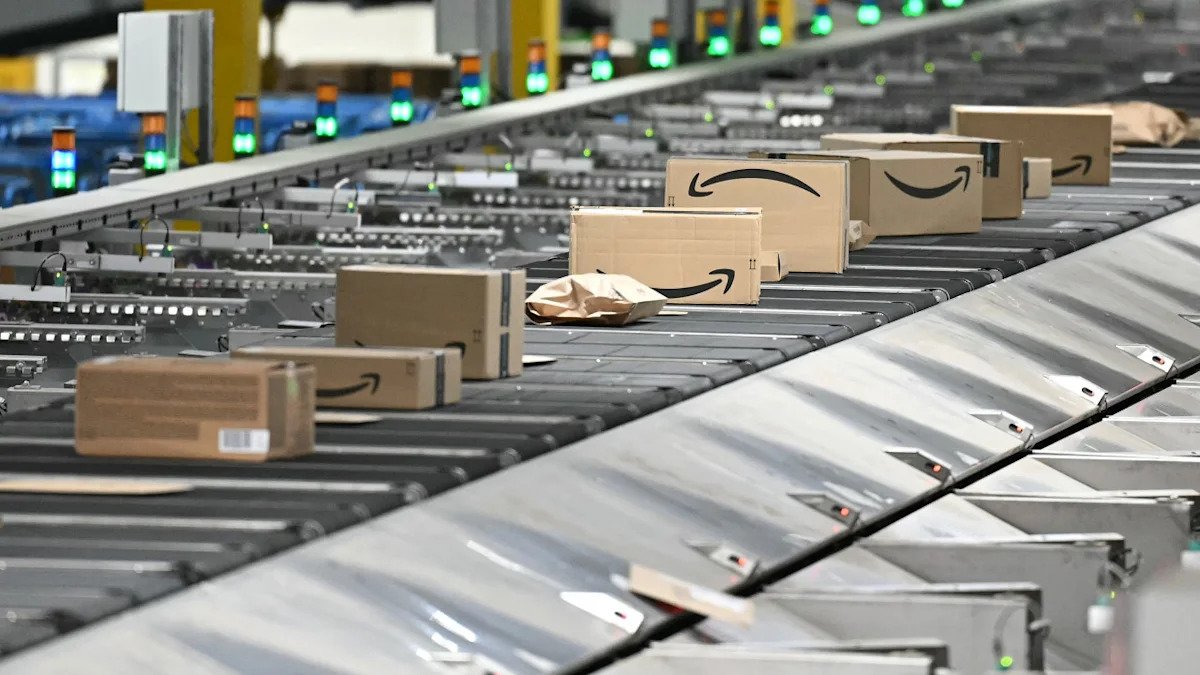
Although the adoption of artificial intelligence has hit certain groups of desk workers the hardest (sorry, juniors), automation has also made its way into American warehouses, where some employees have at times found their new computer colleagues more of a hindrance than a help.
Amazon (AMZN:NASDAQ), the world’s largest company by revenue this year (1), is among those that have taken a cue from Chinese factories and rolled out new AI systems to help manage human resources at some of their massive facilities. But internal documents early in a pilot showed that human managers regularly intervened, whether by ignoring the software’s suggestions, finding “loopholes” in its requirements, or turning off certain components altogether when they thought they knew better.
Memos and conversations acquired from Business Insider (2) Discuss the early difficulties in rolling out the new workplace features being tested to improve the e-commerce giant’s supply chain as consumer demand – particularly for fast order fulfillment (3) – grows.
Executives wrote that providing best practices for how managers should use algorithmic guidance proved “insufficient” and the impact of the new technology was difficult to measure because management did not follow their recommendations.
“Without system-enforced guardrails, manual overrides and habits undermine even the best science,” one memo said. Therefore, “hard” enforcement has been set as the priority target for this year.
Documents paint an incomplete picture of ongoing developments
However, an Amazon spokesperson tells Moneywise that these leaked files represent an “incomplete picture” of the company’s plans and the many phases these new features will go through.
“Managers are still making decisions – this technology simply gives them better information to make those decisions and gives them more time to support their teams,” the representative said. “As with all new systems, we continually iterate on the logic – it takes time, testing and iteration to get there, so it is inappropriate to draw general conclusions in the early stages of testing.”
A press release (4) about the new mechanisms also states that the “magic” of them is “a thoughtful approach that combines automation with human judgment – not one that replaces it.”
Read more: Are you paying too much for car insurance? Here are 3 smart ways to reduce your monthly bill
The ongoing battle – AI as a supplement or replacement?
While the software and its implementation have changed since the initial testing phases, Slack messages from that time show some warehouse managers asking their supervisors to “please pivot.” [the application] from now on and [that they will] explain” or “disable the system until it is repaired”.
Many CEOs would remind us that computer codes cannot replace innate human qualities, including soft skills such as communication, the ability to synthesize information and understand context and real-world applicability. Although robots can easily move large volumes of product around massive hubs, they may never be able to respond in real time to complex, multi-factor human situations.
In the Amazon case, employees seemed frustrated by the software’s inability to take into account the strengths and weaknesses of individual employees (“Six-foot-tall Henry, who weighs 250 pounds, can hunt much better than 67-year-old Henrietta, who weighs less than 100 pounds,” one employee wrote on Slack (2)), among other everyday nuances.
The Amazon spokesperson told Moneywise that these anecdotal observations, which came from “a handful of managers,” occurred while employees were still getting used to the programs and served as a basis for future rollout.
“They do not reflect how the system works today,” they added, noting that the technology’s ultimate goal is to “promote consistency in how managers move staff based on real-time needs, rather than to limit or eliminate managers’ judgment or involvement.”
Future plans for AI automation in its warehouses will depend on the unique needs of each facility.
“We consider where this technology makes the most sense and make adjustments before deciding to scale,” they said.
You might like it too
Join 250,000+ readers and get Moneywise’s best stories and exclusive interviews first – clear insights, curated and delivered weekly. Subscribe now.
Article Sources
We rely exclusively on verified sources and credible third-party reports. Please see our for details Ethics and guidelines.
Yahoo Finance (1); Business Insider (2); NBC News (3); Amazon (4)
This article originally appeared on Moneywise.com with the title: Minutes after Amazon turned on its new AI staffing, a manager asked an engineer to turn it off
This article is for informational purposes only and should not be construed as advice. The provision is made without any guarantee.
https://finance.yahoo.com/technology/ai/articles/minutes-amazon-switched-ai-staffing-211500980.html
