


Rochester, Minn. —
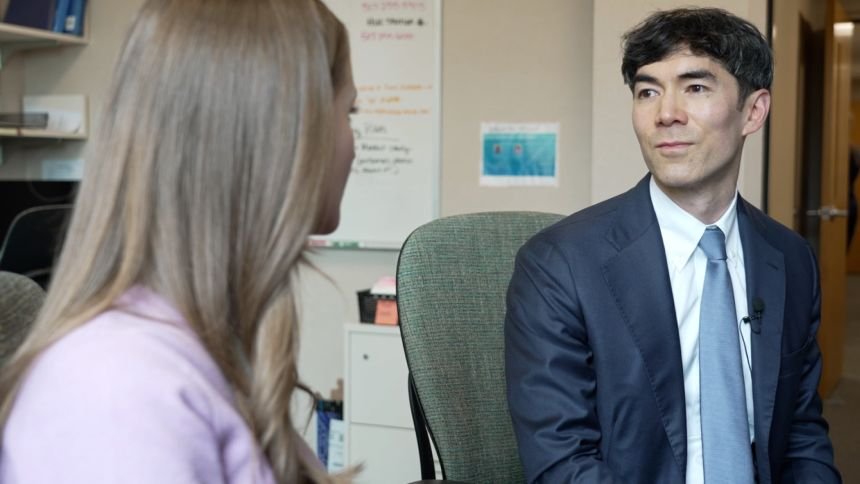
To prepare for a meeting with a patient, Mayo Clinic internal medicine physician Dr. Alexander Ryu, review dozens or even hundreds of pages of medical records.
Many patients visit the renowned clinic in search of a third or fourth opinion and carry unsorted documents from external health systems with them. A new artificial intelligence tool helps doctors analyze records faster – creating relevant patient summaries, organizing documents in chronological order and making searches easier.
Ryu said the tool, called Record Time, can save him between five and 30 minutes of prep time per visit, depending on the complexity of the case. Instead, he can spend this time personally with the patient. And Record Time helps ensure he doesn’t miss important details that may be hidden in the file that could lead to treatment and testing recommendations.
“We receive a huge volume of these records, tens of millions of pages every year, and we needed a way to find important information in them,” said Ryu, who also serves as associate director for innovation in the Mayo Clinic Department of Medicine.
Health-related applications are considered one of the most promising areas of innovation for AI. Google, OpenAI, Anthropic, and others have introduced health assistant chatbot capabilities—and tens of millions of people are turning to AI for medical questions. Silicon Valley executives also often make bold promises about curing cancer and other diseases through AI, although these statements often sound more like marketing pitches because major industry players are largely focused on other consumer and business applications.
But Record Time is just one way Mayo Clinic, one of the world’s best-known hospital systems, is using AI in hopes of improving patient care and ultimately saving lives. The hospital is working with companies like Microsoft and Scale AI to use its massive volume of patient records and research to develop AI tools.
According to Dr. According to Dr. Matthew Callstrom, a radiologist and medical director of Mayo Clinic’s generative AI program, the hospital now has around 150 AI models in use.
The use of AI in healthcare is not without controversy and raises major questions about accuracy and patient privacy.
Traci Tamiko Eto, the former chief research officer at Mayo Clinic, sued the hospital earlier this month, saying she was retaliated against for raising privacy and oversight concerns about some Mayo AI systems.
Mayo Clinic spokeswoman Andrea Kalmanovitz said the hospital does not comment on ongoing litigation, but stressed that it is “committed to the responsible development and use of AI, with privacy, security, transparency and compliance embedded in our processes.”
“Our research and clinical innovations are conducted in accordance with applicable laws and regulations, and we remain steadfast in maintaining patients’ trust in us and respecting their privacy,” Kalmanovitz said in a statement.
Part of what makes AI so useful in healthcare and medicine is that the technology is great for spotting trends in large amounts of data, said Jason Droege, CEO of Scale AI, which worked with Mayo Clinic to develop Record Time.
“AI can step in and take over much of the tedious work that highly specialized doctors or healthcare professionals do to speed up this process – getting more accurate diagnoses faster so that more people can be treated,” he said. “This is an industry where doctors, nurses and others, above all else, recognize patterns.”
Callstrom told CNN he became convinced of AI’s potential back in 2016 when he saw how AI could help radiologists detect subtle, early cancer warning signs in imaging.
The Mayo Clinic is currently conducting a clinical trial to test whether AI can help identify patients at risk of or with early-stage pancreatic cancer – an application that could allow the hospital to detect the disease years earlier than the typical diagnosis. Currently, patients are often not diagnosed with pancreatic cancer until it spreads regionally or metastasizes, when the five-year survival rate is about 9%, Callstrom said.

The hospital has also successfully used AI to analyze patients’ heart rhythms to determine whether someone might develop atrial fibrillation, a condition that can cause blood clots and strokes.
“For the patients where you actually find it and identify it, it can potentially be life-changing,” Callstrom said.
Table of Contents
Balancing speed and trust
To develop AI tools, Mayo Clinic brings technology experts together with doctors or clinicians to decide which medical problems need to be addressed. A big part of Callstrom’s work is ensuring that Mayo Clinic’s AI tools are accurate and trusted by both patients and doctors.
AI tools go through the same process as a clinical trial, he said. First, it will be tested on a small group of patients under medical supervision. Performance is measured and testing is then expanded to a broader population.
Once a tool is widely used, Mayo Clinic continues to monitor how well it works.
“On the physician side…we are very skeptical,” Callstrom said. “We give them the opportunity to try a new AI tool, and if they like it, they use it. If they don’t want to use it, they don’t have to use it. And the best measure of how well we’re doing is the adoption rate.”
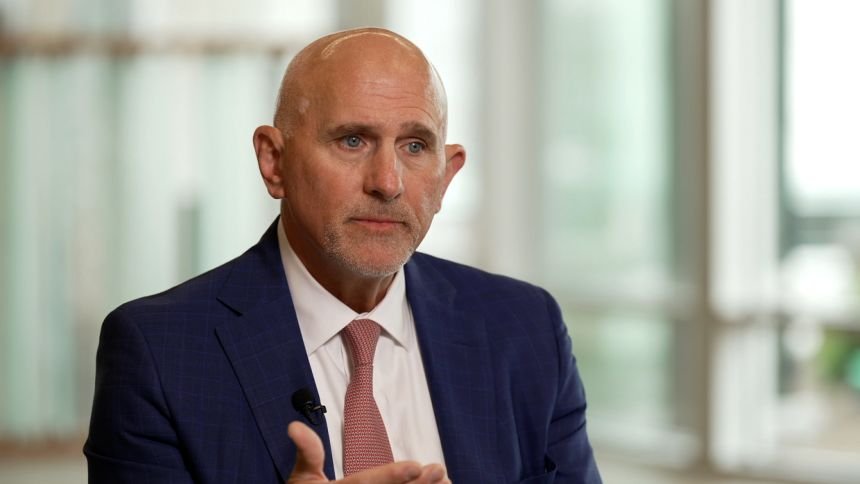
Callstrom also frequently receives questions from employees about how AI tools will impact workplaces. So far, jobs are not disappearing, he said. But they change.
For example, the hospital’s nursing team helped develop an AI system that listens and takes notes during patient visits. That potentially halves the hour-plus a day they spend typing these visits.
“This gives them more time to talk to patients,” Callstrom said.
Scale’s Droege believes the healthcare industry is just beginning to realize the full potential of AI – but that speed of adoption shouldn’t necessarily be a top priority.
“These predictions that everything will be fine in a year or two, I think are extremely ambitious,” he said. “Quality of care is the benchmark, and then comes speed…in healthcare you want to get it right as quickly as possible.”
https://www.cnn.com/2026/07/16/tech/mayo-clinic-ai-healthcare
