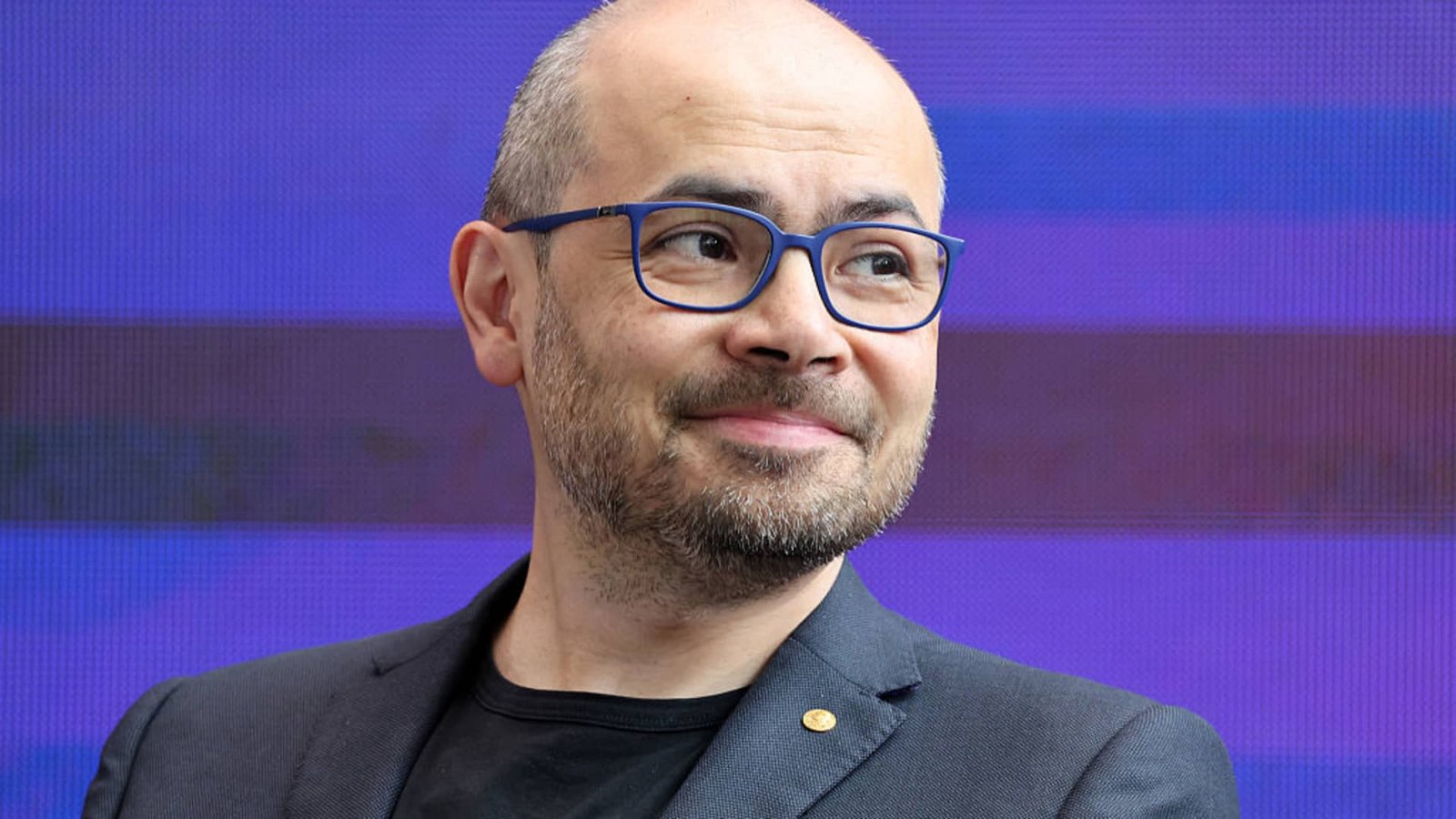
The boss of Googles The AI Division has called on the US to lead a standards body that would oversee new AI models and assess national security risks, including cybersecurity and biological threats.
Google DeepMind boss Demis Hassabis, a Nobel Prize winner, said in an article published on Tuesday
“We have already seen the challenges that frontier models pose to cybersecurity, and other threats, including nuclear and biological risks, may soon emerge as capabilities continue to advance,” he said.
As a solution to address these threats, Hassabis proposed a U.S.-led public-private partnership overseen by the federal government. The White House, State Department and Commerce Department were contacted for comment.
The comments came a month later from sources who told CNBC that Hassabis, along with Anthropic CEO Dario Amodei, called for a U.S.-led coalition to shape rules and standards around AI at a G7 meeting of technology leaders and heads of state that was also attended by President Donald Trump. Sam Altman of OpenAI also called for a similar body in an article published in the Financial Times earlier this month.
Table of Contents
AI Standards Board
Despite increasing calls from industry leaders for an AI watchdog, regulation of leading AI models is increasingly a point of contention between the public and private sectors.
In recent weeks, Anthropic has been involved in negotiations with officials after the Trump administration temporarily imposed export controls on an advanced model. OpenAI also faced restrictions, as it was initially asked by the US government to limit the introduction of a new model.
Hassabis said the U.S. is well-positioned to take a leadership role in developing an AI framework “given its economic and technical situation.”
“A new standards body could be established along the lines of a government-supervised public-private partnership or self-regulatory organization, similar to the Financial Industry Regulatory Authority (FINRA), with a board including independent leading technical experts and open source representatives,” he added. FINRA regulates brokerage firms and stock markets in the United States
The proposed body would need “significant” funding “to attract world-class technical talent and provide the necessary computing resources for large-scale testing,” Hassabis said. Funding will “probably” come from industry, he added.
Frontier Labs would initially share the models voluntarily with the agency for review up to 30 days before publication, before making them mandatory for use in the U.S. market after proving them “effective.”
“Specific agent AI testing could look for attempts to bypass security guardrails or signs of deception, and ensure best practices such as digitally watermarking AI-generated images and generating human-readable output tokens to understand the model’s reasoning,” Hassabis said.
USA against China
Calls for greater regulatory oversight are growing as the race between the US and China to develop and deploy AI models intensifies.
Recent model releases from Chinese companies, including DeepSeek and Z.ai, are seen by many as highly competitive compared to leading frontier systems such as Anthropic and OpenAI, and are gaining traction among U.S. companies as AI costs rise.
As a result, U.S. lawmakers are currently considering how to curb the increasing adoption of Chinese AI models by domestic companies, which the State Department told CNBC raises “serious concerns.”
 Choose CNBC as your preferred source on Google and never miss a moment from the most trusted name in business news.
https://www.cnbc.com/2026/07/14/google-deepmind-demis-hassabis-us-led-ai-standards-body.html
