A draft report from the Treasury Department aims to warn about the risks of the artificial intelligence market and compare key aspects to the dot-com bubble that upended the U.S. economy when it burst in the early 2000s.
The document, whose existence and contents have not been previously reported but was obtained by NOTUS, represents a significant departure from the public tone of the Trump administration, which has focused on encouraging relentless investment to enable exponential growth.
Analysts at Career Treasury have found that AI companies are more deeply entrenched in the U.S. economy than their dot-com predecessors, posing significant risk to the entire system as financial conditions change, productivity targets are missed, or various bottlenecks impede growth.
A downturn in the AI market would send shockwaves throughout the economic ecosystem, the analysts wrote.
The report concluded that the bursting of the AI bubble would result in a less immediate crash than the US economy experienced with dotcoms in the early 2000s. But analysts predicted that if the industry stalled, companies would cut back, investors would lose confidence and the economy would grow more slowly. Stock markets, private credit markets, companies financing data center buildouts, cloud providers, chipmakers and utilities would all feel the impact, the report said.
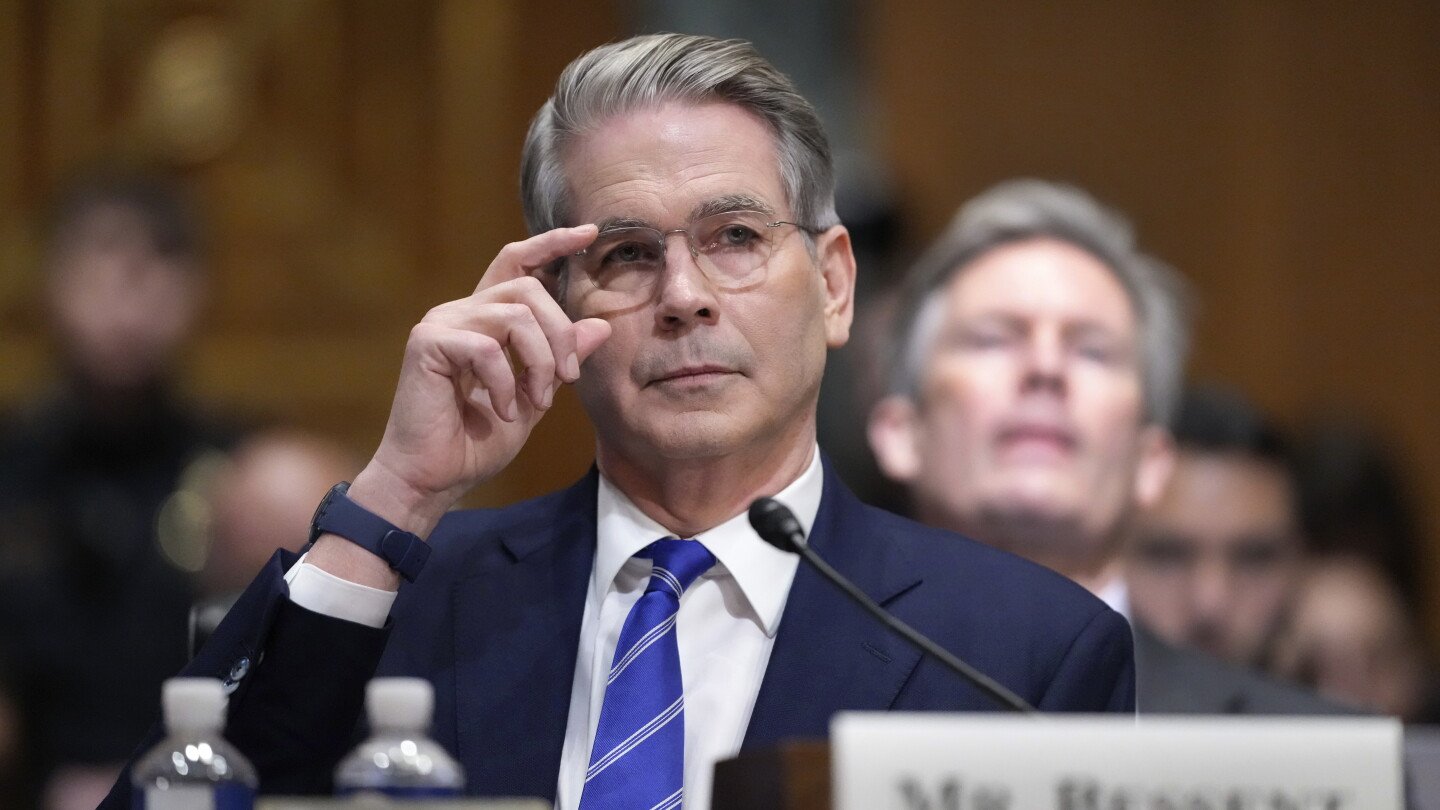
Prepared by financial analysts for Secretary Scott Bessent, Federal Reserve Board Chairman Kevin Warsh and various federal financial regulators, the report provides a rare glimpse into how the Trump administration is examining the risks posed by AI. It has been completed for weeks and is awaiting formal approval before reaching its intended audience, which will ultimately include the public.
The report emphasizes that AI companies have some fundamental differences from the companies that dominated the dot-com boom of the late 1990s, which was characterized by speculative excesses and an overreliance on debt financing. In contrast, many of the leading AI companies are more mature, more profitable and have healthier balance sheets, which could mitigate the impact of the bubble bursting – or if it bursts at all.
Still, analysts say, AI investors are taking such big risks that much of the financial system now relies on AI to meet expectations for productivity gains and profitability.
The Trump administration has publicly shown nothing but optimism about the AI industry. In a June 25 speech in New York, Bessent praised the largest technology companies for investing $750 billion in AI expansion this year. He favorably compared the current environment to the dot-com boom and said AI should base its productivity goals on that era.
“Could we at least do that?” Bessent asked. “Can we maybe do more?”
Bessent has stressed that the main risk of AI is not being able to keep up with competing countries, and the government has largely tried to do this scale back all regulatory efforts That could slow down the industry.
President Donald Trump has halted procurement US government operations in AI companies so that the American public can benefit from their growth, and the White House has recently begun to meddle in the products that AI companies like Anthropic can bring to market.
Fears of an AI bubble have grown among some Wall Street observers over the last year, including on Capitol Hill managementin think tanks and even in the ranks of Top AI Directors. Prominent economists and institutions, including the Bank of England – the United Kingdom’s central bank – and the head of the International Monetary Fund have also raised concerns about the overvaluation of AI companies and the associated risks to the entire economic system.
Trump administration officials have never expressed similar discomfort, and a Treasury Department spokesman dismissed the report’s findings as unaudited and not representative of the agency’s policies or views.
“The official position of the Secretary and the U.S. Treasury Department is that artificial intelligence will be a key driver of America’s new Gilded Age,” the spokesman said. “AI has the potential to deliver unprecedented productivity gains, expand economic opportunity, and empower American workers and businesses.”
The AI sector is vulnerable to funding drying up for data centers and other infrastructure projects and failing to meet sustainable growth expectations, analysts noted in the report, saying this was reminiscent of the dot-com crash.
That’s because the industry is increasingly focused on a small number of companies, relies heavily on private market financing and invests significantly in infrastructure – data centers – to secure its future.
Supply chain issues, geopolitical tensions, power shortages, supply shortages and other concerns could stall AI’s momentum.
While valuations of AI companies are less speculative and generate more revenue than those in the dot-com era, analysts say the industry is in danger if it doesn’t grow as quickly as it promises or if companies can’t monetize their products.
If AI companies fail to comply, the impact would ripple across the entire financial system, from major banks and hedge funds to private creditors, analysts said. The largest AI companies are also all interconnected with each other and across different markets, which also suggests far-reaching implications if investment dries up or demand wanes. In fact, fewer retail investors support AI than dot-com companies, so a continued decline in AI would have a greater impact on institutional investors, which are fundamental to economic stability, the draft report says.
Prominent politicians have repeatedly called for a similar analysis from the Ministry of Finance. Earlier this year, Sen. Elizabeth Warren (D-Mass.), ranking member of the Senate Banking Committee, and other Senate Democrats called on the Treasury Department to require nonpublic data to produce a report on the risks of an AI debt bubble. Last month, a bill was proposed that would require financial companies to disclose this information to the Treasury Department and require the agency to report on the various ways in which the financial world is exposed to AI company developments.
The report would detail how a decline in AI could harm the U.S. economy and suggest regulatory measures to mitigate the impact.
“AI and Big Tech companies are increasingly relying on shadowy forms of debt and accounting magic to finance their multi-trillion-dollar AI developments,” Warren said, explaining that her bill would “give regulators and Congress the information they need to identify risks early and protect our economy from another avoidable financial crisis.”
The Treasury Department spokesperson said: “Treasury will continue to work with regulators and the private sector to ensure our regulatory framework keeps pace with innovation and supports the responsible adoption of AI in a way that strengthens the U.S. financial system.”
In his recent address in New York, Bessent noted that at a recent G7 meeting he disagreed with other leaders who pointed out that security and job losses come with AI.
“I think they were a little taken aback when I said that the biggest risk to AI is that China overtakes us,” he said. “We have to stay ahead.”
https://www.notus.org/economy/treasury-internal-report-warning-dangers-ai-bubble
