

In Abu Dhabi, the largest emirate in the United Arab Emirates, AI is as much a part of everyday life as reporting a pothole, making a doctor’s appointment or paying a traffic ticket – because AI does it all for you.
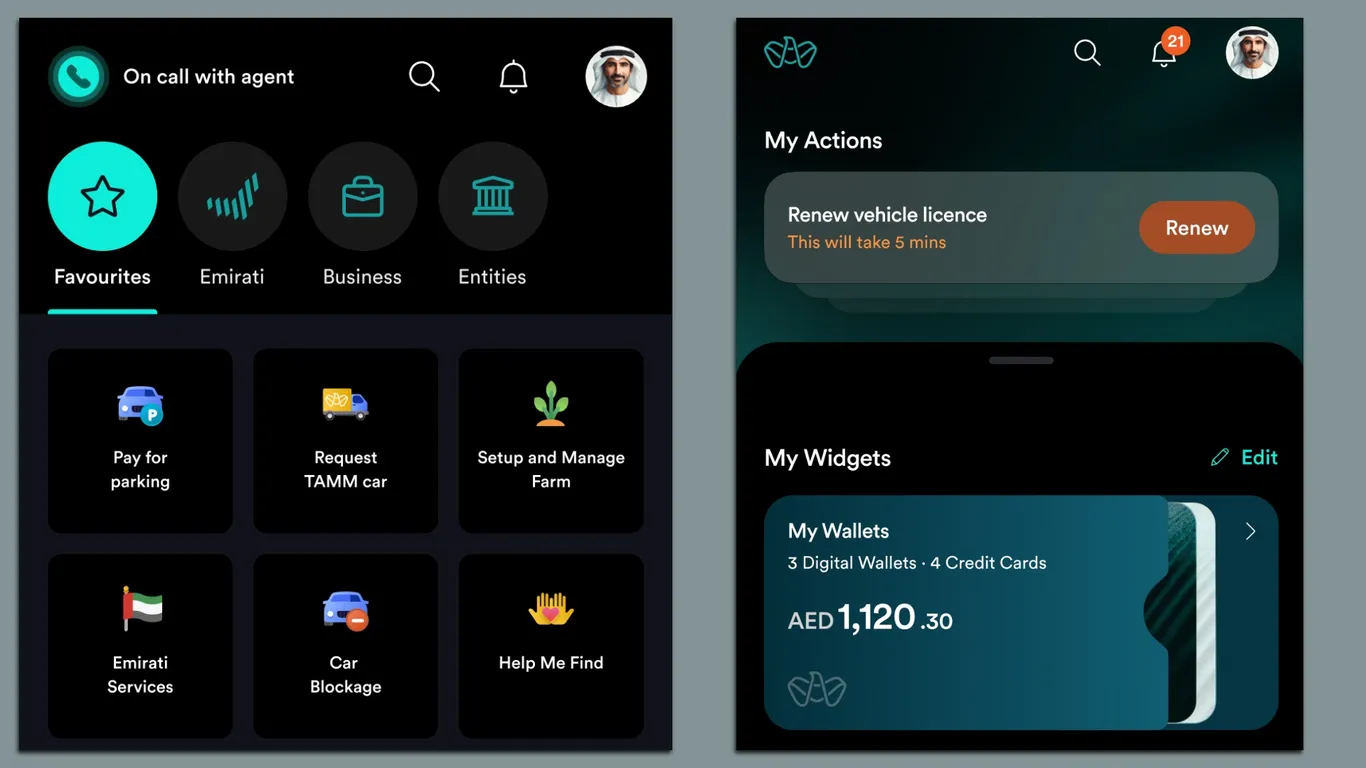
- In Abu Dhabi, the capital of one of the world’s wealthiest and most globalized economic centers, an app is in use almost everywhere that knows when you need to renew your ID card, your health insurance or your vehicle registration.
- The app’s “AutoGov” feature goes one step further: it handles the paperwork and pays the amounts owed without being asked.
Why it matters: The UAE bet heavily on AI, spending billions on infrastructure and research, supported by long-term thinking and the direction of top politicians. Before the war with Iran, the bet paid off massively. “People make money here and bring money here,” a UAE resident said to Jim VandeHei and me when we were there just before the war.
- The war shook the UAE’s AI ambitions and raised fears of a visit given the constant threat of an Iranian attack. UAE leaders tell us they remain fully committed to AI: They are willing to work with both the US and China and see the technology as key to their future beyond oil.
The big picture: Yousef Al Otaiba, the United Arab Emirates’ longtime ambassador to Washington, told me his country “realized early on that data is destiny — and our leaders didn’t wait for the arrival of AI before preparing for it.”
- Almost a decade ago, in 2017, the UAE appointed a minister for AI (reportedly the first in the world). Two years later, they opened what was said to be the world’s first graduate university in AI, the Mohamed bin Zayed University of Artificial Intelligence (MBZUAI), in Masdar City, Abu Dhabi.
The UAE was built on oil. But leaders aggressively diversified into what The New York Times recently called “the ultimate globalized city — a Switzerland of the Persian Gulf.”
- Dubai, the largest city in the United Arab Emirates, is exuberant, wealthy and Western-friendly. It is one of the world’s most important business centers and is home to the world’s tallest building and the world’s busiest international airport.
- This prosperity is being tested by the war in the Middle East. But business leaders tell us that AI investments from around the world have kept the UAE empowered despite the dangers and disruptions plaguing the Persian Gulf.
- On Tuesday evening, the Wall Street Journal reported that the Trump administration is rewarding the United Arab Emirates for its help in the Iran war by expanding access to sought-after AI chips, capping “a years-long attempt by the Gulf state to obtain American technology to diversify its economy.”
Reality check: This is as much opportunism as it is strategic vision. The UAE has an all-powerful royal family that controls the government and economy, enabling sweeping social changes that would not be reproducible in a democracy.
Enlarge: His Excellency Dr. Mohamed Al Askar, Director General of TAMM, as the app is called, took me behind the scenes of Abu Dhabi’s “AI-native government” in two in-depth interviews. He and the emirate’s Department of Government Enablement host a parade of ministers from other governments who dream of emulating TAMM.
- “If you look at the UAE as a whole, this is rooted in our leadership vision,” said Al Askar, a leading expert in digital strategy and technological innovation.
- “It has become part of our DNA. … That’s why I believe the UAE can be a haven for any entrepreneur who wants to test and experiment with AI.”
This is how it works: TAMM is Arabic and means “Consider it done.”
- The app has a Snap & Report section where you can take a photo of a non-working street light and submit it to the government. “The AI will analyze this photo,” said the director general. “We will forward it to the affected company. And the company will fix the problem. And listen to this: The company does not have the right to close your request until you acknowledge it. So you as the customer have the power.”
- When you take a photo of your food, the app gives you a health score.
- When I asked what’s next, Al Askar said, “We actually cook a lot of things. I wish I could share with you what we cook. But we will surprise you.”
What we see: The UAE’s national AI strategy promises that by 2031 the country will have a “reputation as an AI destination… a magnet that attracts the best talent from around the world to conduct their experiments on AI solutions in the UAE.”
- According to PwC, AI could contribute 11% to the country’s GDP by 2030 and add $320 billion to the Middle East economy.
Go deeper: UAE wants to disrupt AI superpowers.
https://www.axios.com/2026/07/15/uae-ai-government-app-tamm
