

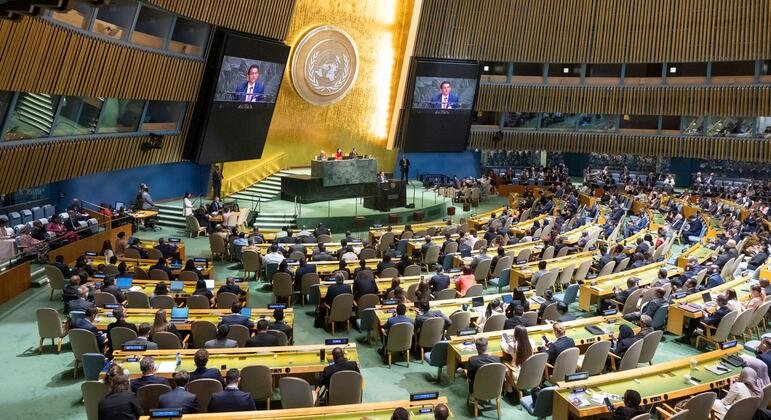
Tuesday’s decision by the General Assembly follows the recommendations of its Fifth Committee, which is responsible for administrative and budgetary matters.
This comes at a time when the United Nations continues to face a severe liquidity crisis as governments delay payments of their mandatory financial contributions and force cuts across the system, affecting everything from recruiting to peacekeeping operations to humanitarian assistance.
Table of Contents
Guterres welcomes important reform
UN Secretary-General António Guterres welcomed the decision in a statement released after the vote, noting that the old financial rules threaten the organization’s “stability.”
“By its vote, the Assembly agreed to introduce, for a four-year test period, a new method to ensure that unspent funds are returned to member states only if they are backed by cash,” the UN chief continued.
“This decision will allow us to manage resources, in particular for the regular budget and the peacekeeping budget, more predictably and responsibly, and to better fulfill the mandates given by Member States.”
“Critical” for the immediate future of the United Nations
He described the change as “critical to our immediate operational continuity, particularly for peacekeeping operations” and a significant improvement for the next Secretary-General, who takes office in January next year.
The UN’s top official will no longer be forced to return funds that “all too often, never received at all.”
Record levels of arrears
The United Nations ended 2025 with a record $1.6 billion in unpaid tax assessments, according to the Secretary-General’s latest report on the organization’s financial situation, released last month.
Total arrears in the regular budget, peacekeeping and two international tribunals exceed $6.5 billion.
Earlier this year, the United Nations introduced strict cash conservation measures to both reduce and slow spending.
“The Secretary-General has called on Member States to either meet their obligations to pay in full and on time or to fundamentally revise the Organization’s financial rules to prevent imminent collapse,” the report said.
Hamstrings
By Tuesday evening, financial rules set 80 years ago required the United Nations to return to member states any unspent funds Credits toward future assessments.
This also applies if the underspending is due to late contributions or funds never received.
Annalena Baerbock, the president of the General Assembly, raised the issue in a speech to the European Parliament in February.
She highlighted the United Nations’ “existential liquidity crisis” and called on European countries “to do this Present proposals for revising this Kafkaesque financial rule the refund of monies never received.”
Wider message
In her response to the vote, Ms. Baerbock said: “With this groundbreaking resolution, the General Assembly has averted the impending financial collapse of the United Nations and modernized an outdated, 75-year-old financial rule that has for too long undermined the organization’s financial stability.”
She said it also sent “a broader message that member states of the UN General Assembly can come together to take decisive action in fragmented times.”
https://news.un.org/en/story/2026/06/1167849
