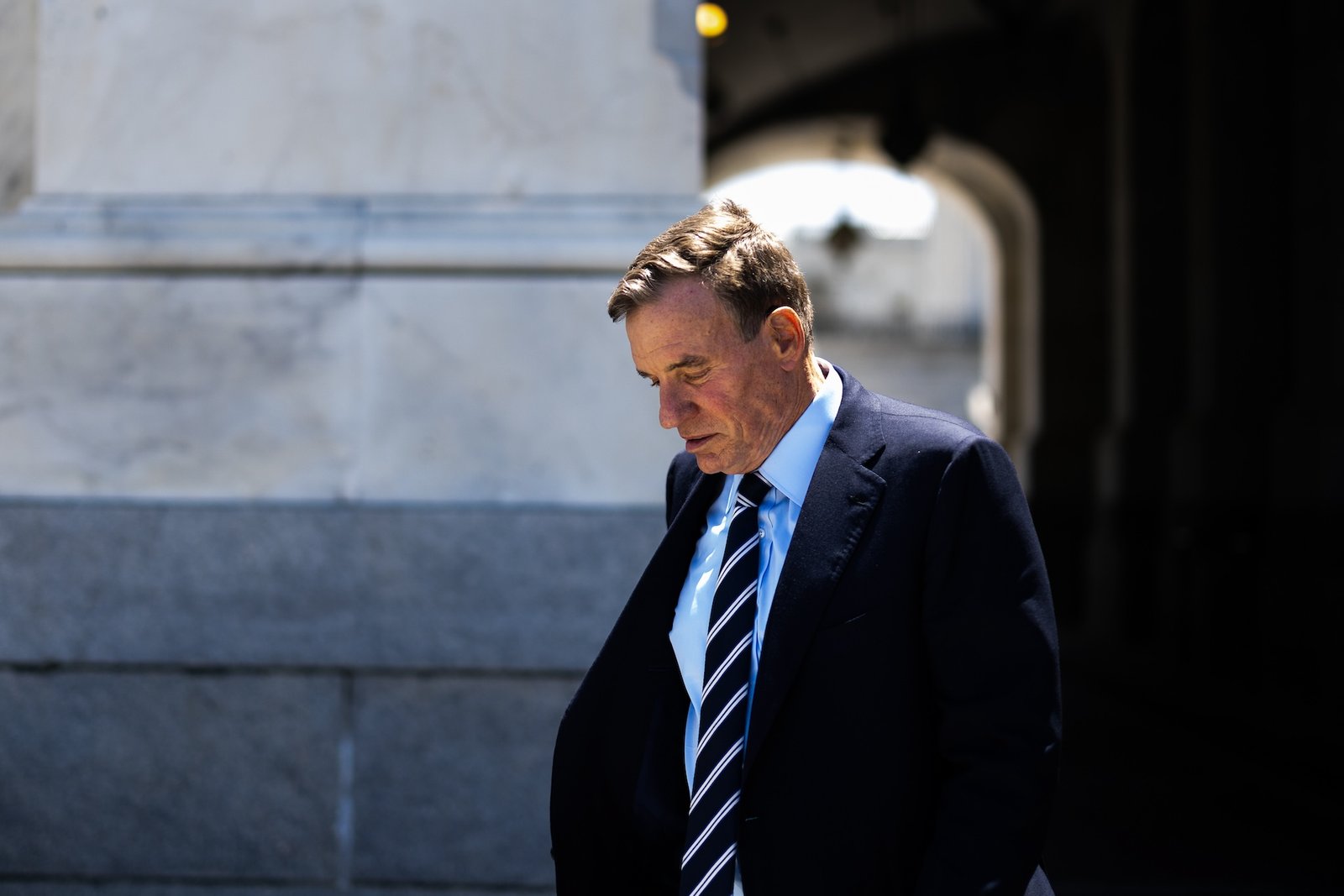
A new Senate bill would create a list of AI agent software providers that people can use to establish human ownership and operate agents securely on social media and other online platforms.
The Artificial Intelligence Access, Gatekeeper Exchange, and Nondiscriminatory Transfer (AI AGENT) Act, led by Sen. Mark Warner, D-Va., would give end users of large online platforms with more than 50 million customers or subscribers per month the right to select at least one AI agent provider that complies with security and identity standards developed by the Federal Trade Commission.
Such agents increasingly make decisions on behalf of users, such as making purchases, posting content on social media, or changing account settings, sometimes without the user’s consent or knowledge.
Under the bill, the FTC would certify independent entities to review AI agent providers. These certification bodies would ensure that the products meet basic privacy and data security protections and act in the user’s interest. The bill also requires providers to link each AI agent to the identity of its human operator and build in built-in controls that allow users to clearly grant or revoke permission for the agent to act on their behalf.
While the commission cannot ban platforms from using AI agent providers that do not meet these standards, it can remove violators from the FTC list.
The bill is a discussion draft and Warner said he would release it now to get feedback before submitting a formal version for consideration in the Senate.
“As agent AI transforms the way Americans interact with technology, consumers deserve real choice in the marketplace — and AI agents must be accountable to the people they serve,” Warner said in a statement. “This discussion draft is an important step toward creating a clear federal framework that promotes innovation, protects consumers and ensures that the United States continues to be a global leader in new technologies.”
Last year, Morgan Stanley estimated that nearly one in four (23%) Americans have made purchases using AI over a 30-day period and that agent buyers could potentially account for hundreds of billions of dollars in online commerce by 2030.
But AI agents can still be unreliable or unpredictable. They may make absurd purchases that a user would never knowingly approve, reveal sensitive information, or act contrary to a user’s interests.
As more agents flood the internet, the likelihood of AI bots interacting with and buying from other AI bots increases – underscoring the need for secure or regulated user solutions that can verify responsible human identities behind AI activities and provide basic security and privacy.
The Trump administration is trying to find its own basis for regulating border models. Earlier this month, the Commerce Department imposed export controls on Anthropic’s Mythos 5 and Fable 5 models, and the two parties are trying to negotiate a framework to ensure government oversight of newer releases.
An AI executive order issued by the Trump administration established a voluntary 30-day testing program for AI companies to submit certain frontier models for testing and evaluation. However, the government imposed the export controls days after Anthropic publicly released Fable 5, reportedly citing concerns that the model could be jailbroken.
Anthropic claims that extensive internal testing has not identified any universal jailbreaks for Fable 5, and that published third-party research to date has not shown that its guardrails preventing access to the model’s enhanced cybersecurity or biological capabilities have been bypassed. These are the capabilities that Anthropic cited when it withheld its latest model, Mythos, from release.

Table of Contents
Written by Derek B. Johnson
Derek B. Johnson is a reporter at CyberScoop, where he covers cybersecurity, elections and the federal government. Previously, he has provided award-winning coverage of cybersecurity news in the public and private sectors for various publications since 2017. Derek holds a bachelor’s degree in print journalism from Hofstra University in New York and a master’s degree in public policy from George Mason University in Virginia.
https://cyberscoop.com/ai-agent-act-senate-draft-bill-mark-warner/
