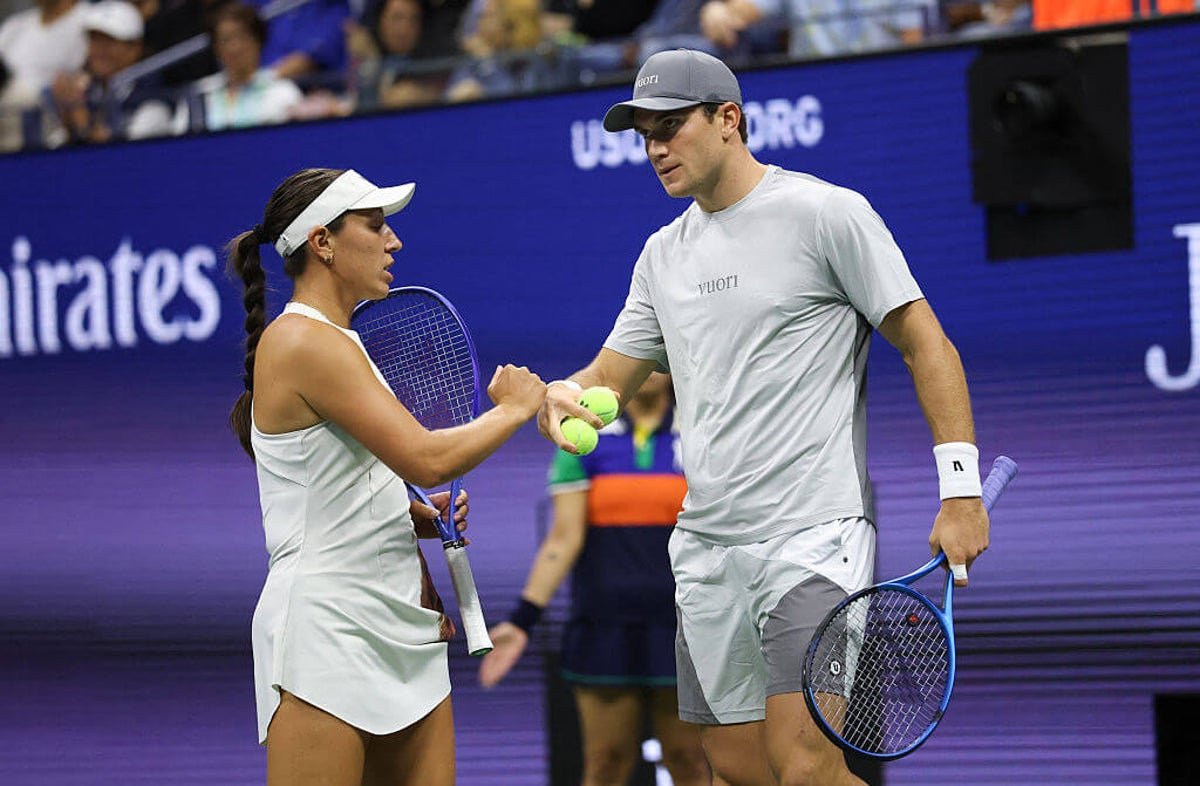
With the start of the final Grand Slam of the year just over a month away, the group of top 20 players pushing for more prize money and support at the sport’s biggest tournaments have set their sights on the US Open’s shiniest new toy: the star-studded mixed doubles tournament that now forms the basis for the increasingly lucrative Fan Week.
USTA leadership is working to avoid a potentially embarrassing partial boycott of an event for which it has already sold thousands of expensive tickets. So far, efforts have not gone far enough to satisfy the group of players, according to people briefed on the talks, who spoke on condition of anonymity to speak freely about a sensitive matter.
On July 4, the group’s leaders, including Jessica Pegula, met in London with Brian Vahaly, chairman of the US Tennis Association, which owns and operates the US Open, and Eric Butorac, the new tournament director, to discuss players’ demands for a larger share of tournament revenue in prize money and a greater say in the planning and operation of the tournament. Other members of the group include Coco Gauff, Aryna Sabalenka, Ben Shelton and Elena Rybakina.
Both sides felt they had made progress, according to two people briefed on those talks, including a USTA spokesman who confirmed details of the meeting. However, the USTA did not go so far as to allow the top players to withdraw their threat to skip the mixed doubles tournament and charity exhibitions that the USTA is organizing in the increasingly hectic week leading up to the main round tournament at the Billie Jean King National Tennis Center in New York.
Would the world’s best tennis players boycott a Grand Slam?
Ava Wallace
The main problem remains the prize money. Players aim for a guaranteed share of the total turnover. So far, tournament organizers have not settled on a revenue sharing formula.
Jannik Sinner, the world No. 1 in men’s singles, is among those considering not taking part in the mixed doubles tournament as part of the current financial agreement. Other top players are ready to get behind him, a sentiment that was passed on to Vahaly and Butorac and was also passed on to Craig Tiley, who took over as USTA chief executive on Monday.
Tiley was previously chief executive of Tennis Australia, the owner and organizer of the Australian Open, where he earned a reputation as one of the sport’s most player-friendly executives. However, last year he refused to discuss the revenue sharing issue with the top players.
A press release announcing the start of Tiley’s term failed to mention what is undoubtedly one of the key priorities of his first weeks in office.
“The USTA has created a great platform to further increase participation in the sport of tennis,” Tiley said in a statement announcing his launch. “We want to work with everyone in the tennis family to grow the sport beyond what anyone thought possible.”
Sinner did not take part in the event last year after withdrawing from the Cincinnati Open final played shortly before due to illness. He was a partner of Kateřina Siniaková, the world number 1 in women’s doubles. The USTA has not yet released an initial entry list for the event, which was won last year by top doubles players Andrea Vavassori and Sara Errani of Italy.
The players came together more than a year ago, working with Larry Scott, a longtime sports executive and former leader of the WTA Tour. In a series of latter and meetings, they have called on each Grand Slam tournament to establish separate player councils that have influence on matters such as match scheduling, contribute $4 million annually to player pensions and health care, and guarantee prize money of at least 16 percent of tournament revenue, rising to 22 percent by 2030.
According to a person briefed on the meeting between the players’ group leaders and the USTA, Vahaly and Butorac said the USTA was willing to move forward with establishing a players’ advisory board and contribute to players’ pensions and benefits, but did not commit to a specific amount.
According to the people, Vahaly and Butorac also said that the US Open wanted to announce a significant increase in prize money to maintain its position as the most lucrative Grand Slam. If the increase keeps pace with last year’s US Open and the recent increase at Wimbledon, the prize money will rise to at least $100 million.
While the players’ group has reportedly welcomed the progress, for now it plans to continue to insist on a revenue-sharing plan that will help restructure player compensation at the Grand Slams.
Through a representative, Pegula declined to comment for this story. Last month at Wimbledon, she said players were grateful for the tournament’s decision to increase prize money, “but even that doesn’t really answer the questions we’ve been asking.”
“I don’t know if the point just doesn’t get across,” Pegula said during her pre-tournament press conference, which she limited to less than seven minutes instead of the usual 15 minutes. “Before the next Slam, the US Open, I think we will have a good overview of where we really stand in the Slams.”
Two days after meeting with the USTA, the players’ group made perhaps its first real breakthrough at a meeting attended by Scott, representatives of several top players and Roland Garros executives, including Stéphane Morel, the executive director of the French tennis federation FFT, and Amélie Mauresmo, the tournament director.
According to one of the people briefed on the meeting, Roland Garros has presented a concrete proposal on all three points, including a prize money formula that ties player compensation to the tournament’s financial success. Negotiations with Roland Garros are continuing as the numbers do not yet meet the players’ demands. Earlier this year, the French Open increased prize money to $70 million, a 9.5 percent increase from 2025.
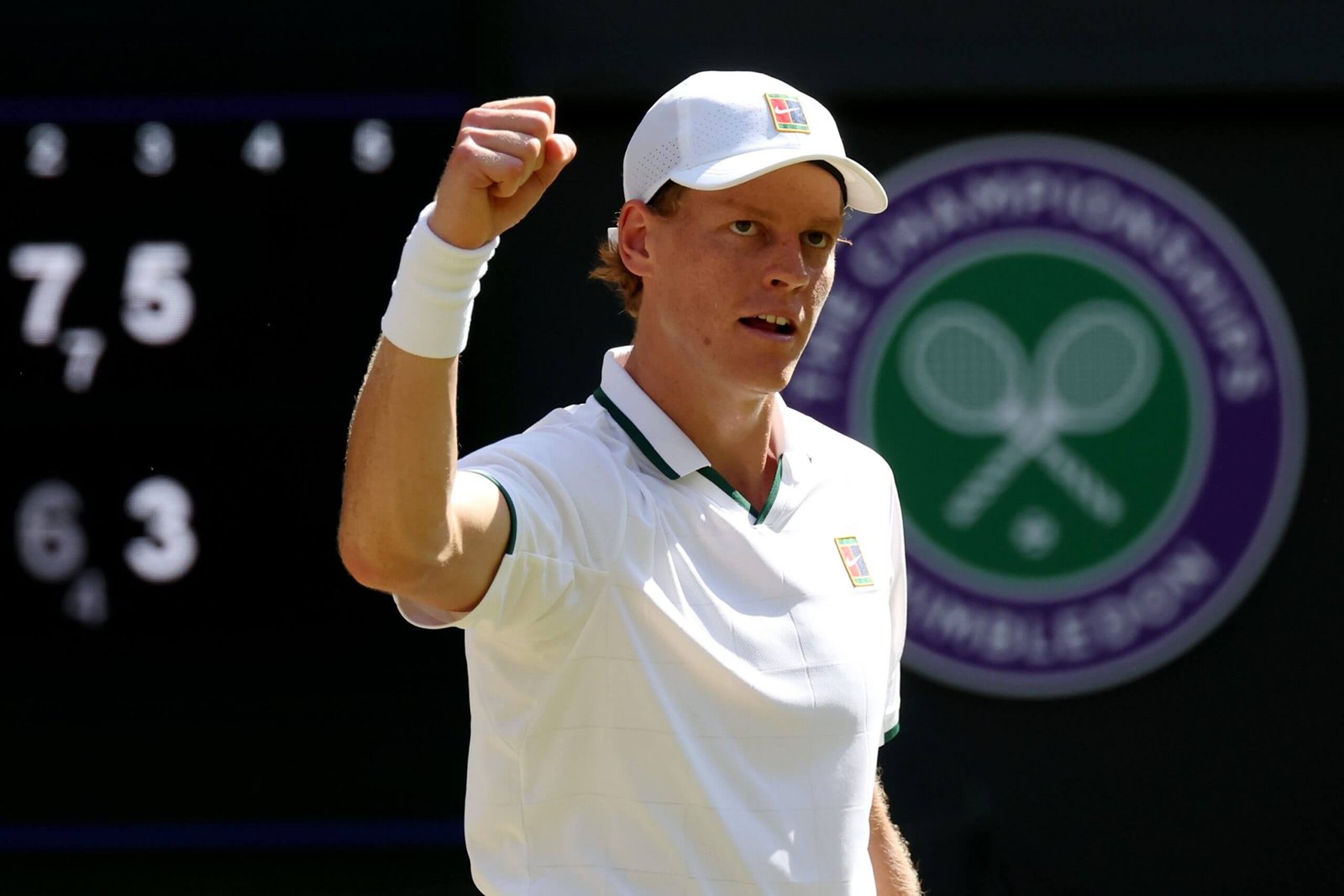
Jannik Sinner, who defended his Wimbledon title earlier this month, is among the players pushing for reforms. (Matthew Stockman/Getty Images)
Emmanuel Bouscasse, a spokesman for the FFT, said new proposals were still being analyzed.
“We continue to have constructive discussions with players and their representatives on a range of issues and appreciate the positive dialogue that has taken place over the last few months,” Bouscasse said in a statement. “As these discussions are ongoing, it would be premature to comment further.”
Last year, the US Open increased its prize money by 21 percent to $85 million, compared to $70 million the year before, after players initially asked to negotiate a new revenue-sharing model.
In June, the All England Club, which owns and organizes Wimbledon, increased its prize money by 20 percent to about $86 million.
In response, the players’ group said it welcomed the gesture but reiterated the lack of a revenue-sharing obligation. The prize money also remained below the required percentage of the projected total revenue and was made without any commitment to player welfare programs.
As a result, most of the top players continued the protest they initiated at Roland Garros. They limited pre-tournament media availability to a total of 15 minutes for all media, compared to 60 to 90 minutes in normal years. They also declined to conduct pre-tournament interviews with Wimbledon media rights holders, who in some cases have committed to contracts worth hundreds of millions of dollars to televise and stream the event.
Some top players, including Alex de Minaur, renounced the media boycott of Wimbledon, saying they valued the increase in prize money as a sign of progress.
Players who continued the protest said they were unhappy with what could be a one-off increase. But after declaring they would extend the limit on their media availability until the first week of the main draw, they reversed that plan before the tournament had even begun, following discussions with AELTC chair Deborah Jevans, tournament director Jamie Baker and board member Tim Henman.
Both the AELTC and the FFT have stated that they do not believe revenue is the correct number for calculating prize money as they do not take into account the reinvestment of that revenue into the tournaments and the wider tennis ecosystem. Vahaly and Butorac said at the meeting in London that the USTA cannot make any commitments to a revenue-sharing model until Tiley begins his term as chief executive.
If the US Open increases its prize money by 20 percent to about $100 million, it is not clear whether players would meet their original demand for 16 percent of their earnings. In 2024, the most recent year for which revenue is available, the USTA reported $560 million in tournament revenue. Its $85 million prize pool for 2025 was just under 15.2 percent of that figure, but the players’ group used actual prize money for a given tournament year as a share of hypothetical revenue for that same year to make its case.
Revenue for last year’s US Open won’t be released until later this year, but the first edition of the new mixed doubles tournament and the first Sunday start in the tournament’s history (which adds an extra day of ticket sales) provided additional crowds.
The 2026 tournament has seen significant ticket price increases, and overall growth in media rights and sponsorship fees could push tournament revenue this year to nearly $700 million. The organization said the increased revenue would help cover the cost of an $800 million renovation of Arthur Ashe Stadium and the construction of a new training, dining and hospitality center for players adjacent to the stadium.
This is an example of the reinvestment that the Grand Slams say underpins the current use of its revenue and the financial model under which it operates. The group of players is pushing for more.
https://www.nytimes.com/athletic/7459141/2026/07/21/tennis-grand-slams-prize-money-protest-us-open-mixed-doubles/
