

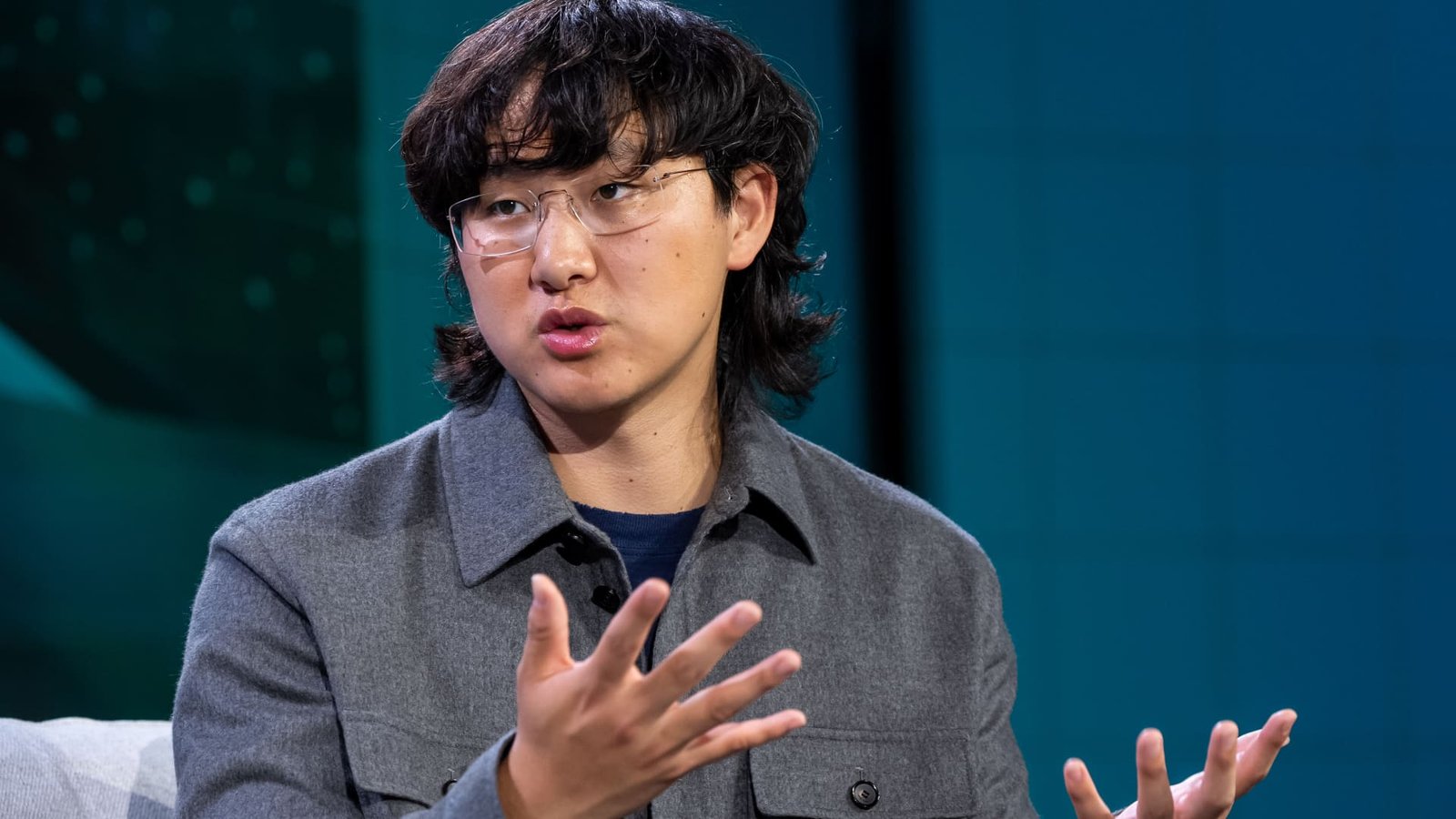
Meta Chief AI Officer Alexandr Wang during the Bloomberg Tech conference in San Francisco, California, USA, on Thursday, June 4, 2026.
David Paul Morris | Bloomberg | Getty Images
Three months after unveiling its first artificial intelligence model led by AI chief Alexandr Wang, Meta introduces a major update to compete with OpenAI and Anthropic in critical market areas.
Muse Spark 1.1, which Meta unveiled on Thursday, represents its “strongest model for agent and coding work to date,” Wang said in an interview with CNBC. The first Muse Spark model, released in April, was only available to “select partners” who could access the technology through a “private API preview.”
Meta is making the new model’s API available through a developer portal as part of a public preview where users can log in and see integration instructions. A Meta spokesperson said some early partners can already access the API and new users “can put themselves on a waitlist and be added from there over time.” Meta said that for now it is limiting API access to its own properties rather than making it available on third-party platforms like the popular OpenRouter marketplace.
“This is in addition to the computing infrastructure we have built,” Wang said.
It’s Meta’s second notable rollout for the Muse family this week. On Tuesday, Meta Muse Image, originally codenamed Mango, released an image creation model as the company looks to attract creatives and advertisers to its offerings.
Meta CEO Mark Zuckerberg is coming under pressure from Wall Street to generate a return on the company’s massive and growing investments in AI infrastructure and development. Although Meta spends as much as its hyperscaler competitors, it doesn’t have a cloud infrastructure business (though it plans to start one) and hasn’t been able to compete with OpenAI, Anthropic, etc Google in the development of popular models and AI applications.

Wang called the Muse Spark update’s pricing “very aggressive and attractive” compared to similar offerings from labs like Anthropic and OpenAI. He said every new API account will start with a free $20 credit. From then on, the company will charge $1.25 per million input tokens and $4.25 per million output tokens, he said.
“The goal is to have really attractive pricing that scales with immense consumption usage,” Wang said.
He said Muse Spark 1.1 outperforms competing models in certain tasks, including the ability to interact with various third-party coding products and services.
Wang’s Meta Superintelligence Labs (MSL) have trained Muse Spark 1.1 to excel at coding-related tasks, as this ultimately improves the capabilities of AI agents that can perform multiple tasks autonomously like a fleet of human interns, he said.
“As part of this, you kind of have to build coding functions that serve the general agent functions,” Wang said.
The tech industry’s enthusiasm for AI agents increased in the first half of 2026, driven in part by the sudden popularity of OpenClaw, which allows developers to manage AI models that power powerful digital assistants. Wang said Meta trained Muse Spark 1.1 “to work well with all the popular wiring harnesses developers use today, and we felt this was the best approach for this model given our goal of maximizing adoption.”
Although Meta’s previous AI strategy focused on releasing the previous Llama family of models to the open source community, the company is now focused on selling access to proprietary AI models.
Wang said Meta is still “committed to open source” and that its MSL unit has a “variant of Muse Spark that is in development and that we plan to release as open source.” He declined to say when the company would release it.
Wang added that he has turned the latest Muse Spark model “on its head” and is excited about the technology’s ability to be used as a tool to improve personal health through tasks such as browsing the Internet, reading academic papers and accessing personal health data.
“It’s one of those use cases that I think really gets to the heart of the needs of these agent systems,” Wang said of his AI and health experiments.
Wang said Meta is currently training a more powerful AI model codenamed Watermelon, but did not say when it would be released. Muse Spark’s codename was Avocado.
REGARD: A year in Meta Superintelligence Labs.
 Choose CNBC as your preferred source on Google and never miss a moment from the most trusted name in business news.
https://www.cnbc.com/2026/07/09/meta-jumps-into-ai-coding-market-to-chase-anthropic-and-openai.html
