

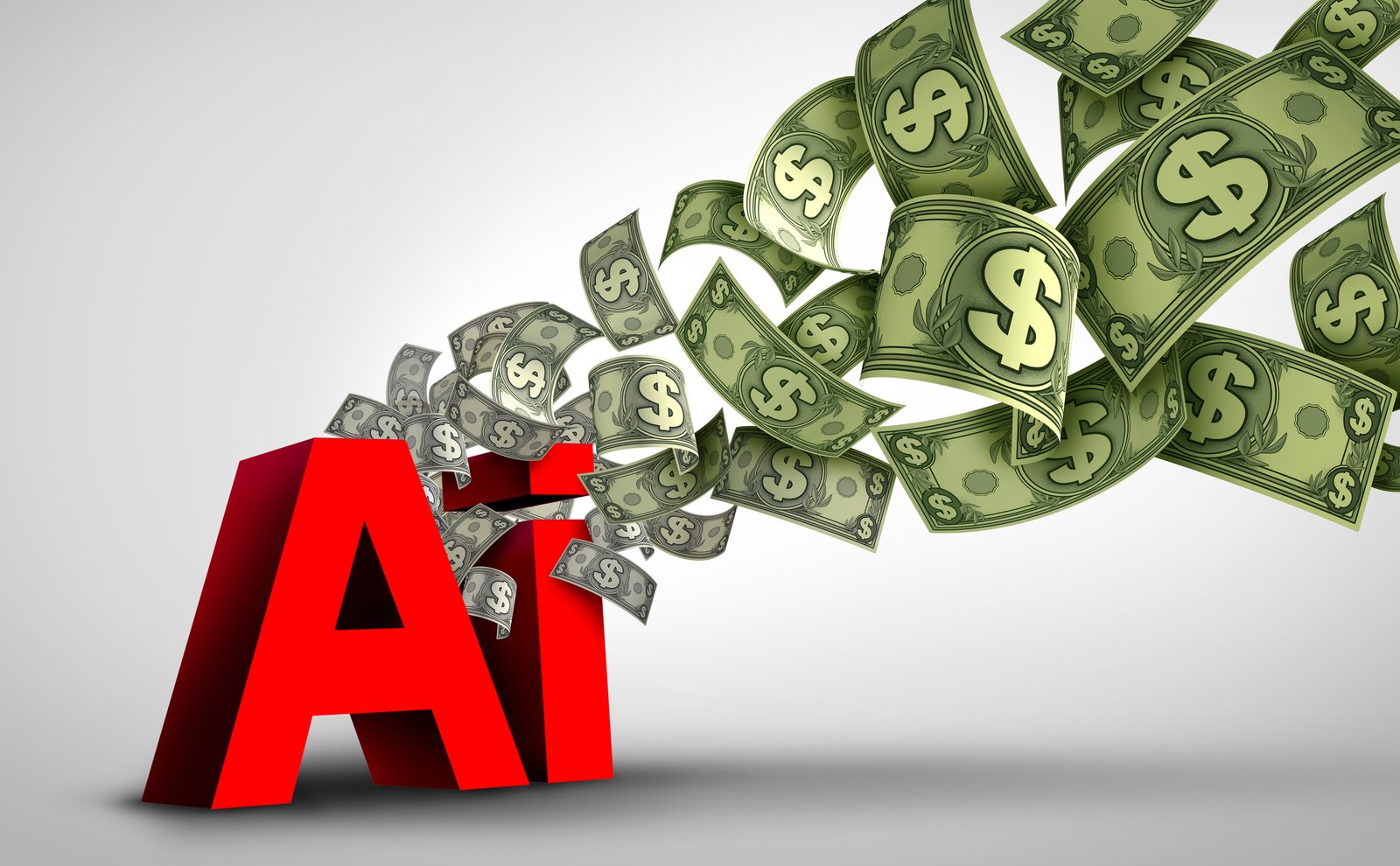
Artificial intelligence companies initially justified their extreme capital investments—the four largest tech companies expect to spend more than $750 billion on AI infrastructure this year alone—by arguing that the technology would replace all human workers. They’ve since realized what an incredibly bad PR pitch that was and have opted for a sunnier scenario where “we’ll be able to keep people at the center,” as OpenAI’s Sam Altman said in May.
More from David Dayen
However, behind the rhetorical shift lies a sobering reality: AI is proving to be more expensive for companies than paying their employees. And that could be one of the many triggers that collapse the fragile economic edifice that AI dreams support.
Most of the news has shifted to corporate sites, but AI firms have adjusted the prices of their products for business customers in recent months. Instead of a subscription fee to use OpenAI’s ChatGPT, Microsoft’s Copilot, or Anthropic’s Claude, they now use token-based billing. A small fee is charged each time the model is queried. This is a very common technique that locks users into a product and then demands more. But it has completely thrown off balance the company’s planning for integrating AI.
A simple cost-benefit analysis that makes AI too expensive cannot be solved by a faster or smarter tool.
Companies that previously told their employees to use AI in all areas of their work are now seeing how it impacts the bottom line. An unnamed company reportedly spent half a billion dollars on Claude in a single month. This is partly because AI is being used for everyday tasks like creating PowerPoint presentations to “prove” the technology’s rapid adoption, which is highly valued on Wall Street.
However, now we see the snapback. Companies like Uber and Tesla as well as Meta and Microsoft limit the use of work tokens. (For Tesla, Elon Musk’s in-house product Grok is exempt from the cap.) Palantir CEO Alex Karp said bluntly earlier this month that “something has gone completely wrong” with the billing model. These are some of the biggest proponents of AI adoption, and some of them have AI companies themselves; If they argue, imagine what even more skeptical companies think.
This cost issue is different from other business concerns about AI. Ford Motor Company rehired hundreds of qualified engineers; The loss of their institutional knowledge and subsequent failure to detect AI errors proved incredibly expensive, costing billions of dollars. Meta’s Mark Zuckerberg has said something similar, acknowledging in internal town halls that AI development hasn’t been as fast as he expected. But AI errors are one of the things that future improvements could theoretically eliminate over the years. A simple cost-benefit analysis that makes AI too expensive cannot be solved by a faster or smarter tool.
This is a serious hurdle for the economics of AI, which is actually another way of saying it is a serious hurdle for the US economy.
The revaluation was necessary due to the continued monetary losses of the major AI modelers. OpenAI and Anthropic simply don’t generate the kind of revenue to keep up with their computing expenses, which, by one estimate, account for 70 percent of the entire industry’s revenue. They raised prices because they had to have at least an acceptable balance sheet before planned IPOs.
If companies that have introduced AI now rebel against the price adjustment, then the AI business model is affected by fatal corruption. The market valuations of these companies and the pick-and-shovel companies that supply them with computer chips and the data centers to house them are based on continued growth. A limited use of AI does not fit this vision.
The stock market depends not only on promises of growth, but also on the infrastructure spending that strengthens it. The fierce storm of protest against data centers is slowing expansion – the data center pipeline was already halved at the end of last year – but delays are one thing, while overcapacity because no one wants to pay for the end product is something else, something much worse.
Meta’s push to build a cloud computing business could be the first sign of overcapacity. Zuckerberg doesn’t really know what to do with a company run by a dying social network at the end of its growth cycle, and he’s looking for anything that can excite investors, from virtual reality to prediction market apps to smart glasses with paywalled subscription fees. The cloud computing idea is part of this effort, but the fact that Meta wants to lease some of its existing computing capacity to serve the new business area is confirmation that the company has this capacity.
In other words, Meta has spent more than necessary and may need to reduce spending or find another use. This is a frightening thought for investors. And there’s more: after a gigantic IPO, SpaceX’s price has stagnated, and even the bonds of its debt are not being sold. We’ve seen pullbacks in tech stocks over the last month that were declared purely technical, but they’re more common. Certain indicators show that the market is more overvalued than it was on the eve of the 1929 collapse. And companies like Nvidia, which are supplying the AI expansion, would have no protection if there was a prolonged shutdown.
A leaked draft report from the Treasury Department compares AI risks to investors to the dot-com bubble of the early 2000s, but with larger implications for the broader economy due to AI’s deeper impact. If anything, the report is below that. As I’ve written, the economics of building data centers are more like the housing bubble, including the patchy lending and accumulation of debt. Despite these warnings, major investors continue to pump money into the sector and its underlying private lending apparatus.
Where the leaked Treasury report is correct is in its assertion that any change in conditions could lead to a crisis and that companies scaling back their AI use en masse would certainly be eligible. The Treasury Department said the report came from a “low-level employee” and would at most speak of data center delays as a systemic risk. But that’s hardly the biggest risk here; In fact, these delays can be a saving grace if they limit excessive construction that cannot be rationalized by economic fundamentals.
So maybe we should imagine Sam Altman offering 5 percent of OpenAI to the US government, not to enrich the public, but to dump something on us that isn’t as lucrative as anyone thinks.
Table of Contents
Related
https://prospect.org/2026/07/08/great-ai-repricing-isnt-going-well/
