Thirty Nobel Prize winners, representatives from 30 countries, former heads of state and government, 20 leading experts in artificial intelligence – including OpenAI, Google DeepMind, AARU and Anthropic – and 30 of the world’s most important universities and research institutions will meet this week at Borgo Laudato si’ in Castel Gandolfo and later at the Capitol, where they are expected to adopt a Rome Declaration for a Disarmed and Disarming Peace.
Vatican News
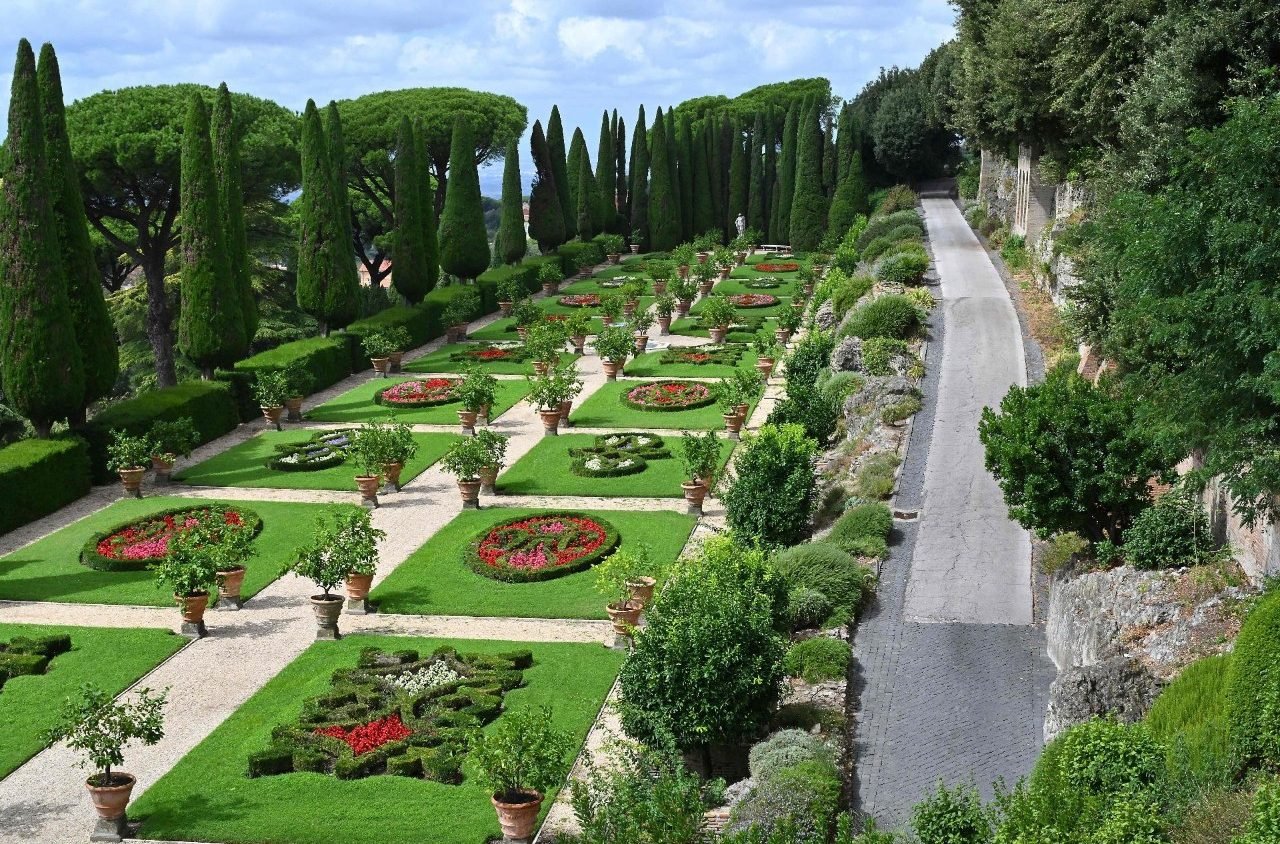
From July 14 to 16, the Vatican will host the Global Nobel Laureate Assembly on Artificial Intelligence and Nuclear War at Borgo Laudato si’ in the Pontifical Gardens of Castel Gandolfo, bringing together more than 200 of the world’s most eminent personalities and representatives of leading international research institutions in the fields of peace and artificial intelligence.
Inspired by Pope Leo XIV’s new encyclical Great humanityThe gathering is dedicated to protecting the human person in the age of artificial intelligence and takes place in a context characterized by international conflict, growing instability and an increasingly complex nuclear landscape. It is part of Pope Leo’s vision for a “disarmed and disarming peace.”
The meetings culminate in the drafting of the Rome Declaration for a disarmed and disarming peace in the age of artificial intelligence, nuclear and autonomous weapons, new digital protocols and new models of digital development.
The event will end on July 16th with a ceremonial meeting in Rome’s Town Hall on the Capitoline Hill.
For three days, 30 Nobel Prize winners, former heads of state and government, 20 of the world’s leading artificial intelligence experts and innovators – including representatives from OpenAI, Google DeepMind, AARU and Anthropic – will join representatives from 30 of the world’s most prestigious universities and research institutions in a “conclave”-style dialogue on the most important challenges facing humanity today.
In particular, they are expected to discuss international security, the management of new technologies, disarmament and the development of a peace-oriented economy.
The focus of the discussions is the search for a new global paradigm that combines innovation, responsibility and ethics.
The initiative is sponsored by the Nobel Laureates Assembly for the Prevention of Nuclear War, the Nobel Women’s Initiative, the International Physicians for the Prevention of Nuclear War (IPPNW), the Pugwash Conferences on Science and World Affairs, the Yunus Center, the Catholic University of America, the University of Chicago Existential Risk Laboratory, Harvard Medical School, Brigham and Women’s Hospital, the University of Notre Dame, the Bulletin of the Atomic Scientists and Soka Gakkai International, with the Domus Communis Foundation acting as the general secretariat.
Representatives from some of the world’s leading universities and research institutions will attend, including Harvard University, Stanford University, Columbia University, Princeton University, University of California, Berkeley, Middlebury Institute of International Studies at Monterey, University of Oxford, University of Manchester, Collège de France, Université Paris 1 Panthéon-Sorbonne, Tsinghua University, Queen’s University, Simon Fraser University, Australian National University, University of Antwerp and St. Patrick’s Pontifical University, the University of Rome “Tor Vergata”, the Balseiro Institute, the University of Southern California and the Università Telematica Internazionale UniNettuno.
The Assembly will conclude with the Rome Declaration for a Disarmed and Disarming Peace in the Age of Artificial Intelligence, Nuclear and Autonomous Weapons, New Digital Protocols and New Models of Digital Development.
The Declaration aims to establish principles and guidelines for the governance of artificial intelligence and promote a vision of international security based on cooperation, human dignity, holistic human development and peace among peoples.
https://www.vaticannews.va/en/church/news/2026-07/world-leaders-and-ai-experts-to-convene-on-disarmament-at-borgo.html
