


At a closed-door briefing earlier this month, key Pentagon officials sat down with spending leaders from both parties in the House of Representatives to make an urgent case for quickly providing more money to finance the U.S. war in Iran.
But as members of both parties pressed for details, Pentagon officials were unable to provide any meaningful details about why they needed the money so quickly – frustrating Republicans and Democrats alike, according to two people in the room.
Now, with the Pentagon’s reserves further depleted, the administration is putting all-out pressure on Republican lawmakers in hopes of securing tens of billions of dollars that officials are seeking this summer as the U.S. continues its fight against Iran.
Last week, the Pentagon invited dozens of House members to a marathon meeting that included a face-to-face meeting with Defense Secretary Pete Hegseth. Select members – including the chairman of the chamber’s powerful Appropriations Committee – were also invited to Camp David, and Vice President JD Vance went to the basement of the Capitol on Wednesday to sell the plan to the GOP base, arguing that Republican unity was essential.
But several GOP members told CNN that they still lack crucial information about the military’s capabilities and needs — and that they are unconvinced by what they have heard. Even Republicans supporting the funding push worry that a sensitive political gamble in the waning days of summer just months before the midterm elections could lead to a legislative implosion.
“It’s a risky undertaking,” Majority Leader John Thune told reporters at the Capitol last week, pointing to other efforts by House Republicans to pass a bipartisan defense bill and other priorities. “Is the juice worth the squeeze?”
The Defense Department said it has had meaningful discussions with lawmakers.
“The War Department has had hundreds of conversations with individual members of Congress or groups of them over the past two months,” a Defense Department official said. “This represents one of the most productive and appropriate legislative engagement packages in many years, alongside the continued provision of budget briefings, judicial committee information requests and regular interactions between the department and the Hill.”
Defense activists in Congress have been warning for months that the Pentagon’s ammunition and funding have been severely depleted since the start of the war in Iran. Lawmakers expected to have to pass some sort of additional funding package before the end of the fiscal year, and congressional leadership has made clear they want to move quickly.
“The defense people are dealing with an emergency that needs to be addressed,” said Rep. Mike Simpson of Idaho. “They will run out of money in mid-August.”
Rep. Steve Womack, an appropriator from Arkansas, argued, “The Pentagon people I’ve talked to say if we’re still having this conversation in August, it’s not a good thing.” And Rep. Ronny Jackson, a member of the Intelligence, Armed Services and Foreign Affairs committees, told CNN the deadline is “serious.”
“We need to get it done as quickly as possible,” Jackson said.
But the emergency argument doesn’t appeal to everyone. Some conservatives have threatened they might vote against the funding because it would simply be charged to the country’s credit card. Others argue that they don’t understand why the Pentagon needs money so badly after billions were injected into the Defense Department as part of the last sweeping partisan bill.
Rep. Brian Fitzpatrick, who said he recently declined a visit to Camp David because he was not interested in a “sales pitch” about funding, said he still had many questions.
“That’s a lot of money to spend in a very short period of time, and I’m not saying they haven’t done it,” Fitzpatrick said, but “they shouldn’t just expect us to go along with whatever they say. I mean, they need to make their case.”
A Republican member who spent Tuesday evening at the Pentagon argued that even after a nearly four-hour meeting at Defense Headquarters, they were still unconvinced.
“To me, they didn’t make any convincing arguments. The microphones weren’t even working,” the member said. “They’re asking for $1.5 trillion and they had chips and dip.”
Another member who has failed to agree on a $95 billion plan from House GOP leaders for defense and other priorities, Rep. Scott Perry of Pennsylvania, told CNN: “Many of us believe there should be grants.”

Republican leaders are still moving quickly and have signs of hope.
“I think that now that many of our nation’s ammunition stockpiles have been exhausted in both Ukraine and Israel, we must respond to this emergency now, regardless of whether you are for or against U.S. involvement in both conflicts. I think responsible lawmakers must come together to ensure that our military has a stockpile of ammunition to deter the next conflict. Our adversaries need to know that we are well armed, trained and equipped,” said Republican Rep. Nick LaLota of New York.
The House Budget Committee was able to advance the proposal unveiled by GOP leaders last week that includes $60 billion for the Pentagon and $13 billion for intelligence agencies. And leadership is confident they can try to bring it up for a vote next week. But even if Speaker Mike Johnson manages to get it through his chamber, Republican senators are expected to make significant changes to the legislation, which also includes grants to fund President Donald Trump’s SAVE America Act and billions in aid for farmers.
In the Senate, aides and members argue that the chamber is likely to demand far more money for the Pentagon than is included in the House bill. The $73 billion for defense is just a fraction of the original $350 billion the administration previously allocated as part of its $1.5 trillion budget request. The lower figure came after conservative members of the Budget Committee argued that they would be happy with only a fraction of the $350 billion if the money were not accounted for.
“In the Budget Committee, we reduced excess demand,” Indiana Republican Erin Houchin told CNN. “We applied some downward pressure there.”
If the funding is increased in the Senate, it could affect the vote total when it is sent back to the House.
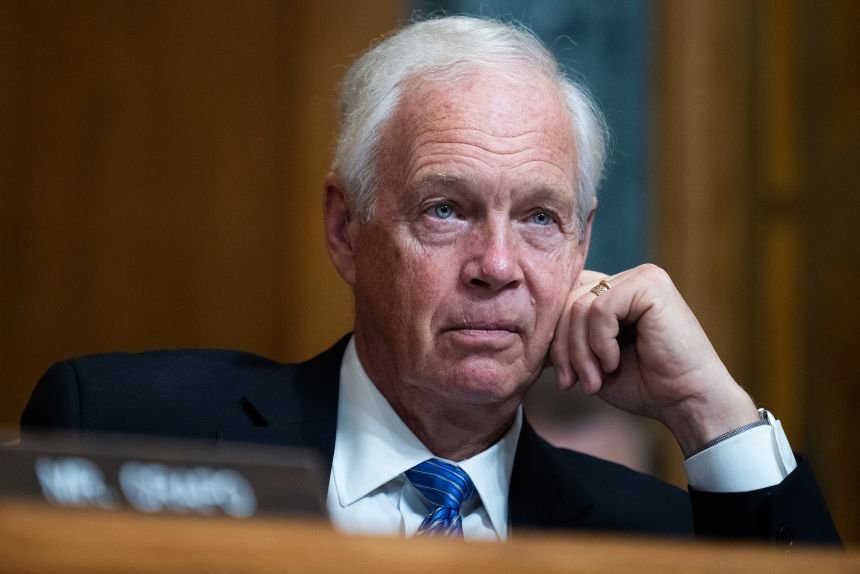
Following the sudden death of the late Senator Lindsey Graham, all eyes are on the new Senate budget chairman, Senator Ron Johnson, a budget hawk who could also push for defense spending balances within his own framework. That’s a potential problem for moderates in the House, who have argued they don’t want to hold tough votes on program cuts before re-election.
It is also not clear whether provisions related to the president’s SAVE America Act will be adopted by the Senate parliamentarian, who must decide what is relevant under Senate rules. If the president’s voting bill is not approved, that, too, could hurt prospects in the House of Representatives.
“The SAVE America Act must be enacted,” warned Rep. Chip Roy, a conservative from Texas. “If there is no commitment here to ensure that voter rolls are correct, that citizenship is verified, that voter ID is verified, then we have a real problem.”
https://www.cnn.com/2026/07/20/politics/trump-iran-war-republicans
