

Table of Contents
Overview:
As the battles over Bears Ears, Line 5 and other sacred sites continue, Levi Rickert argues that local voters should pay close attention to who is funding political campaigns.
Opinion
For generations, tribal nations have fought to protect places that preserve our ancestral stories, our ceremonies, and our identity. But these sacred places are repeatedly targeted – not because they have lost their cultural significance, but because someone believes that they can be used to make money.
President Donald Trump’s decision last week to dramatically reduce the boundaries of the Bears Ears and Grand Staircase-Escalante national monuments is the latest reminder that the fight for public lands is rarely just about preservation. It is also about power, influence and the financial interests that shape government policy.
Bears Ears isn’t just a scenic destination in southeastern Utah. It is a vibrant cultural landscape of great importance to many tribal nations, including the Hopi Tribe, Navajo Tribe, Ute Indian Tribe, Ute Mountain Ute Tribe, and Zuni Pueblo. Thousands of archaeological sites, ancient villages, burial sites and ceremonial sites are woven throughout the landscape.
For the indigenous people, these places are not relics of history. They are part of us.
Grand Staircase-Escalante also contains irreplaceable cultural resources and landscapes associated with indigenous peoples who have lived in the region for thousands of years.
If the protection of these areas is weakened, the question naturally arises: who benefits?
The answer is not difficult to find.
For decades, energy companies, mining companies and their political allies have argued that the areas around Bears Ears and Grand Staircase-Escalante should be opened up for greater resource extraction. The region contains deposits of uranium, coal, oil, natural gas and other valuable minerals. These resources represent potential profits for companies, but also pose irreversible risks to landscapes that tribal nations have worked tirelessly to protect.
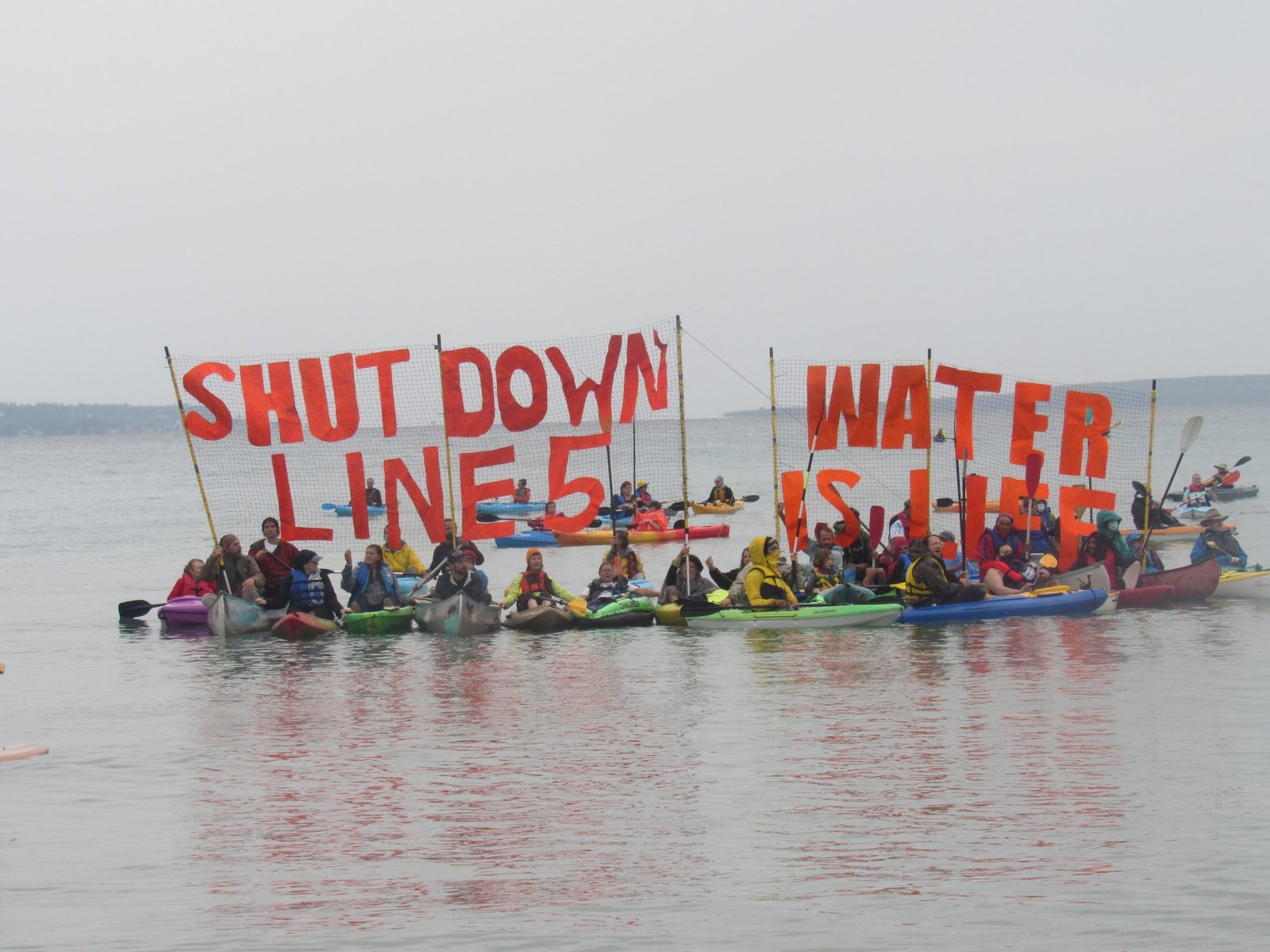
Last Wednesday, Michigan’s tribal nations felt deeply betrayed when Democratic Gov. Gretchen Whitmer’s administration gave oil giant Enbridge a permit to build a tunnel under the Strait of Mackinac to accommodate the 73-year-old Line 5 pipeline. This allowed Canadian oil to continue to flow through Michigan on its way back to Canada.
Bay Mills Indian Community President Whitney Gravelle, who has advocated for the Enbridge Line 5 project for the past decade, wrote in an op-ed for: Local news online“Some things are just too sacred to bury under a tunnel.”
The Michigan tribes were not the only ones opposed to the tunnel. Environmental groups, including the Sierra Club, strongly opposed the project.
“This tunnel puts our Great Lakes, our clean drinking water and our ecosystems at risk through a catastrophic oil spill. Instead of prioritizing the safety and well-being of Michiganders, the Whitmer administration has sided with a multi-billion dollar foreign oil company while Michigan taxpayers will bear all the risks for decades to come,” the Sierra Club said in a statement.
Gravelle argues that the state of Michigan’s tribal consultation, conducted by various departments or agencies, gave the impression that state officials were simply checking a box. This fragmented approach has failed, she claims.
“The issue is whether one of the largest freshwater systems on earth should be put at continued risk by a pipeline that provides minimal direct benefit to Michigan while enriching a private corporation…It is about whether consultations are a real decision-making opportunity or simply another procedural box to check,” Gravelle writes.
Aboriginal communities have repeatedly found themselves caught between extractive industries and lands of great cultural and spiritual importance. This has happened all over the country. Whether it’s uranium mining near the Grand Canyon, oil pipelines through treaty territory, copper mining at Oak Flat or drilling in the Arctic, the pattern remains painfully familiar.
Promises of economic development often overshadow tribal consultations.
With midterm elections approaching, local voters should pay close attention not only to what candidates say about tribal sovereignty, but also to who is funding their campaigns.
Campaign contributions tell a story.
When candidates receive significant financial support from oil companies, mining companies, fossil fuel trade groups or industries seeking expanded access to public lands, local voters should ask tough questions.
Will these elected officials stand with tribal nations when sacred sites are threatened? Or will they stand by the industries that funded their campaigns?
These are not partisan questions. These are questions about accountability.
Protecting sacred lands requires elected leaders willing to put tribal sovereignty and cultural preservation above corporate profits.
Most importantly, indigenous communities must recognize that elections are not simply contests between political parties. It’s about whose voices will have the greatest weight when decisions are made about our ancestral lands, our cultures and our future – for the next seven generations.
As Gravelle’s column makes clear, sacred places remain vulnerable whenever powerful commercial interests are allowed to eclipse the rights of indigenous people. Local voters should remember this as campaign season begins. While the names on fundraising reports don’t always appear on the ballot, their influence often extends far beyond Election Day.
They are all connected.
Related
https://nativenewsonline.net/opinion/the-overtaking-of-our-sacred-lands-native-voters-should-follow-the-money/
