

By Srini Krishna – Fellow, Intel Data Center Group
Opinion: AI performance depends on more than just accelerators
In the age of AI, it’s easy to focus on the most visible parts of the system: the accelerators, the scale of the cluster, or the size of the model. But as AI systems become more complex, one of the most important questions for data center managers is also one of the most practical: Can the platform transfer data fast enough to maintain the productivity of the entire system?
Memory bandwidth becomes a strategic design point
Modern AI host CPUs are expected to support larger models, denser GPU configurations, and increasingly data-intensive pipelines. In this environment, storage performance is not a secondary specification. It can determine whether CPUs, accelerators and memory operate as a coordinated system – or spend valuable cycles waiting for data.
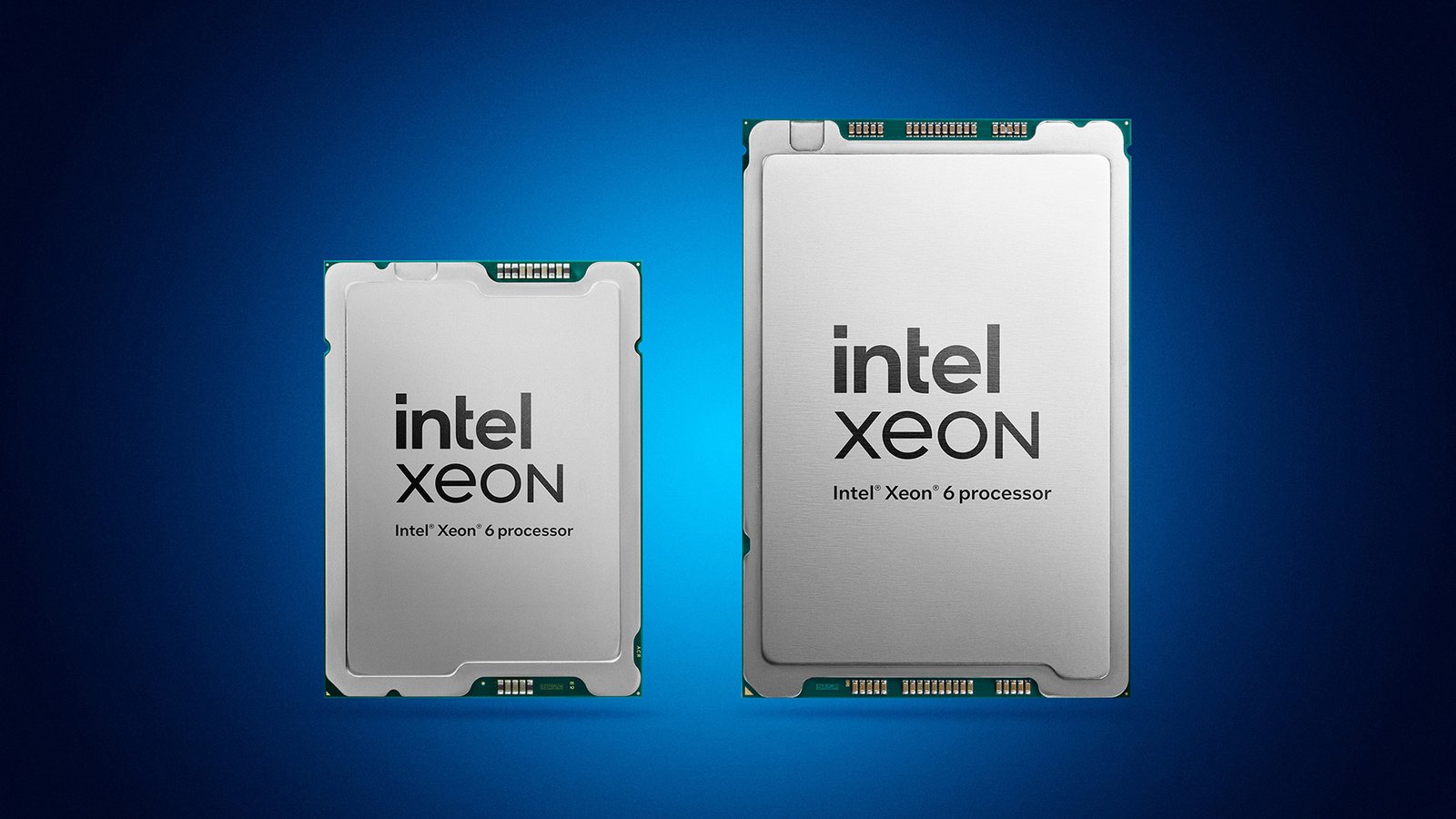
For this reason, Intel continues to improve memory performance on the Intel Xeon 6 platform. It is planned that the Intel For customers designing AI, analytics and other data-centric infrastructure, these benefits are important because they help data move more efficiently throughout the system.
With this improvement, Intel Xeon 6+ and Intel enable new levels of RDIMM memory bandwidth for demanding workloads. Production availability is targeted for August-September 2026.
The gains can be seen where those responsible for infrastructure feel pressure
The benefits go beyond the memory specification itself. Compared to today’s 6400 MT/s RDIMM deployments, measurements show performance improvements1 across a wide range of workloads, with major improvements for memory bandwidth-sensitive applications. Overall, moving to 8000 MT/s RDIMM memory provides up to 20% more overall memory bandwidth1This helps feed data to CPUs and AI accelerators and reduce performance loss due to memory bottlenecks.
For data center teams, this means a simple but important principle: balanced systems win. A faster accelerator or higher core count can only deliver its full value if the rest of the platform can power it, orchestrate it, and scale with it. Memory bandwidth is one of the foundations of this balance.
A roadmap for what comes next
Storage availability and ecosystem readiness are often critical factors in deployment plans. Broader storage support gives customers greater flexibility to optimize performance, capacity, cost and delivery continuity – while preparing for workloads that will only become more data-intensive.
Looking forward, Intel plans to launch Gen 2 MRDIMM support at up to 8800 MT/s in Q1 2027. This roadmap helps enterprises continue to scale memory bandwidth while increasing compute density in AI, analytics, HPC, and other demanding workloads.
In my opinion, storage speed is becoming a competitive advantage. Those organizations that view it as a strategic infrastructure decision – rather than just a single point on a platform data sheet – will be better positioned to extract more value from AI. Intel
Disclaimer
Performance varies depending on usage, configuration and other factors. Find out more on the Performance Index website.
Performance results are based on testing on the data provided in the configurations and may not reflect all publicly available updates. Configuration details can be found in the backup. No product or component can be completely safe. The results were estimated or simulated.
Your costs and results may vary.
1 Baseline:
1 node, 2x Intel® [6400 MT/s]), microcode 0x1000441, 1x I210 Gigabit network connection, 1x 1.7T Micron_7450_MTFDKBG1T9TFR, CentOS Stream 9, 6.6.0-gnr.bkc.6.6.37.1.51.x86_64,. Test from Intel June 2026.
New:
1 node, 2x Intel® [8000MT/s]), microcode 0x1000442, 1x I210 Gigabit network connection, 1x 1.7T Micron_7450_MTFDKBG1T9TFR, CentOS Stream 9, 6.6.0-gnr.bkc.6.6.37.1.51.x86_64. Intel 350W TDP test as of June 2026.
SW: Intel Memory Latency Checker v3.12.
Workloads: latency, local MLC socket latency, local cluster storage, random. Memory B/W, MLCPeak BW – 2TPC All Sockets 2R1W NTW – Triad-like
See [7G40] Results may vary.
https://newsroom.intel.com/opinion/memory-bandwidth-may-be-most-overlooked-ai-performance-metric
