

AI company Anthropic will pay $1.5 billion to hundreds of thousands of authors as part of a landmark copyright infringement settlement. However, some authors have mixed feelings about the outcome.
RICCARDO MILANI/Hans Lucas/AFP via Getty Images/AFP
Hide caption
Toggle label
RICCARDO MILANI/Hans Lucas/AFP via Getty Images/AFP
Charles Graeber said he has positive feelings about being among the three lead plaintiffs in one of the largest copyright infringement settlements in history.
“I was proud to be part of a group that showed that a diverse group of writers, later joined by publishers, could actually stick together as a class, take on a Goliath like Anthropic, and get a meaningful number out of them.” The New York Times Best-selling author and journalist told NPR.
But he also hesitates to call the efforts and outcome of the litigation a complete victory.
Graeber is among more than 300,000 writers involved in the lawsuit and may soon reap a modest profit. A federal judge in San Francisco in July approved a $1.5 billion settlement resulting from a landmark class-action lawsuit the authors filed against AI company Anthropic two years ago.
The AI company agreed to a settlement after a federal judge ruled last year that it used the contents of millions of digitized, copyrighted books to train the large language models behind its chatbot Claude without seeking consent or compensating the authors of those works.
Graeber said he is entitled to about $3,100 in compensation for each of the two books he wrote that were used to support Claude, including The New York Times True crime bestseller The good nursewhich Netflix filmed in 2022.
The author said the cash confirms that piracy is a crime. But he looks back on the last two-plus years he spent fighting Anthropic with mixed feelings. “A lot of travel, a lot of discussion about what to do and what to do next, and a lot of jobs were neglected,” he said. “Ironically, this settlement made me much poorer.”
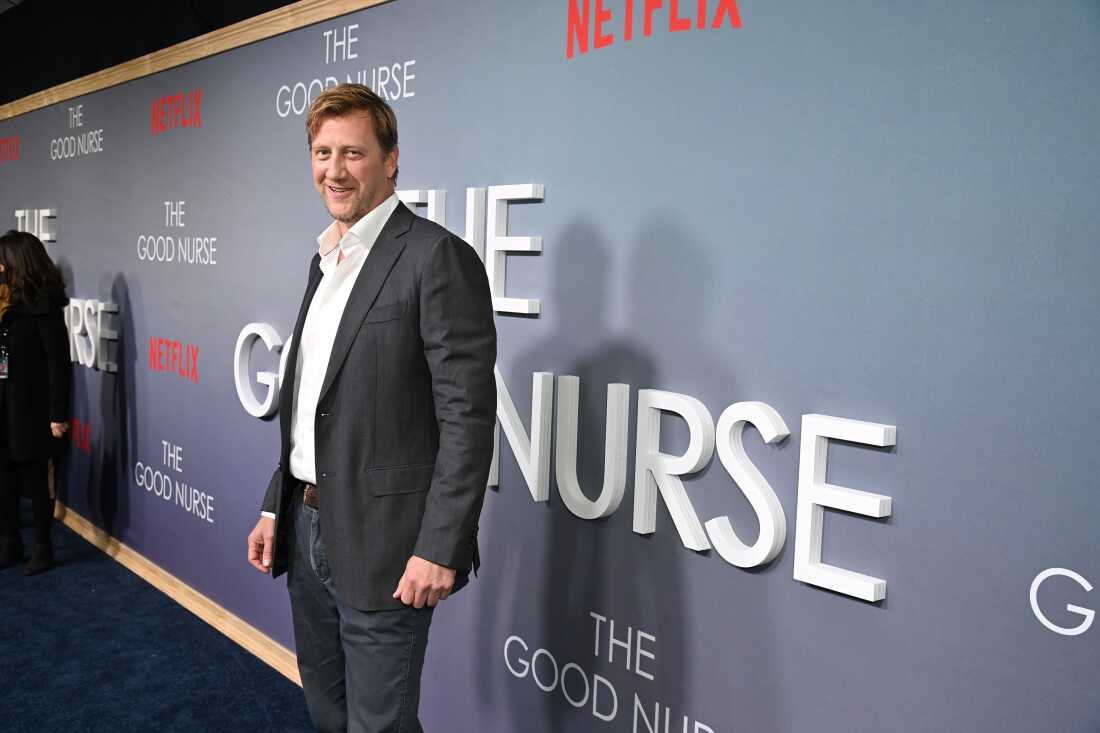
Charles Graeber attends a Netflix screening The good nurse in October 2022 in New York. The author was one of the three main plaintiffs in the Anthropic lawsuit – and has mixed feelings about it.
Bryan Bedder/Getty Images
Hide caption
Toggle label
Bryan Bedder/Getty Images
The total billing amount may seem high. But there are thousands of authors involved who have to share the money with the publishers. In addition, more than $100 million went to the plaintiffs’ lawyers.
And perhaps more importantly, the case could be seen as a win for AI companies rather than the publishing industry.
A win for the AI industry?
That’s because the court didn’t find it illegal, in the strict sense of this lawsuit, for Anthropic to train its AI algorithms on authors’ copyrighted works – as long as the company pays for the books it uses.
“Training AI on books is fair use under copyright law,” said Aparna Sridhar, Anthropic’s deputy general counsel, in a statement to NPR. “More than 91% of the authors and publishers affected by the settlement have claimed their share of the payment, and we look forward to bringing this matter to a conclusion.” The company declined to respond to further questions about the impact of the judge’s ruling.
A federal judge also ruled in favor of Meta last year in a similar case involving a group of authors that included Richard Kadrey and Sarah Silverman. The authors sued Meta, saying they used pirated copies of their novels to train some of its AI models. Meta asserted fair use and won because the authors presented no evidence that the tech company’s use of their books affected the market for their original works.
AI companies often invoke the fair use doctrine — which in some situations allows the use of copyrighted works without the copyright holder’s permission — when trying to argue in court that they should train their models on these materials.
New York Times Best-selling author Andrea Bartz, another named plaintiff in the Anthropic lawsuit alongside Graeber, said the fair use argument makes little sense if the algorithms are used to create machine-written texts that are in direct competition with works by human authors on the open market.
“The algorithm is essentially being used to put us out of work,” Bartz said.
Threats from abroad
Even if U.S. laws eventually grant authors stronger copyright protection, there is no guarantee that other countries will operate under the same rules.
Intellectual property lawyer Dale Nelson, who was not involved in the Anthropic v. Bartz case but said she follows such matters closely, points to the threat posed by foreign AI companies, particularly the developers of powerful and increasingly popular chatbots like China’s DeepSeek.
“The government in China controls a lot of what companies do,” Nelson said. “So I think any enforcement efforts there would be very difficult.”
Bartz said that to meet this reality, AI regulation must go beyond borders, especially as nations compete for political dominance through AI.
Chinese AI companies often use a technique called “AI distillation” to build their models. The output they generate is fed into their models other AI models, often high-quality, US-based models like OpenAI’s GPT-4 or Anthropic’s Claude, rather than training them directly on pirated books by American authors.
“The only thing that makes sense to me is something like this nonproliferation treaty, this treaty that could be expanded internationally,” Bartz said.
But despite the threats, Bartz said she is optimistic about the increase in copyright infringement cases involving AI making its way through the U.S. court system and said authors must continue to fight for their rights.
“I hope this lawsuit is the first of many steps toward creating a fairer environment for creatives in the age of AI,” she said.
Licensing – a possible way forward?
One way for authors to become more equitable in the age of AI could be to license their work to AI companies.
“Licensing is a way to ensure that education is done legally,” said Umair Kazi, director of policy and advocacy at the nonprofit group Authors Guild. “Furthermore, licensing also allows rights holders to limit the representation of their works in AI chatbot output. Maybe you license only for training, but don’t want the model to produce summaries or other types of derivative works – sequels and the like.”
There are already some such agreements between publishers and AI companies, such as Perplexity AI’s agreement with media companies like Los Angeles Times And The world License content for training its models. There are also online licensing marketplaces like Created by Humans.
However, it remains to be seen whether licensing will prevail.
“With the major AI companies all engaged in litigation over training, licensing agreements are still rare,” Kazi said.
https://www.npr.org/2026/07/27/nx-s1-5904606/anthropic-vs-bartz-ai-copyright-lawsuit-pros-cons
