

Over the past 40 years, the advent of digital technology has led to a rise in automation, increasing inequality while increasing productivity. Economic growth continued, but it only enriched some groups and punished many others. This not only led to the collapse of shared prosperity; It also deepened the crisis of liberal democracy that is upending much of the developed world.
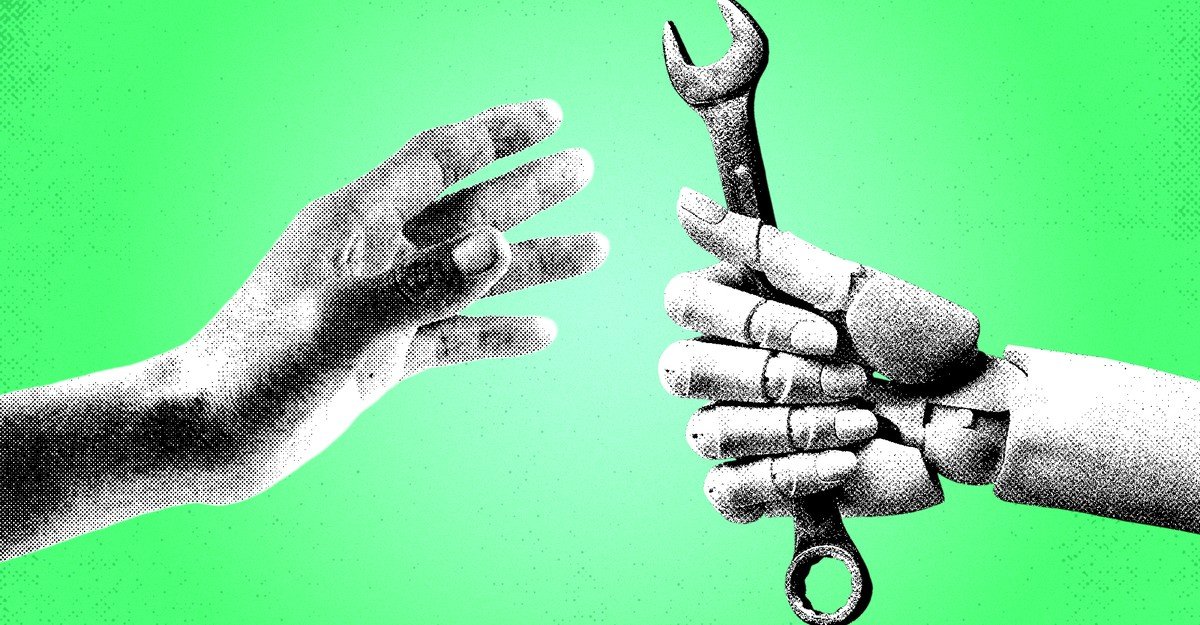
Now generative AI is poised to exacerbate the injustices of the last four decades. But that is not inevitable. Society-wide efforts are needed to avoid the mistakes made with the advent of digital technology. That means redirecting AI development to benefit workers rather than replace them. I call this “pro-worker AI”: models that expand workers’ skills, give them new tasks and make them more productive.
From a technological perspective, it is entirely feasible – and in some cases already proven. Such a transformation will not happen on its own, nor will it be easy. But there are ways to boost it.
 This essay was adapted from Acemoglu’s new book.
We’ve known for some time that AI can enhance workers’ skills rather than render them useless. Computer scientist JCR Licklider recognized this back in 1960 when he predicted that computers would one day improve human cognition by providing workers with highly processed, context-sensitive information. Over the next six decades, digital technology was not up to the task. The Internet represented a breakthrough in collecting and storing information, but retrieving that information remained a challenge. Although search engines could deliver countless results quickly, it was people who had to process them one at a time and slowly.
Now generative AI has fulfilled Licklider’s prophecy. It can find the most relevant answers to a query and summarize them in an easily digestible form almost instantly. It can process technical information and provide precise instructions for complicated tasks performed under specific conditions. This type of information gathering and provision forms the basis of employee-friendly AI. If widely adopted, it could simultaneously increase wages, employment and productivity, restoring the link between productivity growth and good jobs that has been broken over the past four decades.
Worker-friendly AI would help far more people than just knowledge workers who need to write presentations or emails. Consider electricians, who are in high demand in many industries. You don’t need a large language model that can write sonnets to be able to troubleshoot electrical devices; You need specialized models trained on high-quality niche data. These are the hallmarks of employee-friendly AI. As devices and networks become more complex, electricians could benefit from an AI tool that relies on a targeted knowledge base, past use cases and site-specific inputs – sensor data, photos, written reports – to help them identify problems with machines or circuits. In fact, a global company is already developing a range of such products for a range of field service technicians.
Employee-friendly AI could also increase productivity in other service industries. In education, a model trained on relevant curriculum material could allow teachers to identify patterns in test scores and tailor lesson plans for specific groups of students who are prone to making the same mistakes. This is one of many ways AI could make education more cost-effective and personalized, which could increase demand for teachers and increase their wages.
Perhaps most importantly, worker-friendly AI could create good service jobs for workers without college degrees, beginning to address the inequality entrenched in the post-industrial economy. In healthcare, for example, specially trained models could enable low-skilled workers to perform a wider range of tasks, particularly those that rely more on physical exertion and social interaction than on medical expertise.
However, the promise of worker-friendly AI will only be realized if it receives more attention and investment. This requires a dramatic shift in the way all parts of society – governments, companies, investors, workers – think about AI.
In today’s Silicon Valley, most financing is seeking automation. That’s not entirely surprising. Automation can be lucrative for both managers and shareholders because it reduces labor costs and reduces dependence on organized labor. More broadly, these are AI models that behave and sound like us – and not like us Support us – attracting a disproportionate amount of hype. “Achieving human equality” has become a key measure of success in Silicon Valley.
At the same time, the global race for AI supremacy is largely focused on artificial general intelligence, which would theoretically be capable of taking over human work in all sectors, including white-collar cognitive work and the non-routine tasks performed by skilled workers and artisans. Even models that fail to meet the AGI threshold could eliminate countless jobs. The few people lucky enough to take on the remaining roles in the economy would suffer significant wage losses.
Several policy measures could focus Silicon Valley’s attention on worker-friendly AI. Starting at the international level, the United States and Europe should create AI agencies that can create incentives—such as grant programs or public competitions—for technologists to develop models designed to expand workers’ skills.
A simpler solution is the tax code. Tax laws in many developed countries encourage far too much automation. In the United States, for example, employment income is taxed much more heavily than capital income. If a company pays a worker $100, it must fork over up to $30 in tax and expense obligations. However, paying $100 for automation equipment results in a tax bill of less than $5. That number has fallen as companies are allowed to write off more digital infrastructure expenses. For the most part, this tax asymmetry leads to only mediocre increases in productivity. In fact, even if there is automated work less productive As human workers, a company can definitely make money through automation.
To some extent, employers’ preference for automation is inevitable. For one thing, companies need to cover health insurance for people, not machines. However, eliminating these distortions in the tax system would create a level playing field for workers as well as the development of worker-friendly AI models.
Part of the promise of worker-friendly AI is to create new tasks, which in many cases require workers to learn new skills. Therefore, society must invest in training workers. By “training” I don’t mean the unrealistic goal of turning miners into computer programmers. Rather, training should aim to provide workers, including laborers and craftsmen, with the opportunity to expand their existing expertise. With the introduction of AI into the workforce, demand for skills can continually change, so training must be adaptable and emphasize flexibility. Worker-friendly AI itself could play a role, helping to update training programs, just as it can help teachers revise lesson plans.
Reorienting technological change toward worker-friendly AI will also require even more Herculean undertakings. The most important of these is reducing the dominance of technology monopolies, which have an outsized influence on AI development. They use it not only to push technology toward automation and AGI, but also to stifle innovation by crowding out new companies with unorthodox and potentially disruptive ideas. Creating a more competitive environment would open up more space for worker-friendly AI. This can be achieved by enforcing existing antitrust laws, which are rarely applied in the technology sector. It may also be necessary to limit Silicon Valley’s considerable persuasive power, for example by encouraging more and better-funded independent media.
A stronger labor movement would also help. Instead of opposing AI, unions should become advocates for a worker-friendly AI agenda. Simply negotiating higher wages will not be enough: most companies will simply respond to demands for higher wages with greater automation. Instead, unions must argue that corporate investments in worker-friendly AI can benefit both workers and management, making the former more productive and the latter more profitable.
At stake is a central tenet of the liberal economic order: jobs and wage growth remain available to workers with different skills and backgrounds. The last 40 years have called that promise into question. But they have also spawned new, powerful technologies—most notably AI—that can help workers rather than marginalize them. First, we must decide that automation will not be the North Star of the AI era.
This essay was adapted from Daron Acemoglu’s new book. What happened to liberal democracy?
 What Happened to Liberal Democracy?: Reimagining a Politics of Shared Prosperity
By Daron Acemoglu
If you purchase a book through a link on this page, we will receive a commission. Thank you for the support The Atlantic.
https://www.theatlantic.com/ideas/2026/07/ai-automation-productivity-workers/688083/
