

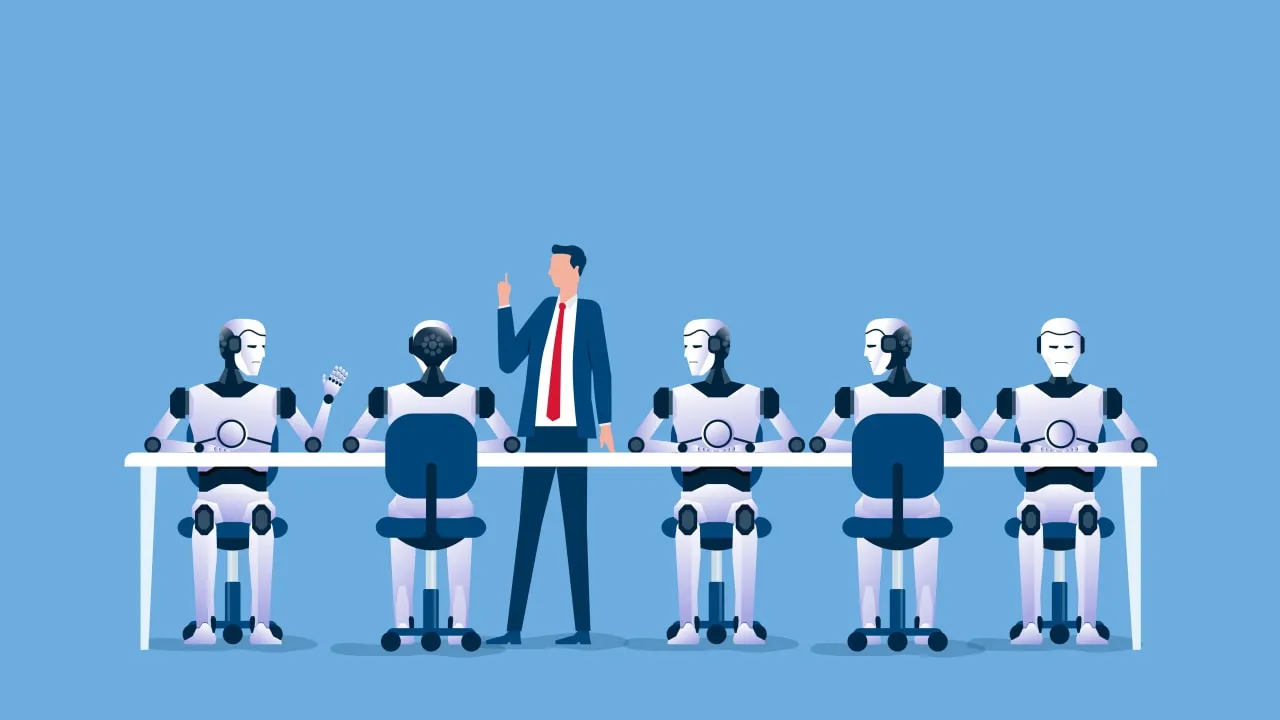
“AI layoffs” have become a familiar term among tech companies over the past two years. More and more companies, especially in the software sector, are downsizing their workforce and citing the development of AI as the reason. These cuts can sometimes reduce a significant portion of the company’s workforce in a single round of layoffs.
AI layoffs can occur for multiple reasons or a combination of these reasons. The development of AI in recent years has resulted in human work being replaced by AI or AI being able to do the same work faster or at a lower cost. In other cases, companies may reduce their human capital to free up resources for necessary investments in AI.
There are also times when the development of AI threatens companies’ business models and these companies have no choice but to cut corners and change if they want to survive in the new world. This story has the frightening name of “SaaSpocalypse,” an apocalypse of SaaS companies that offer subscription-based enterprise software in the cloud.
Shares in the sector have fallen by tens of percent in recent months as the capital market fears that AI could damage or even render obsolete the solutions offered by companies and the entire SaaS business model.
Furthermore, there is no denying that there may also be cases where companies conducting aggressive layoffs find it convenient to blame AI for the cuts they likely would have made anyway.
 “Within about two years, artificial intelligence agents will be doing 90% of the work” (Source: Yoram Walla!)
Table of Contents
Reach Israelis too
Of course, AI layoffs also affect Israeli software companies and cause uproar. The most recent example is monday.com (Nasdaq: MNDY), which announced Wednesday it was laying off 620 employees, representing about 20% of its workforce.
At the end of 2025, Monday had 1,729 employees in Israel, about 55% of its workforce. monday.com, which provides an AI-based platform for managing work tasks, is trading on Nasdaq with a market capitalization of $3.1 billion, after falling about 75% last year.
The company, led by co-founders Roy Mann and Eran Zinman, has made what they believe is the most significant change since the company’s founding. monday.com explained that the change transforms the company from a work management platform to one that also gets work done using built-in AI agents, allowing people and agents to work together. The change also introduced a new pricing model where customers purchase credits from Monday.com and use them to use the features it offers.
Meanwhile, the stock market is not yet convinced and the shares are trading at prices close to their lows.
Someone who has already experienced a crisis that led to AI layoffs is Avishai Abrahami, founder and CEO of Wix, who also sits on the board of monday.com and was an early investor.
Wix allows users to create and manage websites. Last year, recognizing the need for change due to the rise of AI, the company made the highly successful acquisition of Base44, a company involved in Vibe Coding, which enables users to create digital works in natural language without the need for code.
Base44 has become the engine of Wix’s growth. Annual recurring revenue (ARR) has increased from a few million dollars to about $150 million per year. Investors at Wix were also unconvinced and the company’s shares have fallen 67% over the past year (although they have recovered slightly from recent lows), with the main concern being that AI would harm the company’s traditional operations and make them obsolete.
Abrahami recently told US podcast 20VC: “I would like to say that in three years our team will be 1,000 people at Base44 and 1,000 people at Wix and the rest will be AI agents, but I’m not so sure that’s possible. We all give too much credit to AI and its capabilities.”
Wix has laid off 20% of its employees, about 1,000, this year. The layoffs were due to both the development of AI, which requires the company to develop leaner and faster, and the strengthening of the shekel.
 Amazon Ireland’s Dublin headquarters, Amazon.com, Inc. announced on Tuesday in Dublin, Ireland, October 28, 2025, plans to reduce its global corporate workforce by up to 14,000 positions and capitalize on the opportunity presented by artificial intelligence (AI). (Source: REUTERS/Damien Eagers)
The layoffs at Fiverr
One Israeli company that made significant changes and cuts in response to the development of AI almost a year ago is Fiverr (NYSE: FVRR). The company, led by founding CEO Micha Kaufman, announced last September that it would lay off 250 employees, about a third of Fiverr’s workforce.
At the time, Kaufman stated: “The speed at which technology is changing and the opportunities it presents are astounding and require new thinking and more speed to stay at the forefront… We can and should dream bigger and build Fiverr faster than AI-focused infrastructure.”
To this end, it was decided to make the company leaner, with fewer layers of management or, as Kaufman defined it, “return to a startup state.” Fiverr investors also seem to prefer to wait until the picture becomes clearer, and the stock is down about 58% over the past year.
These Israeli examples are, of course, part of a much broader picture. According to “TechCrunch,” the number of layoffs worldwide reached 165,000 in the first half of 2026 alone. For example, Oracle laid off 13% of its employees (21,000) and Microsoft announced 4,800 layoffs, having already explained the layoffs of thousands of employees last year with the need to reduce costs, adapt to rapid technological change and the large investments required by AI.
Software company Salesforce laid off 4,000 customer support employees last year, and its CEO said it needed fewer employees after developing AI.
Employees are being hired again
About a month ago, software company Intuit laid off 3,000 employees, representing 17% of its workforce, as the company focuses on AI-based products. However, the company’s CEO, Sasan Goodarzi, told CNBC: “This has nothing to do with AI. The goal is to become more effective.” This could be part of a change in tone around AI layoffs. Recent articles are beginning to question the steps taken. For example, a CNBC article states that companies are starting to rethink focusing on AI at the expense of employees.
A Ford vice president said in the article that the company is rehiring engineers: “AI is a fantastic tool, but it’s only as good as the information you train it on.” An IBM manager there said if no entry-level employees were hired: “What will happen in three to five years? The well will run dry.”
Forbes also noted that some companies are beginning to rehire human workers. “The company initially announces that it will use AI for work. The number of employees is reduced. Then six to 12 months later it turns out that the AI has only successfully completed 60% of the tasks, and the company rehires the employees,” it said.
It’s hard to say that the trend is changing, but it seems that skepticism remains, both as companies cut employees and invest in AI, and at least in the capital market, investors are waiting for more clarity.
https://www.jpost.com/business-and-innovation/article-903638
