AMARILLO, Texas (AP) — When Gina Hinojosa, the Democratic candidate for Texas governor, began her campaign last year, the candidates didn’t talk or hear about data centers that power artificial intelligence.
But with just three months until the November election campaign, the perceived threat to rural life, rangelands and dwindling water supplies could become a defining issue in her long-term challenge to Republican Gov. Greg Abbott, dividing conservative rural areas that have traditionally served as a counterweight to Democrats’ urban strongholds.
The backlash against energy-guzzling server warehouses is also shaping other national campaigns from Arizona to Ohio to New York and is even giving Democrats a glimmer of hope in Texas, where Republicans have dominated for three decades.
“There’s this little problem I heard about recently that I want to tell you about in case you don’t know,” Hinojosa quipped to a Democratic Party-organized crowd of about 160 people sitting on fold-out chairs at an Amarillo social club in the Texas Panhandle. “It’s this data center problem.”
The crowd booed and she continued: “They belong to the richest men in the world. We all foot the bill. There are no rules. It’s the Wild West of data centers.”
The rapid growth of massive data centers has already upended the race for local offices across the country, often uniting conservatives and liberals in revolt against projects in their midst.
REGARD: Janesville, once a symbol of the Great Recession, is becoming a battleground for AI data centers
People dislike the secrecy surrounding the projects or the prospect of air, noise, water and light pollution. They fear that electricity bills will rise, wells will dry up and open spaces, farmland or forests will be lost.
Meanwhile, the impact has spread to the top races, where incumbents and challengers are trying to show they are listening to a disgruntled electorate.
REGARD: Trump is expanding his promise to protect consumers from rising energy costs caused by data centers
In Ohio, Democratic candidate Sherrod Brown aired a television ad attacking Republican U.S. Sen. John Husted as the “face of Ohio data centers” as people collect signatures for a statewide referendum to ban their construction entirely.
In Wisconsin, Democratic gubernatorial candidate Francesca Hong is promising to “tax the rich, fund our schools and stop AI data centers” as she fights for her party’s nomination in a crowded primary.
In Pennsylvania, Democratic Gov. Josh Shapiro is facing criticism from some voters who feel he has been too friendly toward the tech giants. Sam Burleigh, a Democrat whose rural community opposes data center projects, accused Shapiro of “allowing these data centers to come in and take over acres of prime farmland.”
Table of Contents
Texas is fertile ground for data centers
Political unrest may be felt most clearly in Texas.
The state is poised to overtake Northern Virginia as the world’s largest data center market by 2030, according to a report from commercial real estate giant JLL. It has a lot of land, a lot of energy and a friendly regulatory environment under Republican leadership.
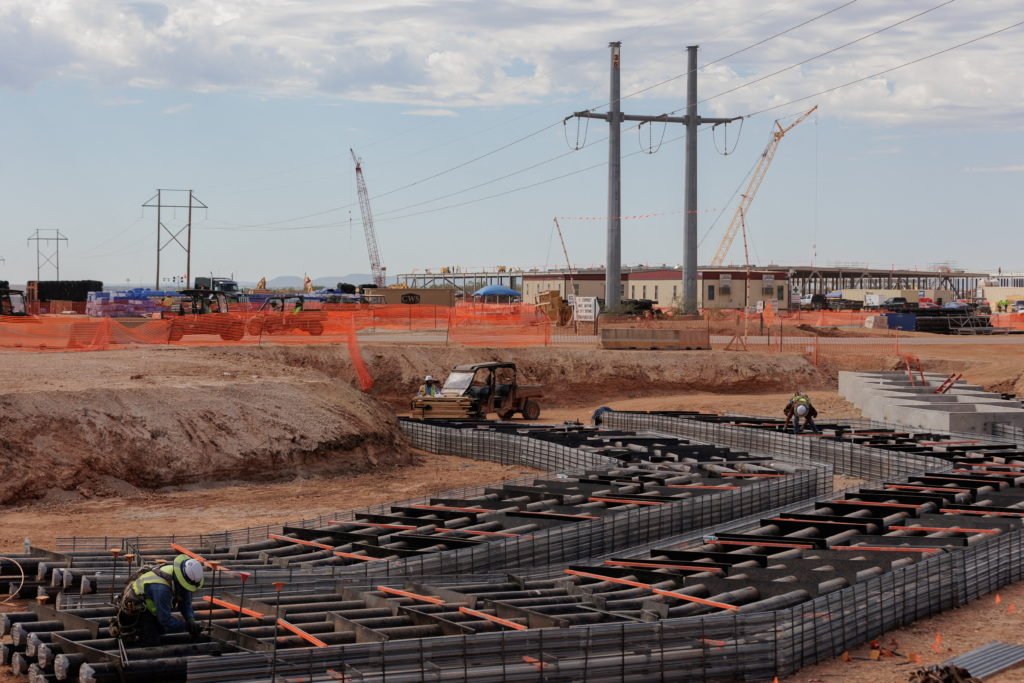
Gigantic data centers are under construction in rural West Texas and its province, including one near Amarillo that is considered the largest in the world. Some are designed to power turbines powered by natural gas.
READ MORE: The massive expansion of data centers represents the latest inflation threat to consumers
Rumors are swirling that more are emerging — Google, which is building four data centers in northwest Texas, has sponsored moderated conversations with officials and business elites in Lubbock and Amarillo in recent weeks — and it’s sparking an outcry in small towns, small towns and sprawling ranches where people overwhelmingly vote Republican.
Google says its investments are driving American innovation, strengthening cybersecurity and increasing energy capacity, while President Donald Trump has made data centers a top priority to help the US compete with China for AI supremacy.
READ MORE: When can an energy supplier take over your country for data center infrastructure?
But tech giants and developers can keep their plans secret, making it impossible to know what will be built or what kind of pollution they will cause, critics say. Some fear data centers will destroy the low cost of living in rural Texas, as well as the hazy sunsets and expansive vistas that stretch to the horizon.
Others say construction and the influx of workers are already wreaking havoc on ranchers and cities, driving up rents, taking away farmland, lighting up night skies, clogging roads and turning parts of rural Texas into industrial areas.
The opposition bridges a partisan divide
Democrats are leading among data center critics, but also Republicans, including the incumbent Texas Agriculture Commissioner, Sid Miller. They say there are many more Republicans who are quieter because they are afraid to publicly oppose their governor and their party.
“They’re upset with Greg Abbott,” said Suzanne Bellsnyder, a former Republican activist from Spearman who writes a column advocating for rural Texas. “I don’t know whether that will lead to people voting against him.”
Abbott has aggressively pushed for big projects in Texas, helping Google announce a $40 billion investment there in November, saying, “Texas is the epicenter of AI development.”
REGARD: Breakthroughs in Chinese AI models threaten US leadership in the technology race
Making matters worse, Texas counties have no zoning authority – the very local land planning authority that communities across the country are increasingly using to fend off data centers.
Abbott appears to recognize that data centers are dividing his base. In recent weeks, he ordered regulators to take action to ensure Texans don’t pay higher electric bills because of data centers and vowed to advance a legislative agenda next year to impose data center regulations.
At a campaign stop in East Texas, Abbott said that included repealing the state’s tax break of more than $1 billion a year and preventing data centers from being built in “rural Texas neighborhoods.”
Hinojosa and others derided Abbott’s words about “rural Texas neighborhoods” as meaningless – “doublespeak that makes no sense to anyone,” Hinojosa said – and lacking urgency or seriousness.
“Now we have this gold rush of data centers in our communities,” Hinojosa said in an interview, adding: “People want a say, and I think that’s fair.”
As governor, she said she would block a data center permit if it wasn’t a good deal for Texans or if residents didn’t have a say in the matter.
Abbott is trying to address concerns
Abbott’s election season about-face on data centers does not appear to have reassured many.
Of major concern is the prospect that data centers will use huge amounts of water and worsen drought conditions for ranchers and farmers in a state where water shortages have already crippled the sugarcane industry.
“Oh, I guarantee you, it’s on everyone’s lips,” said Giles Dalby, a rancher and Republican county commissioner in West Texas.
Dalby, who raises Angus and Brangus cattle on ranch land that has been in his family for 125 years, pointed to fast-growing cities where water authorities have had to make greater efforts to obtain water, including the “water wars” between San Antonio and ranchers several years ago.
READ MORE: Energy, water consumption and pollution from AI and data centers compete with most countries
Texas is increasingly crowding out landowners’ rights in the pursuit of public water, Dalby said, and that could mean data centers move ahead of ranchers if shortages or rationing worsens.
Clayton Tucker, a rancher and Democratic candidate for state agriculture commissioner, said his campaign rallies have been dominated by discussion of data centers. It doesn’t matter whether he meets with Democrats or Republicans.
“This is the most bipartisan issue I’ve ever seen in my life,” Tucker said.
Meanwhile, protest groups are springing up, including one in Lubbock led by Republicans. Founders Stephen Sanders and Hallie Bertrand, like some other Republican opponents of data centers, say it’s possible or even certain that they won’t vote for Abbott, although they don’t necessarily have to vote for Hinojosa.
Abbott still has time to push through important legislation before the election and “be a hero,” said Sanders.
The big question is whether enough rural voters will turn against Abbott to give Hinojosa a chance. It’s hard to say, Bertrand said, especially when some people don’t know anything about the problem.
“You’re just going to push that button, Republicans at the bottom,” Bertrand said. “But I think it’s a step toward something we haven’t seen in Texas in a long time, with people moving from right to left. Or maybe moving a little closer to the center.”
A free press is a cornerstone of a healthy democracy.
Support trustworthy journalism and civil dialogue.
Donate now
https://www.pbs.org/newshour/nation/democrats-seize-on-ai-data-center-backlash-thats-dividing-rural-republicans-in-places-like-texas
