

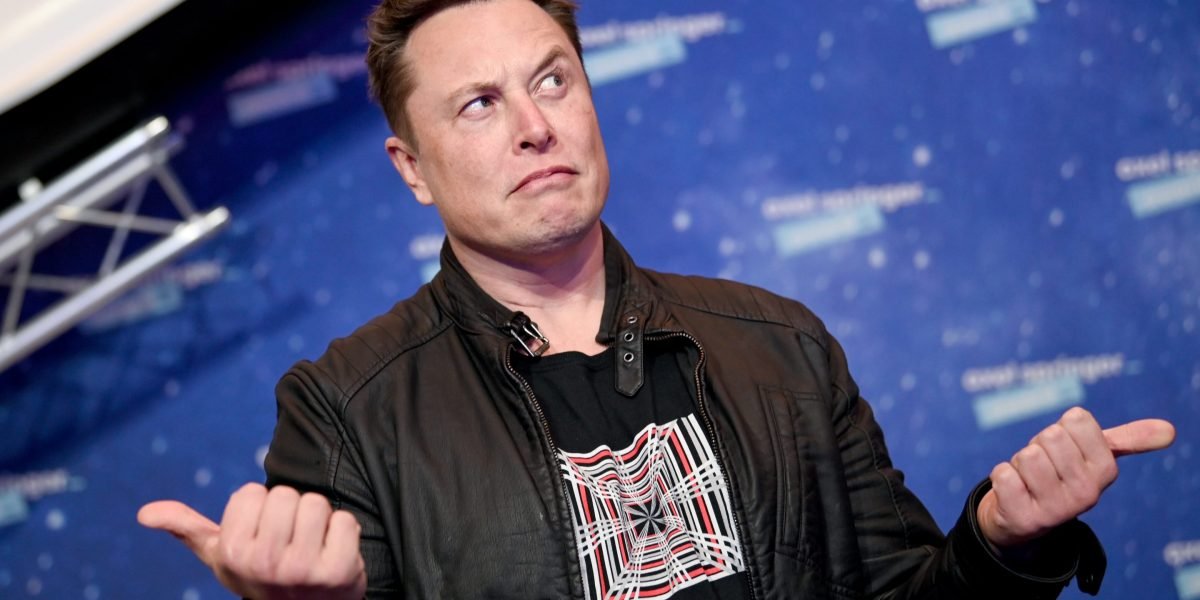
Elon Musk admitted it himself: He is no longer a trillionaire.
On July 24, Musk posted “(Former) Trillionaire” on X, a rare public acknowledgment from a man who rarely backs down. The post came as his fortune continued to decline. It fell below $1 trillion for the first time on July 1, and losses continued from there. This week alone, SpaceX shares fell another 4.8% to around $109.50 on Monday. That extended a 50% plunge since the stock’s June 16 peak and pushed Musk’s net worth below $700 billion for the first time since December.
Forbes puts the figure at about $695.7 billion, less than the high of $1.45 trillion he reached six weeks earlier when SpaceX’s IPO briefly made him the world’s first trillionaire. All told, on paper, Musk has lost about $750 billion, almost the entire net worth of the next three richest men in the world: Larry Page (about $268.5 billion), Sergey Brin (about $270.6 billion), and Jeff Bezos (about $252.6 billion).
The post is also ironic given what Musk had just said The economist. Days earlier, in a wide-ranging interview with Editor-in-Chief Zanny Minton Beddoes at Tesla’s Texas Gigafactory, Musk predicted that money would “no longer matter” by 2036, arguing that AI and robotics will ultimately produce more goods and services than anyone could consume.
Days after video of the interview was shared on his social media platform, Musk unveiled X Money, the payments feature he had promised for years as part of X’s push to become an “everything app.” He posted “This is money.”
Table of Contents
Money is all relative
X Money offers users a digital wallet built into X: a deposit account, fee-free peer-to-peer transfers, and a metal Visa debit card tied to their X handle. It’s the first version of a plan Musk first unveiled in an investor pitch deck in 2022, in which he described X eventually competing with China’s WeChat. Visa was signed as X Money’s first partner in early 2025.
Musk has made similar comments in the past. Musk has been making the same argument for months. Just a few weeks ago, around the time of SpaceX’s IPO, he told XPRIZE founder Peter Diamandis that “money will no longer matter at some point in the future,” arguing that currency will lose its purpose as AI and robots produce more goods and services than the money supply can support.
Diamandis pointed out the irony of the moment since Musk had just become the world’s first trillionaire. Earlier this year, Musk said on the topic of saving for retirement that the practice will become pointless because AI-driven productivity will “exceed what people could possibly imagine as abundance,” with a “universal ‘you can have whatever you want’ income” replacing the need to save at all. On WTF’s People podcast, he said money “will disappear as a concept” once AI and robotics can satisfy human needs without wages acting as a means of distributing labor.
The timing made the moment stranger. Days after the tweet, Musk unveiled X Money, the payments feature he had been promising for years, as part of X’s push to become an “everything app.” He posted “This is money.”
Fellow tech billionaire Vinod Khosla went back to the timeline in a Fortune piece, arguing that the prediction only holds true if politics allow that abundance to be shared. He recalled that even if AI eliminates scarcity, nothing guarantees that the benefits will be distributed evenly.
IPO hype
Tesla shares fell 14.5% on July 23, the stock’s worst single day in more than a year, after second-quarter results showed record sales but a slump in profits: Adjusted earnings of $0.33 per share missed Wall Street’s $0.51 to $0.54, and operating margin fell to 1.4% from 4.1% a year earlier. The gap was caused by price cuts to increase volume and a 142% increase in capital spending on AI, robotaxis and the Optimus robot. Several banks, including JPMorgan and Mizuho, subsequently lowered their price targets.
SpaceX’s demise is a different story. Shares have fallen nearly 50% since their peak in June, pressured by two delayed Starship test launches, a $60 billion stock acquisition of AI programming company Cursor that dilutes existing shares ahead of the Aug. 6 lock-up period, and a valuation that leaves little room for error.
Starship’s 13th test flight was successful on July 25, but the stock still hit a new low – SpaceX’s first earnings report as a publicly traded company, due out on August 4, is now considered the next real test.
https://fortune.com/2026/07/29/elon-musk-money-matters-x-money-former-trillionaire/
