
Crypto prediction and betting websites are popping up around the World Cup, and researchers have already tracked scams targeting fans, including fake tickets, fixed match betting, prediction scams and fan-branded meme coins.
We examined a prediction site ourselves. While we don’t claim that every website works the same way, there are several known fraud patterns. Whether it’s a worthless token, a fake betting platform, or a disappearing website, the result is often the same: you lose money.
Table of Contents
What you need to know
- This is not a single scam. Different sites use different tactics, but many follow the same rules of the game.
- Even if a site pays out exactly what it promises, you could end up with a token that is difficult or impossible to sell.
- Some sites simply keep your deposit and stop responding.
- Crypto transactions generally cannot be reversed. Once you send the money, it may be impossible to get it back.
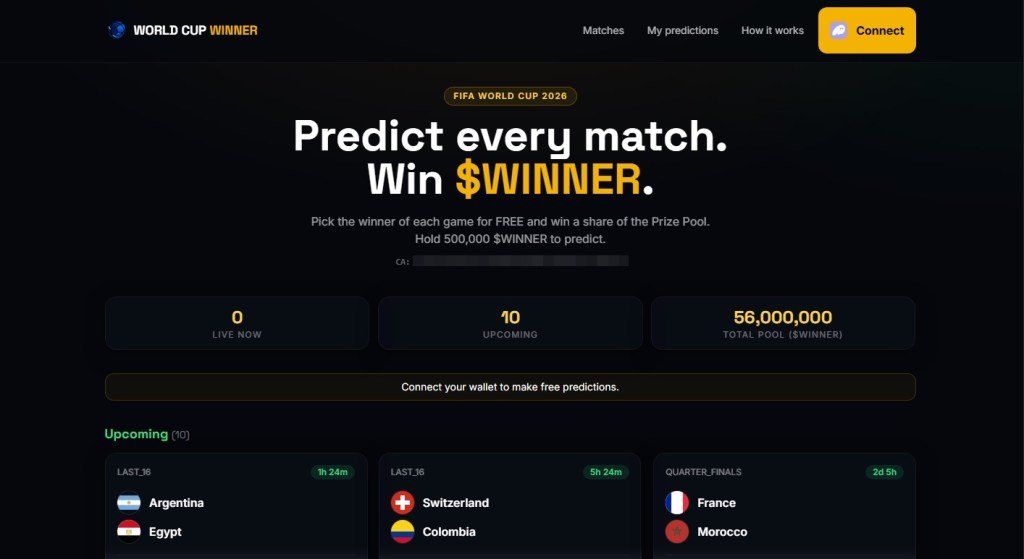 A World Cup themed crypto prediction site
How to Lose Money
The last three examples below are based on a token we examined directly. The first two are common fraud patterns that occur in this category.
- Pump and Dump: A token is promoted through the game, early participants receive real payouts that build trust, then creators sell their holdings and the price collapses. Later buyers are left with a token that few people want.
- Take the money and disappear: You deposit crypto to unlock bets or participate in the game. The site keeps the money and disappears.
- Fake Free to Play: The game is advertised as free, but you must purchase or own a token before you can participate. The game attracts users; Token sales generate income.
- Copycat naming: A new token uses a name similar to an established cryptocurrency, making it easier to mistake it for a legitimate project.
- Crafted activity: The same tokens move repeatedly through a central wallet, creating the appearance of trading activity. On the charts it can look like an active market with little real trading taking place.
Conventional crypto advice doesn’t help much here
You’ve probably heard advice like, “Never share your seed phrase.” That’s still important, but it’s not what’s happening here.
These websites do not require access to your wallet or seed phrase. They persuade you to send money voluntarily. Once you’ve done this, there may be nothing to recover.
How to verify a token
- Look at how many people actually own the token. A token with very few holders, despite clearly being heavily traded, deserves special scrutiny.
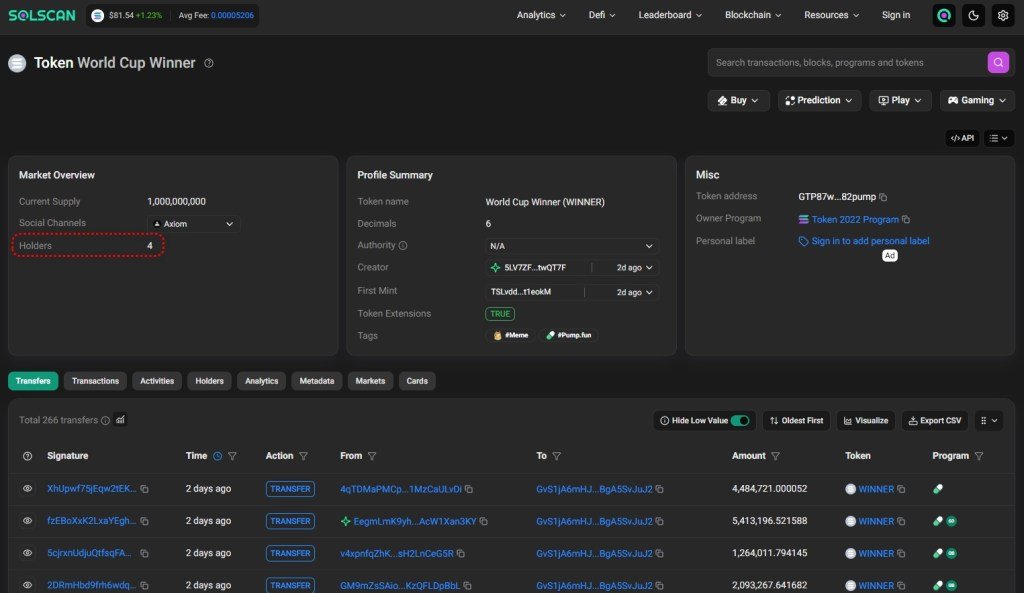 Only four holders, which is a big red flag for a supposedly active token
- Check transfer history, not just trading volume. In one token we examined, identical amounts were repeatedly moved to the same central wallet and back again. We confirmed this pattern at more than a dozen addresses. Real market activity rarely results in repeated matching round trips like this one.
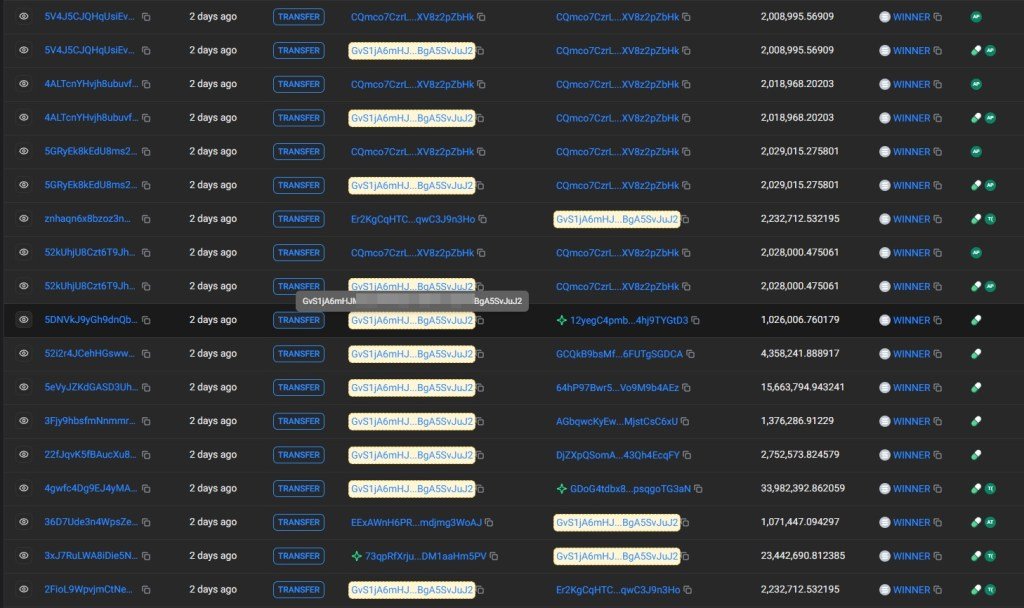 Repeated transfers create the appearance of a trade
- Look for the token name next to “Price”. If there is already a cryptocurrency with a similar name, it may be a copycat.
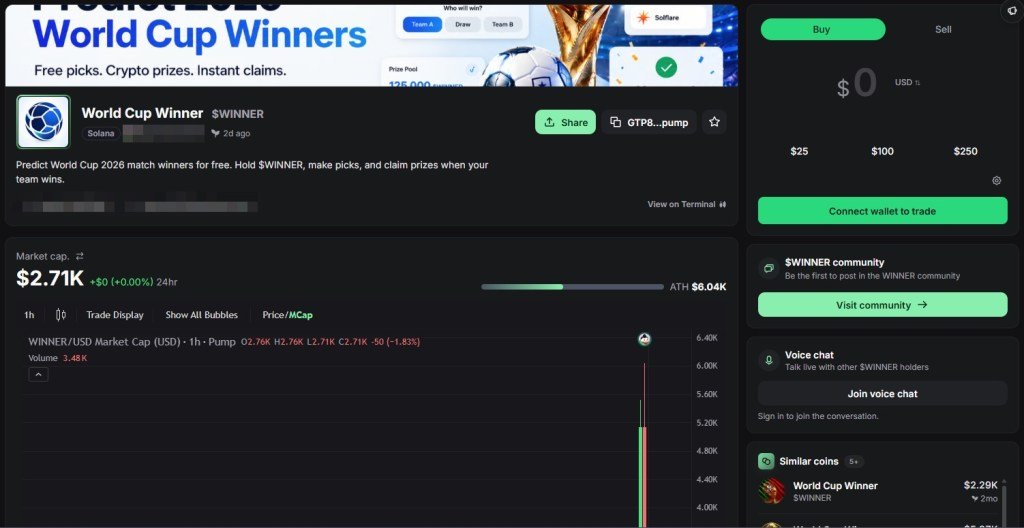 A copycat token on Pump.fun
- Before you send money, ask yourself what will happen if you never see it again. If you are not satisfied with this answer, do not submit it.
If you have already sent money
- Stop sending to unlock a refund or withdrawal. This is often part of the scam.
- Assume that the money might be gone. Waiting for the website to get everything sorted rarely works.
- Disconnect unknown apps and then revoke any spending permissions you granted. Disconnecting a wallet from a website does not necessarily revoke any spending authorizations that have already been granted. Instructions for reviewing and revoking these permissions can be found on your wallet’s support pages.
- Report the scam to protect others:
- Report the website to your country’s cybercrime reporting service or consumer protection agency.
- Report the wallet address if the wallet or exchange you use provides a way to report abuse.
- If you found the site through social media or a search engine, report the post or ad so it can be reviewed.
Whether the site pays you a token that quickly becomes worthless or simply disappears with your deposit, the result can be largely the same.
If a crypto betting game asks you to buy or hold a token before you can play, pause and ask why. The game could serve to encourage token sales rather than reward successful predictions.
Stop threats before they can cause harm.
Malwarebytes Browser Guard automatically blocks phishing pages and malicious websites. Free, just one click to install. Add it to your browser →
https://www.malwarebytes.com/blog/threat-intel/2026/07/how-world-cup-crypto-prediction-sites-take-your-money
