

The automotive industry is undergoing fundamental change. Vehicles are no longer static machines that are defined during production. They become dynamic, software-defined platforms that evolve over time through updates, new features, and continuous improvements.
This change is changing the role of semiconductors. What was once a supporting function is now central to the operation, differentiation and value creation of vehicles. As software increasingly drives the vehicle experience, computing and power architectures must support much more than just fixed functions.
By the next decade, software-defined vehicle architectures (SDV) are expected to dominate new vehicle platforms. Automakers are investing heavily in moving to systems that can adapt over long lifecycles, even as software and AI evolve much faster.
The result is new challenges that go beyond incremental performance improvements.


A growing discrepancy between life cycles
At the core of the SDV transition is a structural mismatch.
While vehicles need to operate safely and reliably for more than a decade, software doesn’t follow that schedule. New features are continually being introduced through AI model updates, over-the-air (OTA) capabilities and evolving applications that go beyond the original vehicle design.
This creates a system that works on multiple timelines at the same time. Safety-critical control systems require stability and certification, while AI-driven functions require flexibility and rapid iteration. Traditional architectures struggle to accommodate both.
The traditional model based on tightly coupled hardware and software and distributed electronic control units (ECUs) cannot achieve this complexity. Even as the industry moves to centralized and zonal architectures, the underlying challenge remains: How to support continuous evolution without increasing risk?
Computing is now a system-level challenge
At the same time, the demand for in-vehicle computing power is increasing dramatically.
Advanced driver assistance, higher levels of autonomy, and AI-driven experiences require powerful processing at the edge. These workloads must operate within strict constraints – limited power, tight thermal envelopes and automotive-grade reliability.
Monolithic system-on-chip (SoC) designs make it difficult to balance these competing demands. A single device must simultaneously meet performance, cost, security and lifecycle requirements, creating inefficiencies and limiting flexibility. As a result, the calculation is no longer a component decision. It is a system-level issue that impacts how the entire vehicle is designed and evolves over time.
Towards heterogeneous and modular architectures
The industry is beginning to respond by moving to more flexible architectures.
Instead of integrating all functionality into a single chip, new designs increasingly rely on heterogeneous systems that have multiple computing elements – CPUs, GPUs and AI accelerators – working together. This approach allows different parts of the system to be optimized independently while functioning as a unified platform.
More importantly, it allows customization to real-world needs. Safety-critical functions can rely on mature, well-understood technologies, while AI workloads can benefit from state-of-the-art processing. Storage, connectivity and I/O can be placed where they provide the best efficiency.
This shift reflects a broader transition from optimizing individual components to designing systems that balance performance, cost and lifecycle considerations.
This system-level development is already visible in current automotive computing platforms.
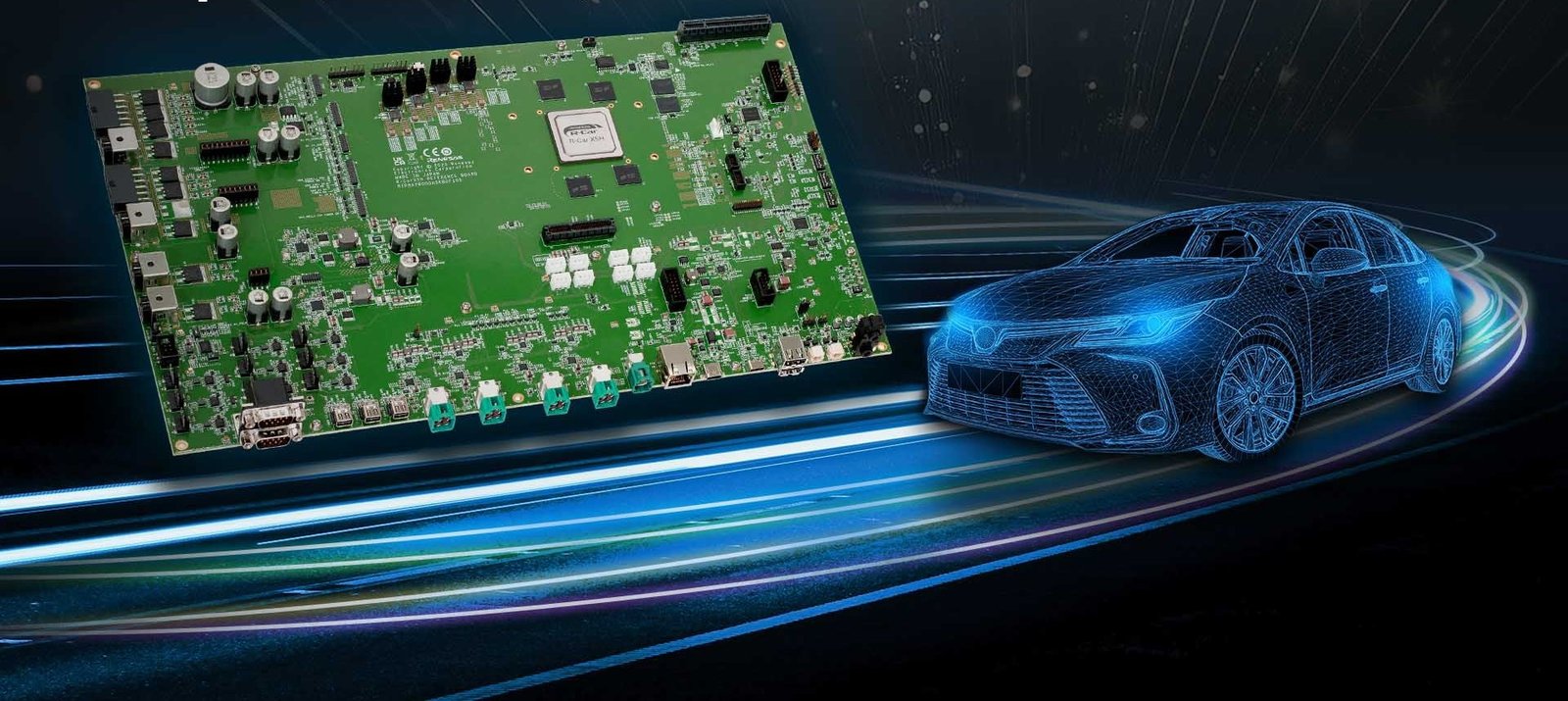
High-performance SoC families like R-Car demonstrate how architectures adapt to SDV requirements. These platforms combine heterogeneous computing power, safety functions and efficient energy management in a scalable framework that can be used in different vehicle domains.
They are designed not only for core computing power in ADAS and autonomous applications, but also for integration with zone controllers and broader vehicle systems. This allows automakers to develop platforms that can evolve over time, rather than designing them from scratch for each new generation.
The key point is not just excellence. It’s about the ability to deliver consistent, predictable behavior across a wide range of use cases and over a long operational lifespan.
Support for various OEM strategies
The transition to software-defined vehicles is not uniform across the industry.
Some automakers are aiming for a fully centralized architecture, while others are pursuing hybrid or zonal approaches. Different strategies reflect different priorities, including cost structure, time to market, and control over software ecosystems.
This diversity requires flexibility. Suppliers must support multiple architectural paths and enable automakers to make trade-offs that meet their specific goals. An open, scalable approach will become increasingly important as vehicles evolve from isolated products to long-life, connected platforms.
AI accelerates the need for change
Artificial intelligence amplifies these challenges.
Early automotive AI focused on discrete functions such as perception. Today, vehicles must handle multiple AI-driven workloads simultaneously, from sensor fusion to planning to in-cabin interactions. These systems must work in real time while meeting strict security requirements.
This shifts the focus from simplified performance metrics to more comprehensive system considerations. Latency, determinism, energy efficiency and data movement are all becoming critically important. Supporting AI at scale requires architectures that can efficiently orchestrate diverse workloads while maintaining predictable performance. This reinforces the need for heterogeneous design at the system level.
From products to platforms
In other words, as complexity increases, the industry is moving toward integrated platforms.
Automakers are no longer just looking for components. They look for solutions that combine hardware, software, and development ecosystems in a way that reduces integration risk and accelerates deployment.
This shift reflects a broader shift in the semiconductor industry – from delivering individual devices to providing complete system solutions. And this transition to software-defined vehicles is a long-term shift that will take place over the next decade.
It is already clear that success depends on the ability to design systems that balance long-term reliability with rapid innovation. This requires new thinking – not just about silicon, but also about architecture, development processes and ecosystem collaboration.
The industry goes beyond optimizing individual parts. It’s about designing vehicles as coherent, adaptable systems. And data processing is at the heart of this transformation.
Vivek Bhan is Senior VP and GM of High Performance Computing at Renesas Electronics.
Related content
https://www.edn.com/rethinking-automotive-compute-in-the-software-defined-era/
