AI executives and companies are betting that by spending millions in the 2026 midterm elections, they can influence AI bills drafted in Congress.
The two largest artificial intelligence political action committees poured at least $44 million into 40 House and Senate candidates through the end of June, according to a CNBC analysis of Federal Election Commission data. This is a first glimpse of how the groups will spend the more than $200 million they have raised throughout the remainder of the primary season and the general election, according to fundraising totals provided by the groups.
The emerging AI industry’s spending is making it an increasingly powerful player in Washington’s orbit. Through their PACs, the companies are shaping the design of the first national legislation to regulate the use of AI.
Brad Carson, head of Public First Action, a nonprofit with several PACs, said he has seen other bills introduced and discussed around AI legislation, particularly as concerns about the capabilities and risks of powerful AI models such as Mythos and Claude Fable have come into the spotlight. While it’s unlikely any legislation will reach the finish line this year because lawmakers have limited days in session, both parties have signaled that AI will continue to be a priority in the coming years.
“They have a lot of advantages. They have a lot of dangers. And you can’t just release them into the wild without the government taking care of it,” Carson told CNBC. “Everyone from right to left, from pro-Trump to anti-Trump, recognizes this.”
Josh Vlasto, co-director of Leading the Future, said developing the right regulatory structure is critical for lawmakers.
“It’s so important that we do this now and urgently because the technology is still in its infancy, but it is being adopted quickly and at scale,” he told CNBC.
The vast majority of candidates supported by both PACs won their primaries. Of the 28 candidates that Leading the Future has endorsed, 25 won their primaries, two are still facing the election, and only one – Jesse Jackson Jr. – lost. The group also opposed Alex Bores, who lost the Democratic primary in New York’s 12th Congressional District.
Public First Action has endorsed candidates in 11 races. With the exception of Bores, every candidate she supported won. Carson said the group plans to complete 50 to 60 races by the end of the midterms.
The playbook used by AI companies is not new. In the 2024 elections, cryptocurrency-backed PAC Fairshake has poured a staggering $200 million into the election, supporting pro-crypto candidates on both sides of the ballot. The result: A major bill on stablecoins became law, and significant progress was made on a bill on digital assets sponsored by major crypto companies such as. B. is advocated Coinbase and ripple.
Leading the Future spent more than $24 million on primaries through the end of June, according to data filed with the Federal Election Commission. The group said it had raised $125 million by the end of 2025, in part from donors such as private equity firm Andreessen Horowitz, Open AI co-founder Greg Brockman, Palantir Co-founder Joe Lonsdale, SV Angel founder Ron Conway and AI software company Perplexity.
Public First Action, which launched last year, has spent $20 million so far and announced last month that it had raised $80 million by the end of June. According to a spokesperson for the PAC, the group received $20 million from Anthropic, although the amount was limited to educating the public about AI policy and not for political purposes.
Pubic First Action does not disclose its donors; Anthropic announced its own donation. But Carson said the group has received donations from employees at OpenAI, Google, DeepMind and X.
Table of Contents
Two AI groups spend a lot of money in politics
The two groups have clashed several times in races, prevailed against each other in the Democratic primary in Manhattan and even exchanged swipes in interviews.
But the policy differences between the two are far more nuanced than “pro” or “anti” regulation. Both groups favor some level of guardrails and even overlap in areas such as the need to protect children online.
The biggest differences concern one of the thorniest questions in Washington — whether a single federal standard should preempt state laws surrounding AI. But even on this issue, the factions in the debate are not completely opposite.
Leading the Future advocates for a “broad, national and consistent framework for regulating AI,” Vlasto said in an interview with CNBC. He denied that the group was violating state law, citing support for New York’s landmark AI law, the RAISE Act, which Bores co-chaired as a New York representative.
But the RAISE Act shows how complex the group’s position is. Leading the Future spent about $8 million fighting Bores, in large part because he advocated for a more aggressive RAISE law when it eventually went into effect.
Before the bill took effect, New York Governor Kathy Hochul successfully pushed lawmakers to approve changes to weaken reporting requirements for AI companies and level of penalties – bringing New York’s law more closely in line with California’s. These changes resulted in Leading the Future supporting the final bill, but still opposing one of the lawmakers who had supported the earlier version of the bill.
Public First Action is more supportive of state laws and fighting efforts to preempt them, although Carson said if Washington can find a “comprehensive federal approach to these problems, then preemption is a natural part of our constitutional order.”
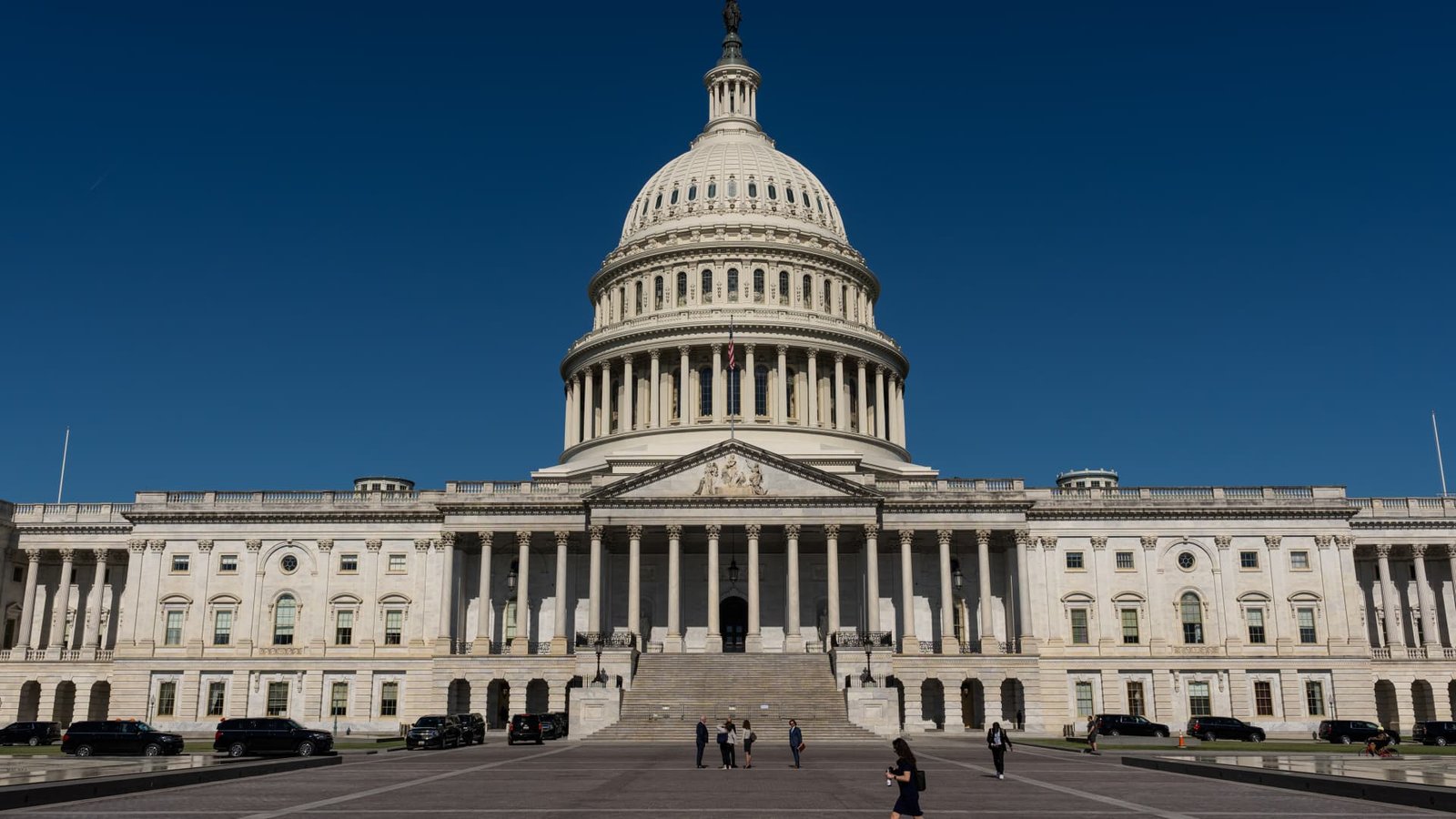
Republicans on Capitol Hill have tried and failed several times to circumvent state laws. House Majority Leader Steve Scalise, R-La., told CNBC that state laws “hurt innovation” and that overriding them “will be the foundation of everything we do.”
Rep. Ted Lieu, D-Calif., co-chair of a House Democrats-appointed commission on AI, said that while there is “clearly bipartisan opposition to doing nothing,” he noted that many Democrats recently supported a child online safety bill that sets a federal standard for privacy standards as a floor.
Choose CNBC as your preferred source on Google and never miss a moment from the most trusted name in business news.
https://www.cnbc.com/2026/07/09/ai-companies-election-spending.html
