

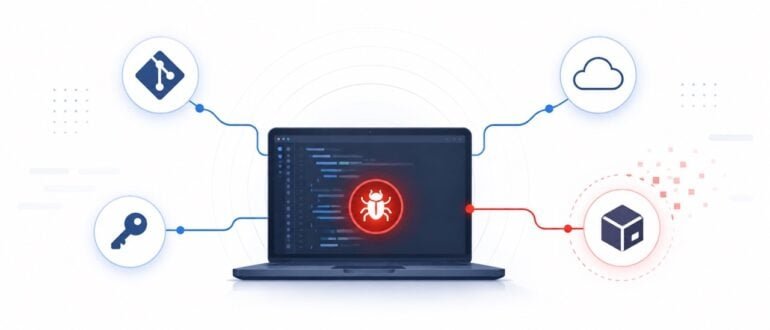
For years, discussions about software supply chain security have focused on centralized infrastructures such as build servers, package registries, and CI/CD systems. Recent attacks suggest that this view is incomplete. The Megalodon campaign injected malicious GitHub Actions workflows into thousands of repositories, while a separate incident involving a malicious Visual Studio Code extension showed how a single compromised developer device could expose large amounts of source code and internal assets. These incidents highlight the growing reality: developer workstations are now an important part of the software supply chain.
The scale of the threat continues to grow. Sonatype identified more than 454,000 new open source malicious packages in 2025 alone, bringing the total number of known malicious packages in major repositories to over 1.2 million. Many of these campaigns specifically target developer environments, CI/CD systems, and credential stores, rather than end users.
Table of Contents
A new threat model
Modern software development begins long before code reaches a shared repository. Developers routinely store local source code, SSH keys, cloud credentials, API tokens, and configuration files on their computers. This allows a compromised workstation to give attackers direct access to systems that support software delivery.
The risk goes beyond the theft of a single ID card. Developer machines often contain the context needed to understand how systems are connected, where sensitive resources are located, and how deployment processes occur. Attackers are increasingly targeting workstations because they provide access to repositories, CI/CD pipelines, cloud environments, and internal tools.
How attackers target developer workstations
Developer workstations offer attackers numerous opportunities to initially gain a foothold. Instead of directly targeting production systems, threat actors often focus on the tools, dependencies, and credentials that developers use every day. From malicious packages to compromised extensions to stolen credentials, these attacks aim to exploit the trust and access associated with development environments. The most common attack methods used by attackers on developer workstations include:
Malicious packages and dependency abuse
Open source ecosystems remain a popular attack vector. Threat actors use techniques such as typosquatting and package impersonation to trick developers into installing malicious dependencies. Once installed, these packages can collect credentials, exfiltrate secrets, or inject malicious code into development environments.
Recent campaigns have also shown how malware can spread across software ecosystems by stealing developer credentials and using them to publish compromised packages further downstream.
IDE extensions and developer tools
Developer tools can be just as dangerous if compromised. Malicious IDE extensions often operate with the same permissions as the developer using them, allowing access to source code, credentials, and local files.
Because developers often have access to multiple repositories and environments, compromising a single workstation can give attackers valuable insight into internal systems and software delivery processes.
Credential theft and pipeline abuse
Credential theft remains one of the most effective attack techniques. Industry data shows why. Sonatype reported that host information exfiltration occurred in 5.7% of the malicious packages analyzed, while secret exfiltration occurred in 3.9%. These campaigns are increasingly focused on stealing API keys, cloud credentials, SSH keys, and CI/CD tokens that can be used to penetrate deeper into development and production environments.
Attackers target API keys, cloud credentials, SSH keys, and session tokens stored on developer devices. Once obtained, these credentials can be used to modify repositories, publish malicious packages, access cloud resources, or manipulate CI/CD workflows.
The connection between developer workstations and automated pipelines makes this particularly dangerous. As organizations have learned from repeated CI/CD security incidents, weak credential handling in automated pipelines can quickly turn a local compromise into a broader supply chain event.
Automation and the growing attack surface
Automation has shortened the gap between compromise and impact. CI systems run workflows automatically, dependency management tools introduce new code into projects, and development tools increasingly interact directly with repositories and cloud services.
When companies introduce AI-powered development tools, additional security considerations arise. These tools can access source code, configuration files, documentation and other development resources. Although they provide productivity benefits, they should be evaluated using the same security principles that apply to all components that interact with the software supply chain.
Hardening developer workstations
Recognizing the workstation as a supply chain node requires a combination of endpoint security, identity controls, and secure development practices. Developer devices routinely store source code, cloud credentials, SSH keys, browser sessions, and access tokens. When malware compromises a workstation, these assets can serve as an entry point into repositories, CI/CD environments, and cloud infrastructure. Organizations should view securing developer endpoints as a core element of software supply chain security, rather than a separate endpoint management issue. Developer devices have become repositories of source code, credentials, deployment access, and other sensitive assets, making them a common target for malware and credential theft campaigns. A compromised workstation can expose secrets, deployment access, and source code long before attackers ever interact with the production infrastructure.
Reducing this risk starts with tighter control over how developers install and use the software. Dependencies and IDE extensions should come from trusted sources, while extension permissions and newly released packages should be carefully reviewed before deployment. Signed commits and release signatures can provide additional assurance that software artifacts have not been tampered with.
Organizations can further reduce exposure by isolating development activities from the underlying device. Containerized and remote development environments help limit the impact of a compromised workstation, while disposable environments and sandboxing can reduce the blast radius if an attacker gains access.
Securing developer jobs doesn’t require a complete overhaul of the software delivery process. Improving visibility into endpoint activity, reducing credential exposure, and strengthening protections on developer devices can provide a solid starting point for organizations looking to reduce supply chain risk.
The connection between developer workstations and CI/CD systems also deserves special attention. Branch protection rules, mandatory code reviews, signed workflows, and ephemeral credentials help ensure that a compromised device cannot easily be used to manipulate software delivery pipelines or gain unauthorized access to production resources.
Finally, technical controls should be complemented by continuous monitoring and developer awareness. Secret scanning tools built into IDEs, repositories, and Git workflows can help detect exposed credentials before they become incidents. Regular security training can help developers identify malicious packages, suspicious extensions, and social engineering attempts that target development teams.
Diploma
Developer workstations are no longer just productivity tools. They have become operational components of the software supply chain, providing credentials, source code, deployment access, and direct connections to CI/CD systems.
The broader supply chain threat landscape reflects this shift. Research shows that more than 60% of organizations have experienced a software supply chain attack in recent years, showing that these incidents are no longer isolated events but an ongoing operational risk for development teams.
Companies that focus solely on centralized infrastructure risk missing one of the most accessible entry points for attackers. By securing on-premises environments, securing developer endpoints, controlling dependency ingestion, and strengthening CI/CD protection, security teams can significantly reduce supply chain risk and improve the resiliency of modern software delivery.
https://devops.com/why-developer-workstations-have-become-a-critical-part-of-the-software-supply-chain/
