- U.S. Senate candidate Abdul El-Sayed criticizes Democratic primary contender Haley Stevens over DTE Energy donations
- Records show a DTE PAC had donated $45,000 to Stevens in the past but had not donated to her Senate campaign as of June
- El-Sayed has made his opposition to corporate donations a pillar of his election campaign
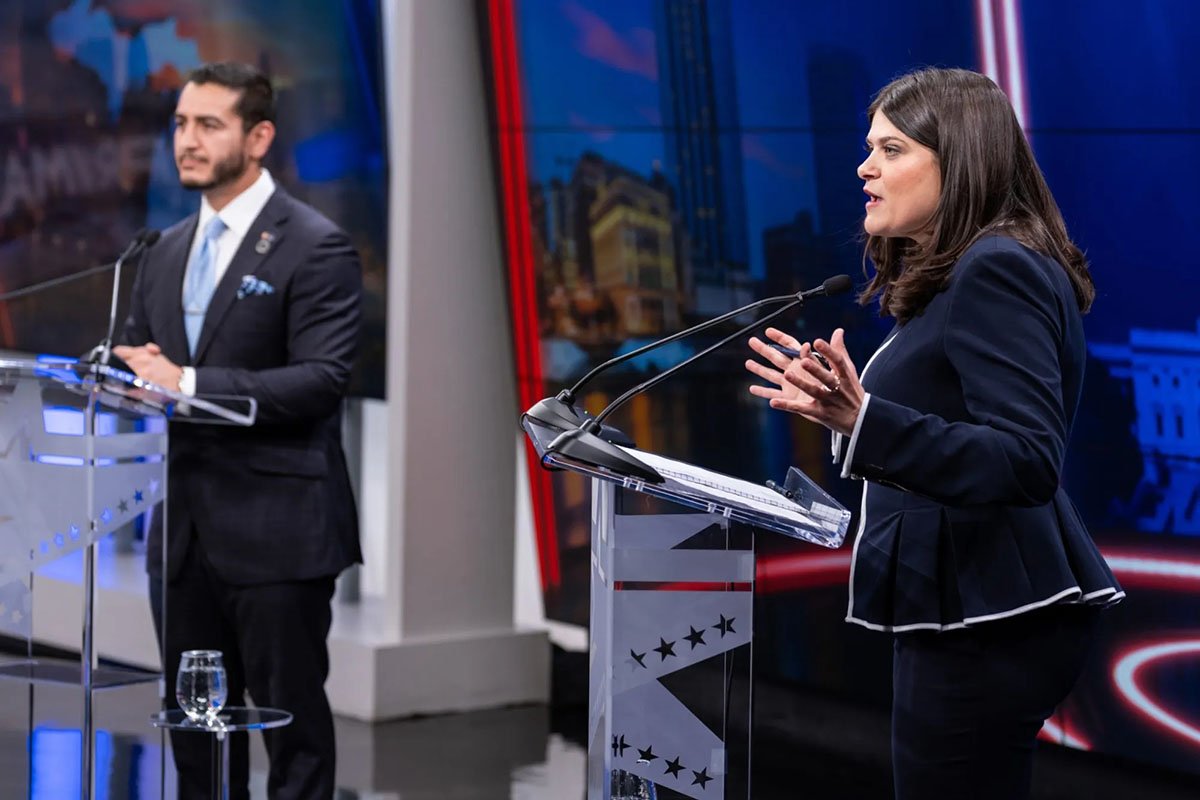
As progressive Abdul El-Sayed tries to stand out in Michigan’s Democratic U.S. Senate primary, he and his supporters have recently taken aim at his rival Haley Stevens’ financial ties to the state’s largest utility.
“While Michiganders sat in the dark for days following DTE’s failures, Haley Stevens was busy cashing $45,000 in DTE checks,” reads one of several recent anti-Stevens ads from the PAC Fighting for Michigan, a super PAC that supports El-Sayed. “She will be tough on rate hikes, but the receipts tell the real story.”
Bridge Michigan obtained this evidence as part of our series examining claims made in the Senate primary, where El-Sayed and Stevens are vying for the chance to face Republican Mike Rogers in the November general election.
Here’s what you should know:
Table of Contents
The context
Michigan’s largest monopoly, DTE Energy, has been a frequent target of public anger, largely due to high rates, frequent outages and the company’s support of tax breaks for energy-hungry data centers that could boost its profits.
Related:
Critics have long criticized DTE’s aggressive political lobbying, arguing that the utility maintains lawmakers’ favoritism by funding its campaigns.
DTE’s political action committee spends hundreds of thousands of dollars annually on donations to state and federal candidates.
A possible proposal for the November ballot aims to ban such spending by monopoly utilities or large government contractors in state races. If approved by voters, the policy would not apply to candidates for federal office, whose campaigns are governed by separate rules.
El-Sayed refused to accept donations from corporate PACs and called the influence of money in politics a “disease” that allows corporations to “buy and sell politicians.”
Stevens has accepted donations from PACs representing health insurance companies, investment firms, weapons developers and a range of other industries, but stressed that the donors have no influence on her political stance.
“My vote belongs to no one,” she said during a debate in July.
The facts
Federal Election Commission records show that the DTE PAC had not donated any money to Stevens’ Senate campaign as of late June. But the PAC already donated $45,000 to Stevens’ House campaigns and her congressional leadership’s PAC starting the year she took office in 2019.
The DTE PAC has not contributed to El-Sayed.
El-Sayed has benefited from some PAC endorsements, including from the National Nurses United for Patient Protection. The Fighting for Michigan PAC that supports him is funded by individual donors.
The criticism of DTE funding fits into a broader theme of El-Sayed’s campaign. He has repeatedly criticized the tens of millions of dollars that corporate donors and outside groups have spent supporting Stevens, claiming they expect friendly policies in return for their investment.
“When DTE spends money to buy a Senate seat, they’re not just buying a Senate seat, they’re buying peace and quiet when you’re without power for five days because of a minor storm,” he said during a Sunday rally in Lansing. “When Blue Cross tries to buy a seat in the Senate, they are buying the ability to raise your premiums over and over again.”
Blue Cross Blue Shield of Michigan has donated $19,500 to Stevens since 2018.
In response to this criticism, Stevens spokeswoman Joetta Appiah highlighted Stevens’ proposals to reform campaign finance laws and improve police, insurance and pharmaceutical companies as evidence that companies supporting her campaign cannot buy her vote.
In March, for example, Stevens introduced legislation that would withhold federal funding from utilities that raise their rates twice a year.
“The only voices Haley cares about are the voices of Michigan residents, and those are the stories she brings to Congress every day,” Appiah said.
In a campaign video released last week, Stevens emphasized her call for accountability among utilities, noting that DTE has not paid federal taxes since 2013.
“As your next U.S. senator,” she said in the video, “I will not let it stand.”
The end result
DTE Energy’s corporate PAC repeatedly donated to Stevens’ previous campaigns and her leadership PAC, spending a total of $45,000 since 2019. The utility has not reported donations to its current U.S. Senate campaign.
This article first appeared on Bridge Michigan and is republished here under a Creative Commons Attribution-NoDerivatives 4.0 International license.

https://bridgemi.com/michigan-government/fact-check-how-much-money-did-haley-stevens-get-from-dte/
