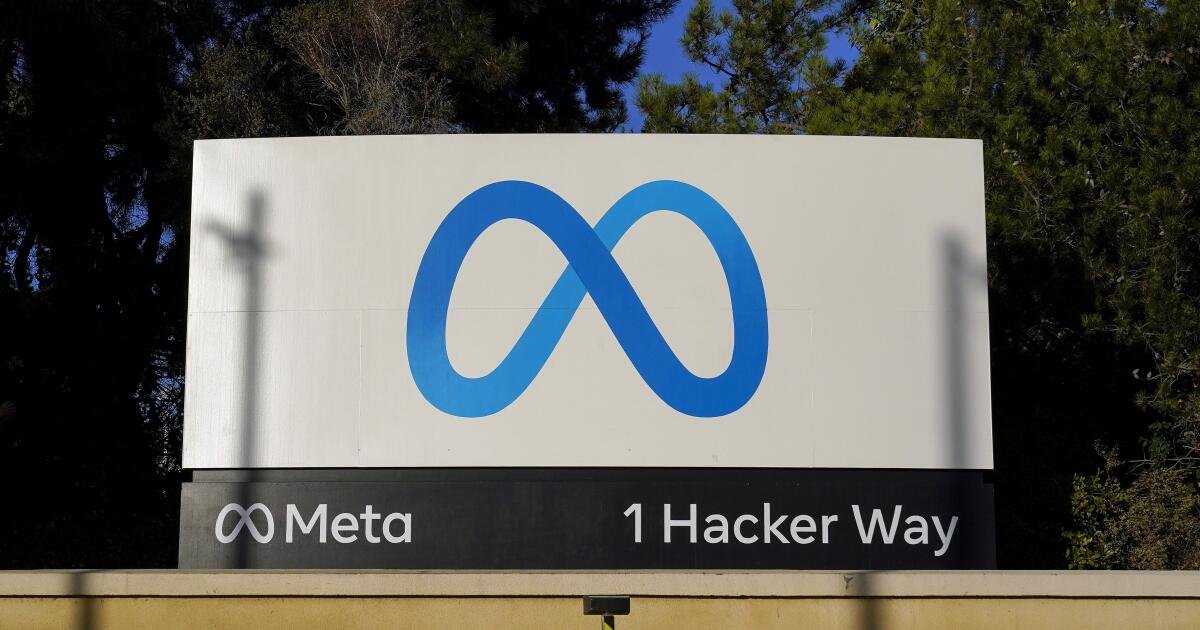
Influencers at Kyle Hjelmeseth’s talent management company build their Instagram presence on lived experiences. Their control over that image and likeness was shaken on Tuesday when Instagram parent company Meta Muse Image launched – a tool that lets people take publicly posted Instagram photos and use AI to generate new images from them.
Many accounts were turned on by default, exposing their public photos to the tool and setting off alarms in the entertainment industry.
“I just think it’s wrong, again, to expect people to opt out of something that’s literally proven to cause harm,” said Hjelmeseth, chief executive of influencer talent management company G&B.
Major talent agency CAA said it had raised concerns with Meta on behalf of its clients.
“We call on Meta to make Muse Image AI protections the standard, not the exception, and allow individuals to opt-in if they want to allow their image or likeness to be used to create AI content,” CAA said in a statement. “Artists have the right to decide whether and how their likeness and work is used, with consent and the ability to set their own terms. This means that creators may impose restrictions, monitor use, and prevent unauthorized promotion or exploitation.”
“CAA believes in the power of new technology, but not at the expense of individual rights or livelihoods,” the agency said. “The future of creativity depends on respecting the ownership and autonomy of those who make it possible.”
SAG-AFTRA also expressed criticism of the rollout.
“Anything other than a clear and conspicuous OPT-IN to this type of use of Instagram users’ images is unacceptable and a complete misjudgment of public opinion regarding the obvious dangers and harms associated with such use,” the artists’ union said in a statement.
Hollywood has long been wary of AI after a series of deepfakes – videos or images showing celebrities doing or saying things they never authorized. Jamie Lee Curtis and others appeared in advertisements for products they never endorsed. Last year, OpenAI’s Sora 2 video tool caused outrage in Hollywood after users conjured up dead celebrities without their offspring’s consent. OpenAI later said it would give rights holders more granular controls.
Meta described Muse Image in a blog post as “a creative partner that knows your world and makes it easy for you to turn your ideas into high-quality images that you can download and share anywhere.” In a promotional video, the company showed examples such as including a friend in a band photo or designing furniture for a garage. According to Meta, the AI-generated images are watermarked and users can report problematic images.
“We have built Muse Image with strong controls and security guardrails from day one,” Meta said in a statement. “Private accounts and those of users under 18 are automatically banned, and adult users with public accounts can log out with just a few clicks. We will take action against any content that violates our Community Standards.”
Users can opt out by going to Settings, selecting “Share and Reuse,” and unchecking the option that allows others to create with and reuse their content.
Meta said it has safeguards in place to prevent Muse Image from creating content that violates its policies, including violent, sexual or defamatory images.
The launch follows a familiar Silicon Valley pattern: ship products first, ask for forgiveness later. Here that means Meta is tapping into the vast pool of content already on its platform to power a new AI tool.
“They are leveraging their size to make the tools easier to use and scale the content available,” said Mickey Maher, chief business officer at Vermillio, which tracks people’s digital likenesses and intellectual property. “This doesn’t just apply to this meta product.”
Others said opt-out should be the default.
“This dismal pattern of AI overreach, where it’s essentially a jack-of-all-trades when it comes to your content and information, is something that no one actually wants,” said Lori Fena, former chair and executive director of the Electronic Frontier Foundation and co-founder of New York-based Personal Digital Spaces. What we need in this new AI ecosystem is the ability to inspire trust and have some kind of understanding and authenticity, and this does exactly the opposite.”
https://www.latimes.com/entertainment-arts/business/story/2026-07-09/meta-muse-image-ai-hollywood
